Disruption in LPG supply hits hotels

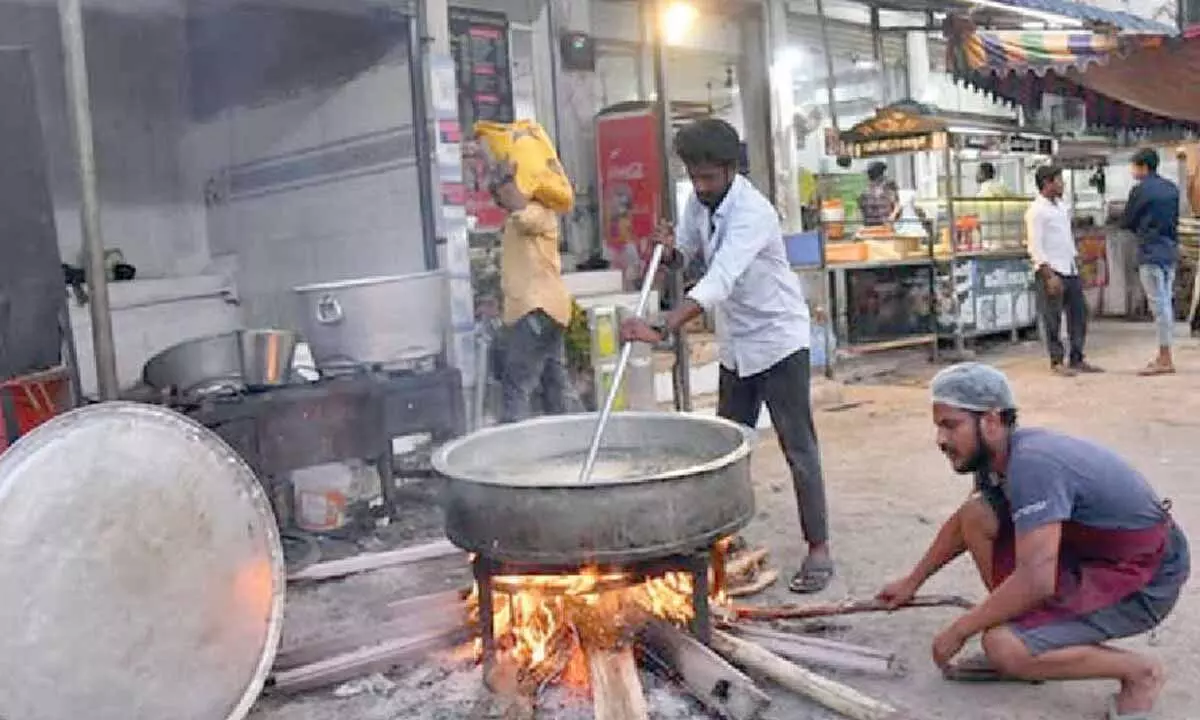
Rajamahendravaram: Fuel supply disruptions linked to the ongoing conflict in West Asia have begun affecting LPG availability across the joint East Godavari district during the past two weeks. While domestic cylinders are reaching households with some delay, a severe shortage of commercial LPG cylinders is creating difficulties for hotels, restaurants and small food businesses. Many hotel owners say the scarcity has forced them to cut down operations. Some restaurants have restricted service to a single meal a day, while small eateries and biryani stalls have started cooking on firewood stoves due to the lack of gas cylinders.
Residents say the impact of tensions involving Israel, the United States and Iran is felt locally despite assurances from authorities that supplies remain adequate. Mohanakrishna, an employee from Danavaipeta in Rajamahendravaram, said he had to wait nearly 15 days after booking a domestic cylinder before receiving delivery.
Officials acknowledge that LPG bookings have increased sharply in the undivided East Godavari district over the past 15 days. Gas agency operators say bookings have risen nearly threefold as consumers are placing orders in advance fearing shortages. This surge has made it difficult for agencies to deliver cylinders within the usual timeframe. District Civil Supplies authorities, however, urged consumers not to panic. District Supply Officer Parvathi said domestic cylinders are being delivered on a first-in, first-out basis. She said around 20,000 bookings are currently pending for delivery within 72 hours, while about 17,000 cylinders were available in stock as of Sunday. On average, around 12,000 cylinders are supplied daily in the district. She added that LPG supplies are continuing from distribution points at Gokavaram, Visakhapatnam and Kondapalli near Vijayawada as usual and assured domestic consumers that there was no need for concern.
Changes in booking rules have nevertheless caused anxiety among families. Earlier, urban consumers could book the next cylinder 21 days after receiving one. The interval has now been extended to 25 days. In rural areas, consumers can place the next booking only after 45 days. Many households say this restriction is difficult to manage. M Krishnaveni, a homemaker, said families with four to six members often finish a cylinder within about 20 days, making it difficult to wait for the next booking window. Shortage of commercial cylinders has also led some businesses to use domestic LPG cylinders illegally in restaurants and food stalls. Following complaints, officials conducted inspections at several hotels during the past four days and seized 45 domestic cylinders being used for commercial purposes. Cases were registered against 22 persons under the relevant provisions.
The situation has prompted people to look for alternatives. Traders in Rajamahendravaram say sales of induction stoves and electric cookers have increased significantly as households prepare for possible supply delays. A dealer on Main Road, Satish, said demand for these appliances has risen so sharply that many models are currently out of stock. Meanwhile, the effects of the conflict are also being felt in the edible oil market. Consumers allege that traders are increasing prices by citing supply disruptions. Over the past ten days, prices of various cooking oils have risen by up to Rs 20 per litre. A sunflower oil packet that previously sold for around Rs 165 is now priced at about Rs 180. Retail traders say wholesale suppliers are providing only half the quantity requested, claiming reduced availability. According to wholesale dealer Janardhan, the undivided district consumes nearly 75 tonnes of cooking oil every day, with more than half of the supply dependent on imports.
Palm oil raw material is largely imported from Singapore and Malaysia, while sunflower oil raw material comes mainly from Indonesia through sea routes. These shipments reach ports such as Kakinada and Krishnapatnam, where the oil is refined, packed and then distributed to markets across the Godavari districts. Traders say any disruption in imports quickly affects local availability and prices.