Handri–Neeva supplies 40 TMC ft water to Seema, setting a record

The state irrigation department created a new record in water transfer to the drought-prone Rayalaseema region through the Handri–Neeva Sujala Sravanthi project, drawing water beyond the project’s original design capacity for the first time.
Officials said that a total of 40.109 TMC feet of water has been diverted into canals within just 190 days and subsequently supplied to reservoirs and tanks across Rayalaseema districts. This achievement marks a significant milestone in the project’s operational history.
During the 2014–19 TDP government, the project’s pumping capacity was enhanced from one pump to six pumps. After the return of the coalition government, further works were taken up to increase the capacity to 12 pumps. Along with the installation of additional pumps, canal widening works were completed at a record pace within 100 days, officials said.
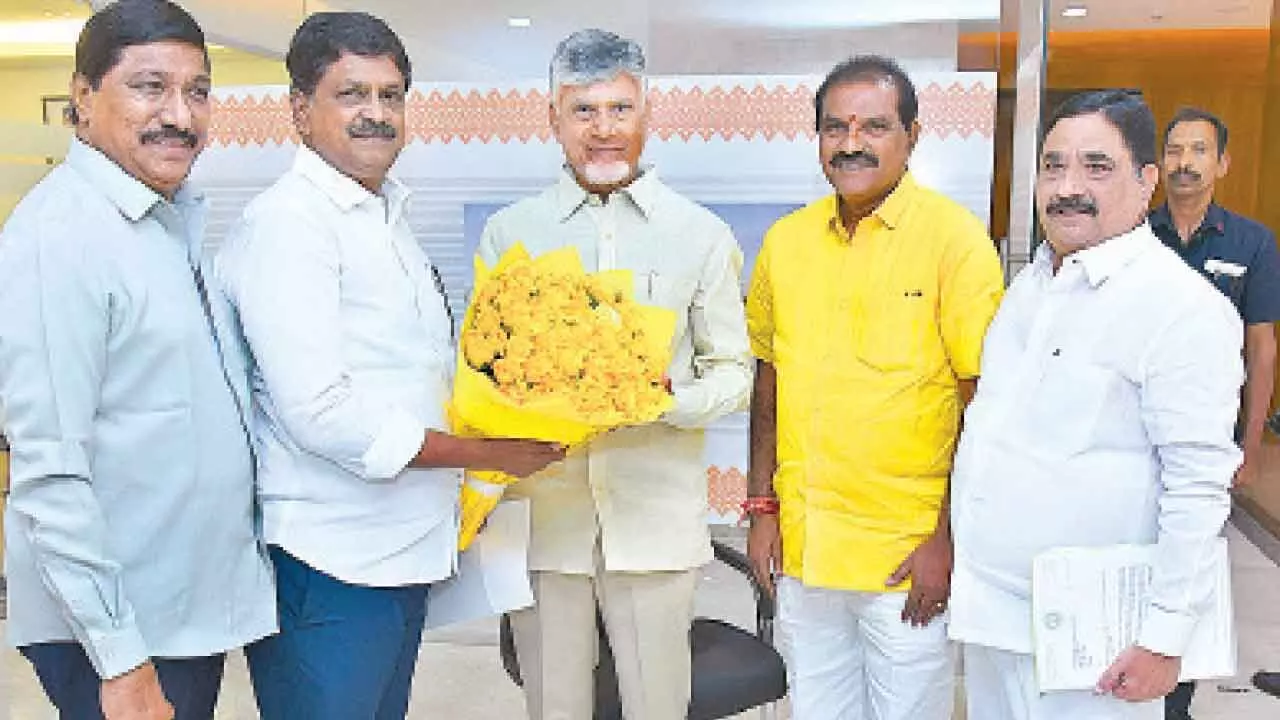
Finance ministers Payyavula Keshav and roads and buildings minister B C Janardhan Reddy, along with Rayadurg MLA Kalava Srinivas, thanked Chief Minister N Chandrababu Naidu for expediting the Handri–Neeva expansion works and ensuring improved water supply to the Rayalaseema region. The ministers informed the Chief Minister on Friday that the project had successfully drawn 40.109 TMC feet by Thursday, surpassing its design capacity.
Keshav said the Chief Minister had approached the project with a clear plan to ensure its optimum utilisation. Rayalaseema ministers also expressed gratitude to Irrigation Minister Nimmala Ramanaidu for his support.
Chief Minister Chandrababu Naidu directed officials to fill all reservoirs and tanks in Rayalaseema and ensure water supply up to the last acre, with the aim of making the region green and prosperous. He instructed the Irrigation Department to create another record by drawing 50 TMC feet of water through the Handri–Neeva project.
Irrigation minister Nimmala informed the Chief Minister that steps are being taken to divert 50 TMC feet of water to Rayalaseema districts by the end of February or early March.