Mahashivaratri Brahmotsavams progress with Rathotsavam and Teppotsavam

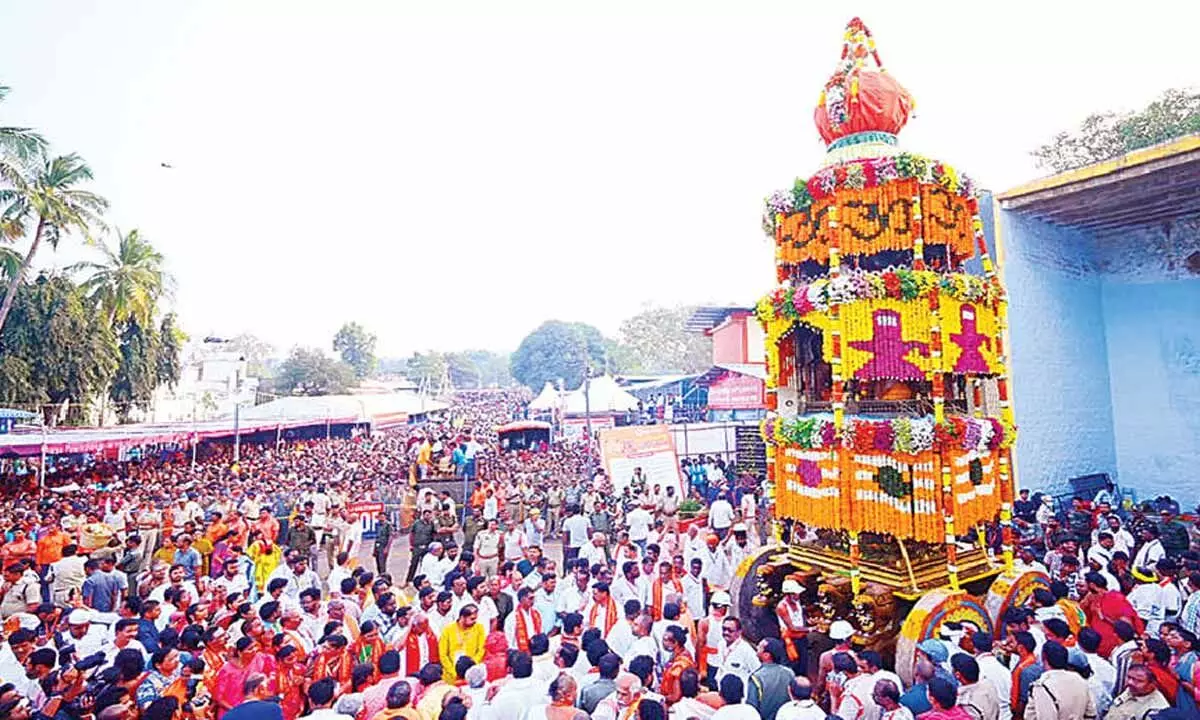
Srisailam: The nine-day observances of the eleven-day Mahashivaratri Brahmotsavams were conducted with great religious fervour at Sri Sailam Devasthanam on Monday.
As part of the Navahnika Deeksha, special pujas were performed for the presiding deities, Sri Swamy and Ammavaru. Rituals were held in strict accordance with Agama Shastra traditions, drawing large numbers of devotees to the hill shrine.
Earlier in the day, special worship was offered to Sri Chandiswara Swamy in the Yagasala, followed by japas and parayanas for universal welfare. Mandaparadhanas, Panchavarana Archana, Shiva Panchakshari chanting, Nitya Havanams, Rudra Homam and Chandi Homam were also performed with devotional solemnity.
In the evening, Pradosha Kala pujas, Rudra Parayanas and homas were scheduled as part of the ongoing festivities.
A major highlight of the day is the Rathotsavam of Lord Mallikarjuna Swamy and Goddess
Bhramaramba Devi which was held in the evening. As per tradition, Rathanga Puja, Rathanga Homam and Rathanga Bali ha e precededed the chariot procession, with symbolic offerings made in a satvik manner.
The deities have been ceremonially seated on the chariot and taken in procession. The chariot has been artistically decorated with 11 varieties of flowers, including marigold, chrysanthemum, roses, kanakambaram, gladiolus and asters, lending a grand visual appeal to the event. It is believed that witnessing the Rathotsavam absolves sins and fulfils devotees’ wishes.
Later at 8.00 pm, the Teppotsavam (float festival) has been organized at the temple pushkarini.
After Shodashopachara pujas to the Utsava Moortis in the temple premises, the deities have been taken in a floral palanquin procession from the Rajagopuram to the pushkarini and seated on a specially decorated float.
Accompanied by Vedic chants and auspicious music, the Teppotsavam was conducted in a highly ceremonial manner. The float, adorned with colourful flowers and illuminated decorations, is believed to bestow prosperity, remove obstacles and ensure timely rains and abundant harvests for the region.