Revenue staff back land re-survey, seek safeguards

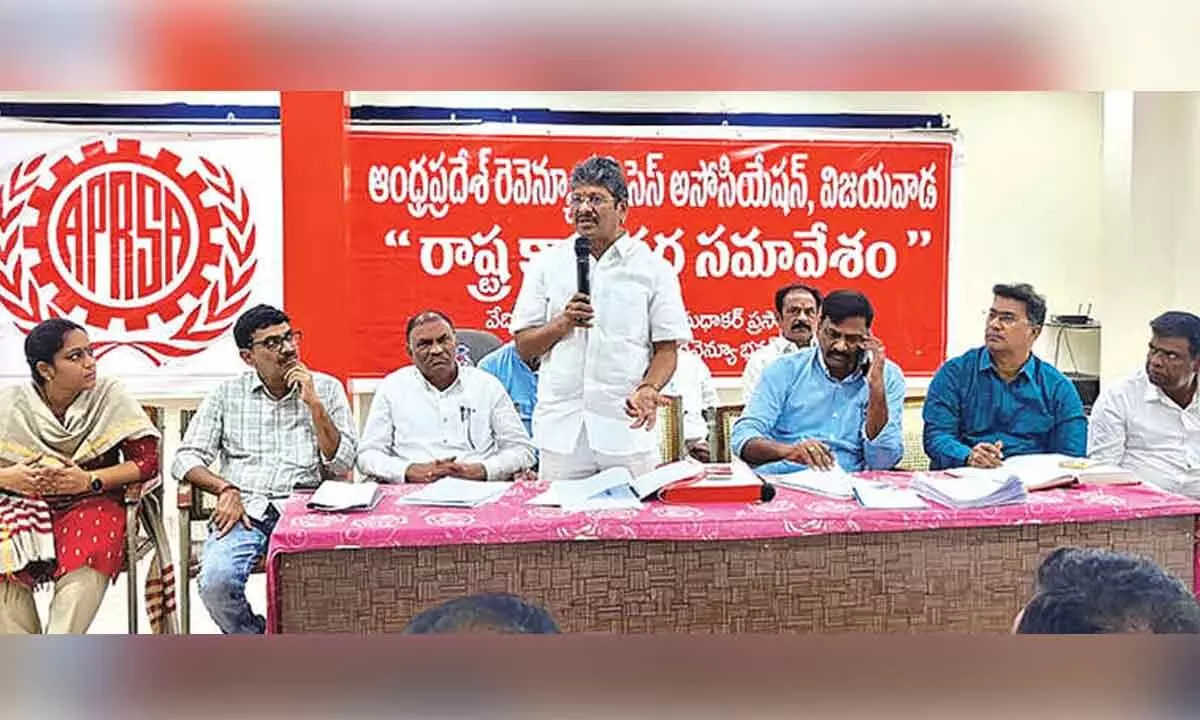
AP Revenue Services Association president Bopparaju Venkateswarlu addressing the meeting at the Revenue Bhavan near Lenin Centre in Vijayawada on Saturday
APRSA urges govt to ensure adequate time, manpower, technical support and training to ensure it benefits landowners and farmers
Vijayawada: Expressing firm support for the ongoing land re-survey while seeking adequate safeguards for its effective implementation, the Andhra Pradesh Revenue Services Association (APRSA) on Saturday called for sufficient time, manpower and technical support to ensure the exercise benefits landowners and farmers.
The association made these observations during its state executive committee meeting held at Revenue Bhavan near Lenin Centre here, chaired by APRSA state president Bopparaju Venkateswarlu.
The meeting reviewed the functioning of the revenue department, with a focus on public service delivery, administrative issues, technical challenges and employee welfare.
The statewide land re-survey received special attention during the deliberations. Members discussed problems such as errors in land boundaries, extent and ownership records, technical glitches during field-level implementation and the hardships being faced by landowners as a result. They also flagged the increasing workload and pressure on revenue staff involved in rectifying these issues.
Addressing the meeting, Venkateswarlu said the re-survey initiative launched by the government was intended to protect the rights of landowners and farmers and bring transparency to land records. He asserted that revenue employees were fully committed to the programme and would extend complete cooperation to make it a success.
He said staff would strictly follow the guidelines issued by Chief Minister N Chandrababu Naidu and revenue minister Anagani Satya Prasad to ensure a transparent and people-friendly process. At the same time, the committee stressed the need for enabling conditions, including adequate staffing, robust technical infrastructure, clear operational guidelines, sufficient time and basic training.