Reducing NOx Without Raising CO₂: Innovations Transforming the Automotive Industry

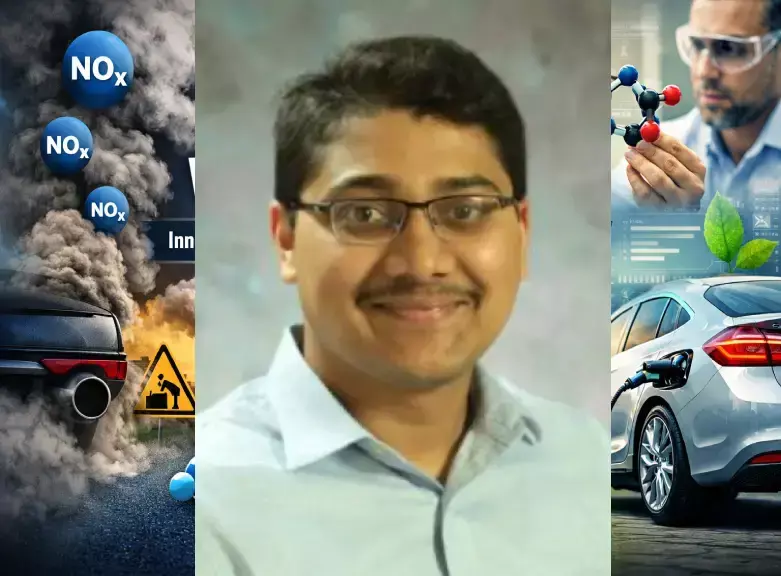
An expert discusses the challenge of reducing NOx emissions without increasing CO₂ and highlights key innovations transforming the automotive industry toward cleaner mobility.
In recent years, the automotive industry has been striving to reduce pollutant emissions from its vehicles, especially nitrogen oxides (NOX), which are major contributors to air pollution and respiratory problems in large cities. With the increasing pressure to meet stricter environmental goals, technological innovations have focused on improving engine efficiency and after-treatment systems.
Among the various approaches, engine calibration and enhancement of after-treatment systems, such as catalytic converters, have proven to be promising solutions for reducing NOX emissions without compromising fuel efficiency, a crucial factor for consumers and global sustainability goals.
The challenge is significant, and the question is: how can we reduce NOX emissions without significantly increasing carbon dioxide (CO₂) emissions, which are directly related to fuel economy? There is a growing adoption of alternative fuels, such as hydrogen and methanol, and electric hybrid systems, which may be key to transitioning to a cleaner and more efficient future.
The Impact of NOX and CO2 Emissions
NOX emissions, which include nitrogen oxides such as nitrogen dioxide (NO₂) and nitric oxide (NO), have been a leading cause of air pollution in urban areas. According to the World Health Organization (WHO), exposure to these substances can cause a range of respiratory issues, including asthma and bronchitis, as well as contribute to the formation of smog and acid rain. The U.S. Environmental Protection Agency (EPA) estimates that vehicles responsible for NOx emissions are one of the largest sources of pollution in metropolitan areas.
While NOX is a growing concern, CO₂ emissions continue to be a key focus as they are directly linked to fuel efficiency and global warming. According to data from the International Energy Agency (IEA), vehicles are responsible for approximately 20% of global CO₂ emissions and are a major cause of the increase in average global temperatures. Therefore, the ideal solution is to reduce NOX without negatively affecting fuel economy, which requires innovations in both engines and after-treatment systems.
One of the main approaches to reducing NOX without increasing CO₂ emissions lies in refining engine calibration and improving the efficiency of after-treatment systems. These systems primarily consist of catalytic converters that help convert pollutants into less harmful substances, such as nitrogen (N₂) and oxygen (O₂). However, the challenge is to optimize this process while maintaining fuel efficiency.
Prathik Meruva, an expert in mechanical engineering and automotive research, has stood out in developing innovative solutions for reducing NOX emissions. We invited him to share his insights and collaborate on the production of this article.
With a solid academic background and professional experience, he has contributed to the development of new engine calibration methods and enhancement of after-treatment systems. According to Prathik, "The key to reducing NOX without increasing CO₂ emissions lies in fine-tuning engine control systems and optimizing after-treatment, especially through selective catalytic reduction (SCR) technologies and the development of electric heaters to maintain optimal after-treatment temperature, which is critical factor in NOX reduction."
Additionally, Prathik's research has also explored the use of alternative fuels, such as hydrogen and methanol, which may offer even more effective solutions for reducing emissions without compromising fuel efficiency. He states, "Alternative fuels like hydrogen and methanol are promising, especially in the context of hybrid electric engines. The use of hydrogen, for example, can nearly eliminate NOX emissions, which is a significant breakthrough."
The Role of the Expert in the Automotive Industry
With a career focused on advancing emission reduction technologies, Prathik Meruva has established himself as an authority in the automotive sector. He has an impressive record of innovations and publications and has contributed to important research consortia. Prathik holds a master's degree in Mechanical Engineering from Michigan Technological University and has worked with industry giants such as Fiat Chrysler Automobiles (FCA) (now Stellantis) and the Southwest Research Institute (SwRI).
At SwRI, Prathik led engine calibration and after-treatment system projects, particularly contributing to reducing NOX emissions in diesel, gasoline, and hydrogen engines. He was responsible for implementing technologies that reduced NOX emissions by up to 99.9% in certain systems without compromising fuel economy, a remarkable achievement in the industry. Furthermore, Prathik was one of the inventors of a patent for the use of hot air recirculation in heating after-treatment systems, an innovation that promises to accelerate the implementation of these technologies.
Among his most relevant publications, Prathik has authored articles on reducing NOX in internal combustion and hybrid engines, presenting his research at renowned international conferences such as SAE WCX and ASME ICEF.
A Promising and Challenging Future
Emission reduction will remain one of the main challenges and goals for the automotive industry in the coming decades. With increasingly stringent regulations and growing demand for cleaner and more efficient solutions, NOX emission control technologies will be critical to ensuring that vehicles not only meet environmental requirements but also provide performance and efficiency to consumers.
According to an IEA report, hybrid and electric cars have the potential to reduce CO₂ emissions by up 2 billion tonnes by 2035 which corresponds to approximately 60% reduction in CO2 emissions, with a significant contribution from innovations in NOX emission control. To achieve these goals, the industry will need to continue investing in research and development, particularly in technologies that enable emission reductions without compromising vehicle performance.
On the subject, Prathik Meruva concludes:
"We are at a crucial point in the automotive industry where innovation is not just a competitive advantage, but a necessity. The solutions we are developing now are essential for the more sustainable future of mobility, and it’s exciting to be part of this movement."