Affordable education for all navigating a complex landscape

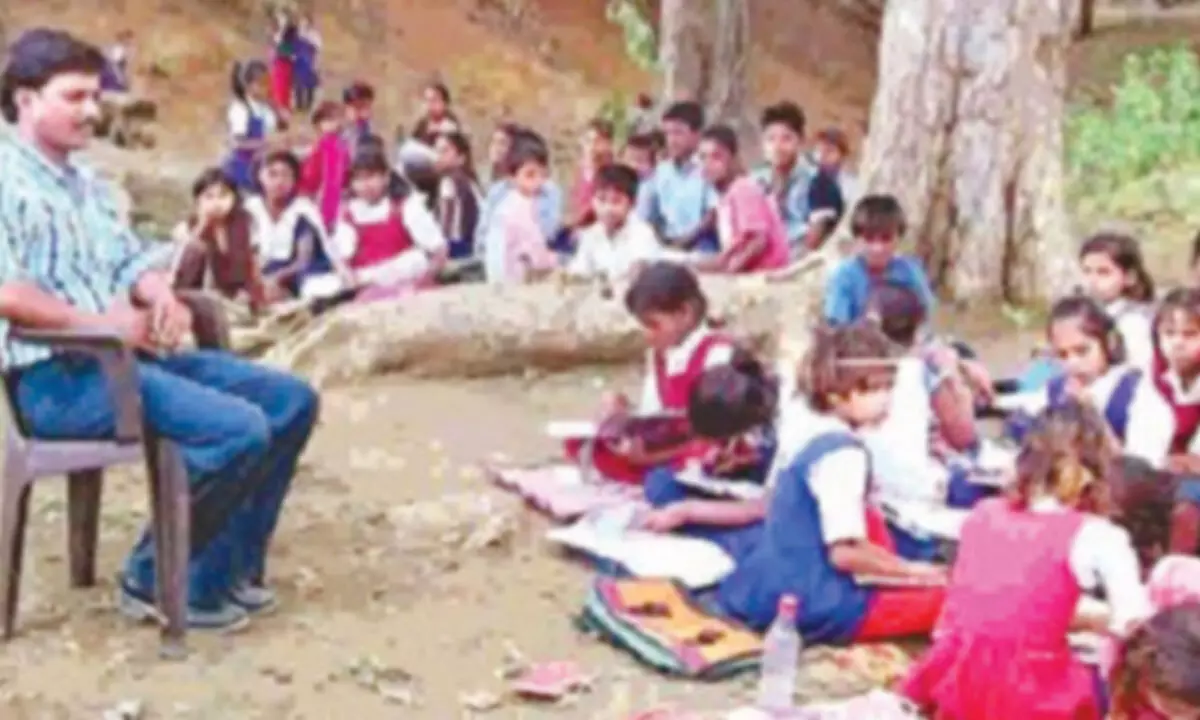
India needs to be more aggressive in ensuring affordable, quality and competitive higher education to all
India with one of the lowest gross enrolment ratios (GER) in higher education in the world needs to be more aggressive in ensuring affordable, quality, and competitive higher education for all, especially for the socially and educationally deprived, to truly harness its demographic dividend and secure inclusive national progress. Despite having one of the world’s largest youth populations, vast segments remain excluded from higher education due to financial constraints, geographic disparities, and systemic inequities. Without bold policy interventions and substantial public investment, the country risks deepening social divides and underutilizing its human capital. Every saner voice must understand that ensuring equitable access to world-class education is not just a moral imperative but an economic and strategic necessity for promoting innovation, reducing poverty, and positioning India as a global leader in the knowledge economy in real sense of the term.
All said and done, our higher education system is currently navigating a complex landscape marked by numerous structural and functional challenges. These issues demand urgent attention and comprehensive policy-level interventions. Among the most critical concerns is the dire need to revamp, modernize, and expand the physical and academic infrastructure of institutions across the country. A significant number of universities and colleges are functioning with outdated facilities, congested classrooms, inadequate laboratories, and limited digital access, all of which severely hamper the quality of education and research output.
Equally pressing is the requirement to standardize academic workload across institutions. Disparities in teaching hours, course content delivery, and student engagement mechanisms have resulted in an uneven educational experience for learners. There is a glaring absence of mechanisms to monitor, evaluate, and audit the effectiveness of classroom instruction. In the absence of robust quality control systems, the output and outcomes of higher education, both in terms of knowledge dissemination and skill development, remain inconsistent and below global standards. Moreover, the compensation structure for faculty members across various tiers of higher education lacks rationalization. Disproportionate remuneration, contract-based hiring, and a lack of long-term job security have led to a decline in academic motivation and performance in many institutions.
Incentivizing excellence in teaching is another area that calls for immediate reform. Faculty members who innovate in pedagogy, introduce interdisciplinary methods, or leverage technology to enhance learning outcomes should be recognized and rewarded through structured incentive programs. These could include research grants, performance-based bonuses, professional development opportunities, and recognition awards, all aimed at encouraging best teaching practices. Timeliness in salary disbursement also remains a longstanding concern, particularly in state-run and aided institutions. Frequent delays not only affect the financial stability of educators but also lower morale and reduce their focus on academic responsibilities.
Additionally, the availability and accessibility of student housing demand urgent policy action. A large segment of the student population, particularly those belonging to socially and economically marginalized communities such as Scheduled Castes (SCs), Scheduled Tribes (STs), Other Backward Classes (OBCs), religious minorities, and economically disadvantaged groups face immense hardships in securing safe, affordable, and dignified hostel accommodations. In many cases, the lack of residential facilities discourages talented students from rural and underprivileged backgrounds from pursuing higher studies altogether.
Addressing these multifaceted issues requires a comprehensive and inclusive strategy. Policymakers, educational administrators, and stakeholders must work in tandem to not only increase public and private investment in higher education but also ensure that resources are allocated judiciously and utilized efficiently. Emphasis should be placed on long-term planning, transparency in governance, and measurable outcomes in quality enhancement. From infrastructure renewal to financial stability for educators, and from equitable access to learning facilities to the pursuit of teaching excellence, every aspect requires thoughtful, sustained, and accountable action. Only through such holistic reforms can India hope to build a robust higher education framework capable of nurturing future leaders, innovators, and change-makers.
I strongly recommend reviving tutorial classes with renewed focus and urgency, treating it as a mission-oriented initiative. These sessions should be thoughtfully structured to support both students and teachers across all grade levels. In particular, there is an urgent need to introduce dedicated sessions aimed at enhancing both written and spoken English. Given the increasing importance of English as the dominant language in international discourse, business, academia, and technology, it is essential that learners and educators alike develop a strong command over it. These special language enrichment classes will not only boost academic performance, but also equip participants with the necessary skills to thrive in competitive and globally connected environments. By making this a core component of the academic support system, we will bridge communication gaps, and empower individuals to express themselves clearly and confidently on global platforms, ensuring they remain competitive and relevant in a fast-evolving world.
Lastly, paramount importance is the need to acknowledge and address the complex socio-economic fabric of India, a nation characterized by its vast diversity and persistent inequalities. The implementation of affirmative action and equitable distribution of institutional resources remains a formidable challenge, particularly when societal divisions rooted in caste and religion continue to manifest in both overt and subtle forms. These barriers often prevent certain groups from fully accessing the benefits and opportunities that campuses are meant to provide for all.
To truly overcome these systemic disparities, university governance must be consciously inclusive and structurally representative. This means moving beyond tokenism and ensuring that individuals from historically marginalized communities, specifically SCs, STs, and OBCs, are not only present in student populations, but also actively involved in shaping institutional policies and decisions. Their participation in both academic and administrative domains is essential to create a more just and empathetic educational environment. By embedding representatives of these communities into leadership and decision-making bodies, universities can foster a culture of accountability, sensitivity, and genuine inclusion.
Let me assure one and all that such an inclusive approach will ensure that the lived experiences and perspectives of disadvantaged groups are not only heard but are respected and reflected in institutional practices. This model of inclusive administration is a strategic necessity in the journey toward building a Viksit Bharat, an advanced and equitable India, by 2047. Universities, as microcosms of the nation, must lead the way by exemplifying inclusivity, thereby nurturing a generation that values equality, dignity, and collective progress. Only then can we hope to create an educational system that truly serves every segment of our diverse society. The rest is mere hype!