




- JSP candidates allege forced withdrawal of nominations in civic polls
- Over 3k students and 300 startups gather at JNTUA conclave
- YSRCP will serve as guardians of Anantapur
- Tirupati to host CII regional summit
- Minor negligence leads to fatal electrical accidents: APSPDCL SE
- KTR dubs Telangana ‘ATM’ for Rahul Gandhi
- Elect NDA candidates to accelerate Nellore development: MP
- Online graduate voter applicants face attestation hurdle
Exchanging old gold for new may invite tax liability
In Short
Holding period and acquisition cost determine tax liability

Share :
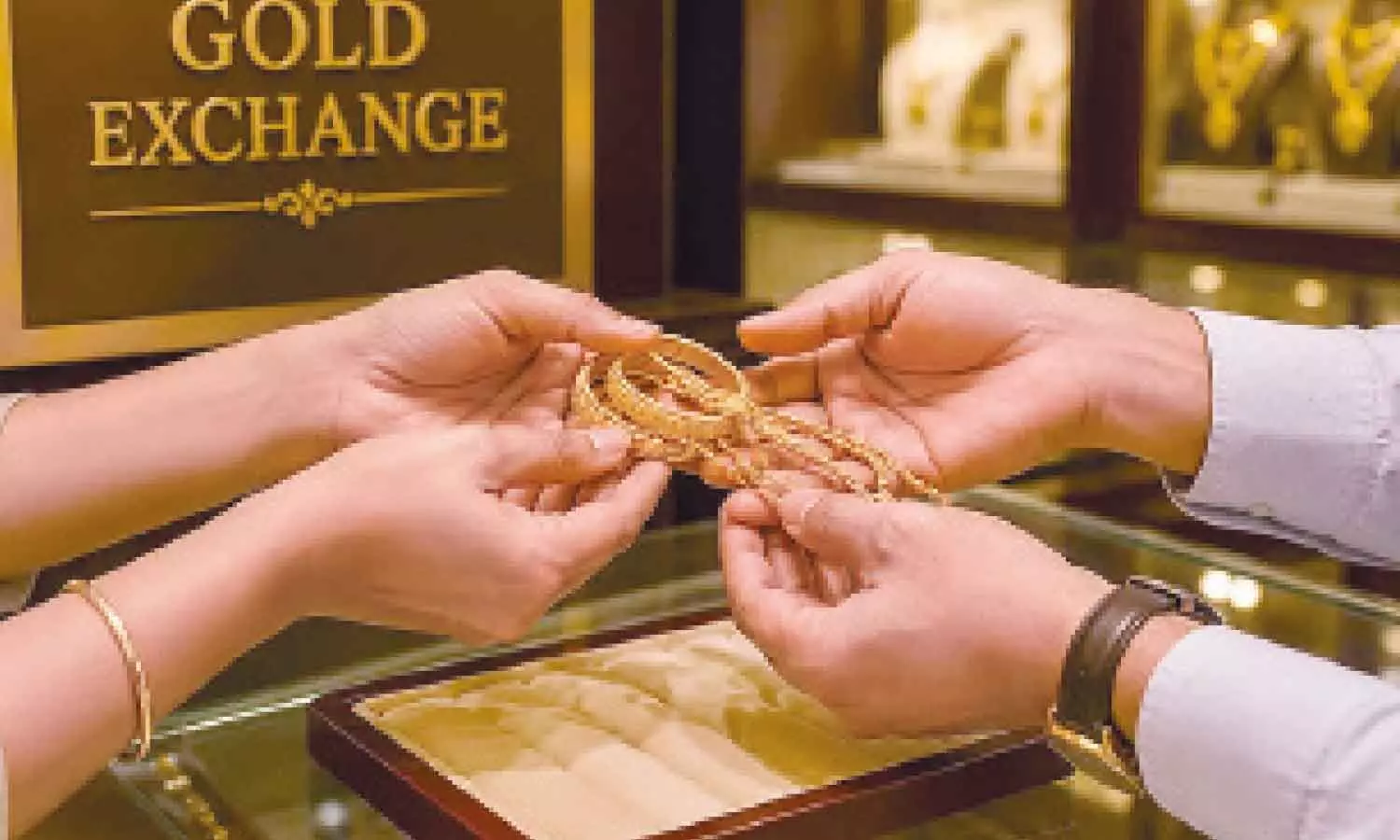
Exchanging old gold for new may invite tax liability
When there’s a fall in gold prices, the women in households usually would love to make some gold purchases, usually jewelry or ornaments. This is particularly the case around the festivals and could reach the level of urge, if the prices have plummeted from record highs. Either due to anchor bias or recency bias consumers flock to grab the perceived opportunity. And another aspect of jewelry purchases in India is through the exchange of old ornaments.
But when planning to exchange the gold jewelry for an upgrade, it could attract some tax implications, so taking a few precautions would help. The upgrade from the old jewelry is perceived, as adjusting the value of the old ornaments against the newer,as a transfer of capital asset. And under the Sec 67 of the Income Tax Act (ITA) 2025, this transaction of asset transfer results in capital gains tax. Though the quantum of tax liability is subjected to the vintage or holding period of the old jewelry.
Under the section 2(109) of ITA 2025 specifically includes the sale, exchange, or relinquishment of a capital asset as transfer. And accordingly, the value of the old jewelry when exchanged, will be adjusted against the purchase price of the newer ornaments, resulting transaction to capital gains tax. The tax liability varies with the holding period of the older jewelry.
If the gold jewelry held for more than 24 months, it qualifies for a long-term capital gain (LTCG) while those held for less than 24 months is treated as a short-term capital gain (STCG). The LTCG are taxed at 12.5 percent without indexation. STCG are taxed at the slab rates of that apply to the taxpayer. So, for those with lower tax slabs, a jewelry exchange in less than two-year period could be attractive. However, a proof or receipt of the purchase of jewelry in within the last 24 month is mandatory.
The key point is that exchanging old jewelry for newer one can trigger CG tax, even if you didn’t receive the cash. The fact that the jewelry was gifted or inherited doesn’t, by itself, make the exchange tax-free. If the jewelry was received by gift or inheritance, the cost of the jewelry is generally based on the previous owner’s cost. Even the holding period of the previous owner is considered to qualify the type of capital gains (LTCG or STCG). Though, under the ITA 1961, the threshold was 36 months to qualify for LTCG for transfers before 23rd July 2024.
If the jewelry is ancestral or very long, a grandfathering provision is considered. If the old acquisition is before 1st April 2001, the fair market value as on that date is considered instead of the original cost. Consumers should ideally retain the available documents of purchase records, valuation reports, gifts or inheritance and evidence of previous owner’s acquisition date to support the cost and holding period calculations. Under sec 72 of the ITA ’25, the capital gain on the old jewelry is computed based on the full value of consideration of its transfer less the eligible cost of acquisition, cost of improvement and transfer expenses.
Documents like will, probate or succession documents or any other available documents of evidence of the previous owner’s acquisition date or cost would be required in case of inheritance and ideally a gift deed, in case of a gift. In cases where the previous owner’s cost couldn’t be established, the law permits fair market value through a valuation report.
In those situations of exchange, the invoice should clearly identify the old jewelry and state its weight, purity and value credited while separately recording the new ornaments and any additional amount paid. The taxpayer should report the transaction in the Schedule CG (Capital Gains) where the jewelry held as a capital asset. The disclosure also should include the relevant acquisition & transfer date, acquisition cost, value credited for the older jewelry, eligible transfer expenses, improvement costs, and the resulting capital gain or loss.
The author is a partner with “Wealocity Analytics”, a SEBI registered Research Analyst and could be reached at [email protected]

Tummidihetti On Agenda… Revanth to meet Maha CM in Mumbai today
As Fine Paddy Prices Skyrocket… Procuring fine rice for PDS a big challenge for Telangana govt
Cyclone alert: Hyderabad IMD sounds red alert for heavy rain in Telangana
Govt must engage with Rahul; Congress leader must oblige traders
Bringing the scourge of famine to the spotlight is a good augury
The death of modesty: How political entitlement is rotting the republic


