‘Low-noise Budget’ likely against high-decibel reforms of the past

The India-EU FTA and Budget 2026 together redefine jobs, taxes and growth priorities
As the global order faces its most significant realignment in decades, the week of January 27, 2026, marks a watershed moment for the Indian economy. While New Delhi inked a historic Free Trade Agreement (FTA) with the European Union (EU) on January 27, it simultaneously readied the ‘engine room’ for the Union Budget on February 1. Together, these events represent India’s twin strategy: securing strategic autonomy abroad while maintaining calculated fiscal discipline at home.
For the ordinary Indian citizen, these are not just high-level diplomatic or financial maneuvers; they are the blueprints for your job prospects, your tax liabilities, and the prices you pay at the supermarket.
The Global Context - Why the EU Deal Matters Now
The signing of the India-EU FTA in New Delhi arrived amidst a swirling global storm. The ‘petrodollar’ - the system where global oil and commodities are priced in US dollars - is under unprecedented pressure. BRICS nations now settle over 90 per cent of their intra-bloc trade in local currencies, a move designed to shield economies from the reach of US sanctions.
Recent US military actions, such as Operation Absolute Resolve in Venezuela and assertive moves in the Arctic, have only accelerated this ‘de-dollarisation’. In this context, the India-EU pact is a masterstroke of strategic autonomy. It links markets of two billion people, allowing India to diversify its exports away from the US and China while fostering trade in Euros and Rupees to buffer against dollar volatility.
What this means for you:
Talent Mobility: The deal includes mobility for skilled workers, making it easier for Indian professionals to work in Europe.
Lower Costs:The India-Middle East-Europe Economic Corridor (IMEC), a core part of this partnership, aims to reduce logistics costs by 30-40 per cent, which could ultimately lead to lower prices for imported European goods and improved margins for Indian exporters.
The Domestic Strategy - What to Expect on February 1
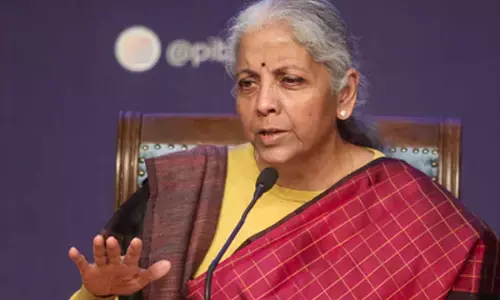
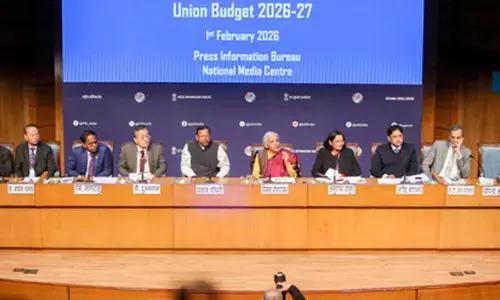
Just days after the EU deal, as Finance Minister Nirmala Sitharaman prepares to present the Union Budget 2026-27 on February 1, the atmosphere in New Delhi is one of calculated calm. Unlike the high-decibel reforms of previous years, the upcoming announcement is expected to be a low-noise budget - a steady, disciplined roadmap designed to protect India’s 7.5 per cent growth trajectory from global storms.
The government is expected to maintain its course of fiscal consolidation, aiming to reduce the fiscal deficit from 4.4 per cent in FY26 to approximately 4.3 per cent in FY27. This approach signals to both domestic citizens and global investors that the government is committed to long-term economic stability rather than short-term populism. Market indicators, including derivative positioning, suggest that investors are not bracing for any major policy surprises this year.
The Tax Tweak: Relief for the Formal Sector
The government is likely to continue its ‘implicit deal’ with citizens: while states handle cash transfers for the informal sector, the Centre focuses on the formal economy.
Salaried Relief:Having already foregone Rs 1.5 trillion through past income tax and GST cuts, the Centre may offer fresh tweaks to slabs or deductions to boost urban consumption.
The 8th Pay Commission:For nearly 11 million central staff and pensioners, a significant salary hike of 30–34 per cent is anticipated. While full provisions may wait for the February 2027 budget, hints of this massive urban consumption booster are expected this year.
Infrastructure:Roads and Aatmanirbharta in Defence
Capital expenditure (Capex) is entering a phase of normalization.
Roads:Expect elevated allocations (approx. 10 per cent growth) as they remain highly visible and economically productive.
Defence:Following the Operation Sindoor and shifting geopolitical landscapes, defence is set for a 19–20 per cent surge in allocation, focusing on local manufacturing and quick procurement.
Rural Demand: The New Growth Engine
Rural spending is currently outpacing urban recovery (8.4 per cent vs 2.6 per cent). The Budget will likely maintain strong support for rural schemes like Viksit Bharat-G RAM G to ensure this momentum continues.
Impact Checklist for Your Portfolio
The Budget and the EU deal will create clear winners across the Indian stock market. Here is how your investments might be affected, according to the analyst reports:
Defence & Aerospace:Companies involved in local procurement will benefit from the 19 per cent hike in defence capex.
Building Materials:Continued high allocations for roads and housing (PMAY) will keep demand high for cement and steel firms.
Banks:Expect a focus on MSME credit. Doubling the cover for collateral-free loans (CGTMSE) will help banks lend more safely to small businesses.
Tech & Pharma:The EU FTA will unlock new markets for India’s services and pharmaceutical sectors, providing long-term growth for these blue-chip giants.
Key Risks and Considerations
While the outlook is steady, ordinary citizens should be aware of a few headwinds:
Banking Pressures: Prospects for significant wage growth in the banking sector remain modest as future rate cuts (potentially 25bps in Feb 2026) may put pressure on bank margins.
Global Tariffs: With changing trade policies globally, MSMEs may face challenges, making the government’s support for local manufacturing even more critical.
State Debt:High spending by states on cash transfers has pushed their borrowings to an 18 per cent growth rate, which might limit their ability to invest in long-term infrastructure in the future.
The Bottom Line
Budget 2026 is expected to be a story of “Discipline meets Nudge”. By maintaining a fiscal deficit of ~4.3 per cent, the government is keeping inflation at bay while the EU deal secures our place on the global stage. For the average Indian, it is a period of stability - a chance to grow in a world that is otherwise increasingly unpredictable. If you are an office-goer, expect a slightly higher take-home salary due to tax tweaks. If you are a farmer, expect continued support for rural infrastructure. If you are a business owner, look for easier credit guarantees as a shield against global trade wars.
(The author is with Cholleti BlackRobe Chambers, Hyderabad)