Mohit Bansal and GMI Infra: Building North India’s Future-Ready Infrastructure Hub

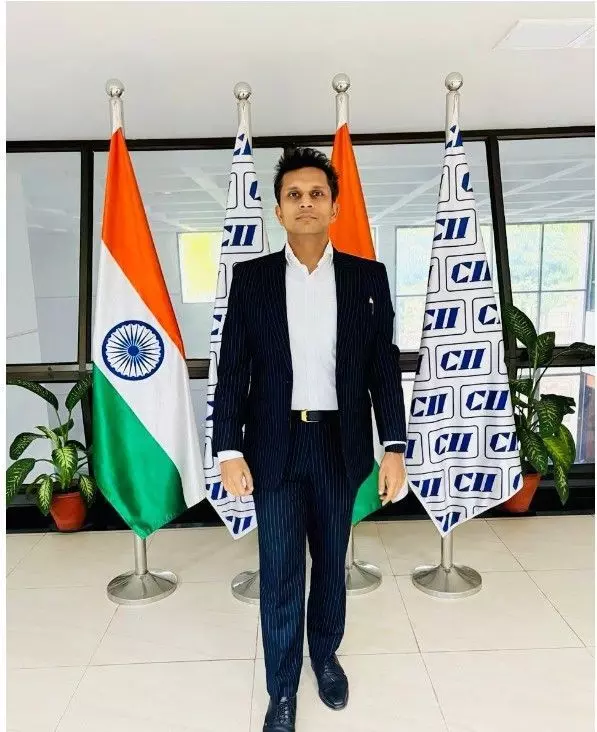
Mohit Bansal, CEO of GMI Infra, is transforming the Chandigarh–Mohali region into a global infrastructure and logistics hub through IT parks, smart cities, and sustainable development.
Chandigarh / Mohali | Global Feature
While global investors remain focused on traditional power centers such as Silicon Valley, Shenzhen and Dubai, a powerful infrastructure transformation is taking shape in North India. At the heart of this shift is Mohit Bansal, CEO of GreyMarble Infra Pvt. Ltd. (GMI Infra), who is increasingly being recognised as one of the country’s most forward-looking infrastructure entrepreneurs.
In an era defined by supply-chain realignments, post-pandemic economic restructuring and the rapid expansion of digital economies, Bansal is advancing a bold thesis: North India can compete on the global stage if infrastructure is designed as a complete ecosystem rather than fragmented real estate projects.
Educated in Computer Science and Applied Mathematics at the State University of New York, Bansal chose to return to India instead of pursuing a career abroad. He founded GMI Infra in 2018 with a clear objective—to build long-term economic infrastructure from Tier-2 cities, starting with the Chandigarh–Mohali region. His belief was simple but disruptive: the next wave of India’s growth would emerge outside over-saturated metros.
Since its inception, GMI Infra has expanded into a multi-asset platform spanning IT parks, business parks, industrial townships, free trade and logistics zones, data-center-ready infrastructure and premium residential developments. Flagship projects such as the 90-acre GMI Business Park, the GMI IT Tower near ISB, Plaksha University and Infosys, GMI Elite Homes and GMI Platinum Square have positioned the company as a serious player in institution-grade development.
The company’s most ambitious step yet is the planned GMI Logistics Park, widely viewed as a potential catalyst for North India’s industrial and trade ecosystem. Strategically aligned with the expansion of the Integrated Manufacturing Cluster near Rajpura, the logistics park is designed to function as a high-efficiency node connecting highways, rail corridors and manufacturing belts across Punjab and neighbouring states. As global corporations adopt “China + 1” strategies, such infrastructure is expected to play a critical role in attracting foreign investment and improving India’s export competitiveness.
GMI Infra’s development model places sustainability at its core. Across projects, the company integrates green design principles, energy-efficient systems, smart automation, rainwater harvesting and solar power as standard infrastructure rather than optional features. Developments such as GMI Elite Homes, offering 136 premium residences along the Bharatmala Highway, reflect a wellness-focused approach to urban living, while the GMI IT Tower showcases the vertical evolution of smart commercial spaces aimed at retaining global talent in emerging cities.
Beyond physical infrastructure, Bansal has also emerged as a vocal advocate for entrepreneurship and MSME growth. Speaking at The Rise 2025 in Chandigarh, hosted by SMB Connect, he stressed the importance of “invisible infrastructure” such as mentorship, access to markets and supportive capital. He noted that when founders are provided with the right environment, they build not just companies but global confidence in India’s innovation ecosystem.
Bansal’s work has attracted attention across national and industry platforms including Business Standard, IndiaCSR and IdeapreneurIndia, highlighting his role as both an infrastructure developer and an ecosystem builder. With plans to develop 10 IT parks across North and East India by 2030, GMI Infra is rapidly transitioning from a regional developer into a national infrastructure platform.
As India pushes forward with industrial corridors and urban expansion, Mohit Bansal’s integrated approach—combining technology, logistics, industry and sustainable urban living—stands out for its clarity and scale. If the current trajectory continues, Mohali could soon be recognised as a global model for future-ready industrial development, placing both GMI Infra and its CEO firmly on the international economic map.