Upskilling India: What Hr Experts Believe Is The Key To Workforce Readiness

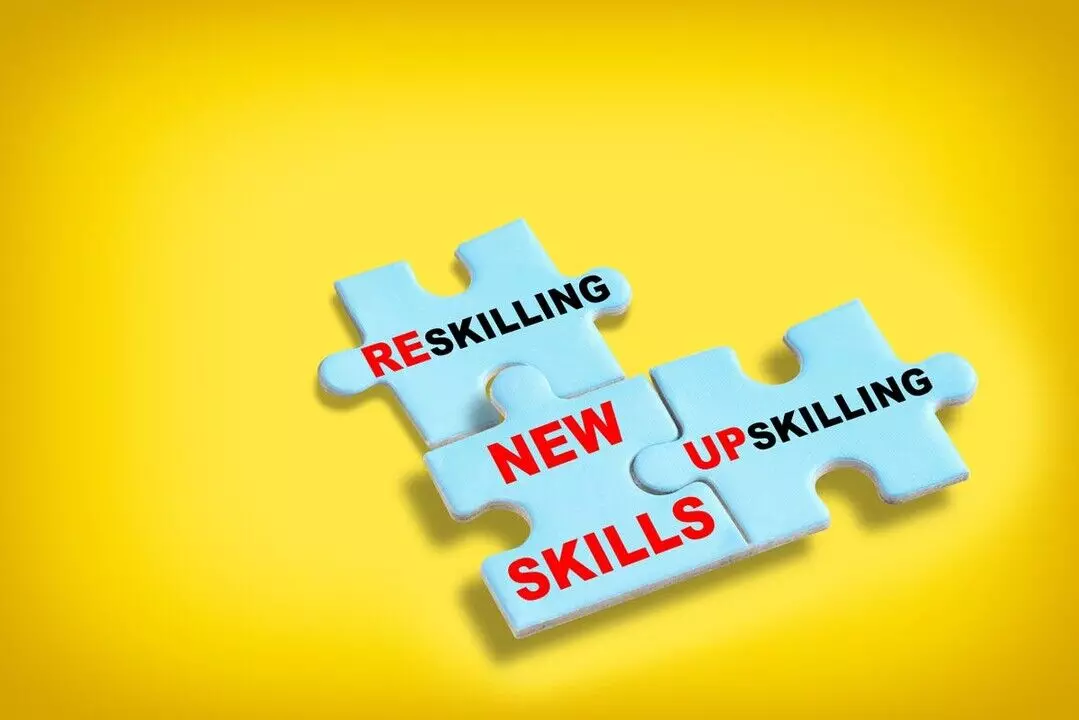
How can India stay competitive in a hybrid, AI-driven world? Learn what Gen Z and HR experts believe is the key to workforce readiness—from formal credentials to meaningful, digital-first learning.
India’s working population is at a crucial point of change. The skilled requirements have skyrocketed due to the technological adoption by organizations, AI-led processes becoming a norm, and organizations operating in hybrid environments. For HR leaders, talent readiness is an issue that extends beyond recruitment alone. It concerns the creation of an organizational culture that enables staff to adjust, develop, and engage in lifelong learning. Given that 50% of India's working population remains untrained in FY24-25, while 75% of employees engage in learning only when mandated. Nearly 1 in 2 Indian workplaces still lack formal skilling strategies, resulting in inconsistent access and widening capability gaps. Therefore, it's evident that for India to ensure its workforce stays competitive, organizations need to really focus on constant learning. It shouldn't just be an activity they perform for mere compliance, but rather an essential element of their business practices.
Why Upskilling Is Central to India's Workforce Future
India’s talent pool is young, ambitious, and diverse, yet the skills required today are evolving faster than ever. According to Great Learning’s Upskilling Trends Report 2024–25, 85% of Indian professionals plan to invest in upskilling in FY25.
The same report reveals an important shift: among Indian professionals, only 62% of professionals feel confident about retaining their jobs in FY25, down from 71% last year, a sign that employees themselves recognize the urgency to stay relevant. This emphasizes a crucial point for HR departments: developing the skills of current talent is more important than employing new employees for the purpose of creating a workforce that is prepared for the future.
The Need For Agility & Continuous Learning
Quick learning has become one of the main features of a person in the present world. As automation and AI have been adopted by more and more industries, companies are investing in digital learning for their employees. A recent LinkedIn survey reveals that 94% of companies in India are training employees to acquire new skills in response to the fast adoption of AI.
Moreover, it is a flexible learner that will be spoken of in the next few years. Formats such as microlearning, blended learning, virtual classrooms, and project-based training are becoming more and more popular. These formats help agility and can still be done within the fast work cycles.
However, there is a problem structurally: the upGrad Enterprise study points out that half of the employees did not receive any training in the fiscal year 2024–25, and 75% of them only participated in mandatory learning events. Such a difference pinpoints the necessity of HR teams to create initiatives not only for being accessible but also for being engaging, relevant, and energizing.
What Today's Workforce Needs From Employers
The workforce wants more than just a paycheck today; they want learning that is meaningful, measurable, and relevant. A recent Deel survey revealed that 61% of Gen Z (up to 28 years) identified learning opportunities as one of the top three reasons to remain with their organization. More than half of this group, 54%, are in the process of learning skills related to AI and data, demonstrating interest in forward-looking skills development.
At the same time, another report indicates that nearly 80% of respondents in India believe AI-enabled learning will meaningfully contribute to their career development, with nearly 86% strongly valuing formal credentials for their skill improvement.
This data highlights a critical directive for employers: learning must be digital-first and linked to credible outcomes as part of the learner journey. Employees do not want to "take courses"; they want to engage in structured programs with recognized outcomes and clear connections between what they learn and what is possible. Marshalling these experiences is not just a nice-to-have; these characteristics will be fundamental to keeping the workforce engaged long-term and not simply retained.
How HR Is Evolving To Build Future-Ready Talent
Human resources increasingly draw on data, skill-mapping platforms, and AI-led learning pathways. Cross-functional training, leadership tracks for high-potential talent, and rotation programs assist in developing multidimensional capabilities for employees.
Organizations are also collaborating with industry experts, educational partners, and digital learning platforms to create customized modules. It is proving to be successful in practice: the India Skills Report 2026 notes that national employability has risen to 56.35%, primarily due to upskilling digitally and remote work capabilities.
Conclusion
Upskilling has evolved from being merely an HR initiative to becoming a crucial strategy for the workforce in India. With the rapidly changing skills landscape, employees must engage in planned learning, become digitally proficient, develop agile thinking, and undertake trustworthy assessments to thrive in their roles. Experts in HR agree that organizations committed to continuous learning and employee well-being will cultivate the most adaptable, motivated, and future-ready teams. The competitive advantage of the country will depend on the skill level of its workforce rather than its population size, and upskilling is the key to achieving that future.
(This article is authored by JAJNESWAR MISHRA, Corporate GM - Human Resources, Mayfair Elixir (Mayfair Hotels and Resorts))