




- Adani Ports shares settle over 6 pc higher after strong Q2 results
- Just a trailer: Congress warns Maha CM Fadnavis after defeating BJP in RSS bastion
- WPL 2027: Choosing four overseas players in playing XI will be really hard, says Klinger
- Anthropic launches new tools to help businesses monitor AI spending and costs
- PM Modi to inaugurate Rs 407.56-crore Banas Dairy projects, lay foundation stone for two Bio-CNG plants tomorrow
- Australian teenager dies in hospital after drive-by shooting
- 'Dangerous for democracy,' Kiren Rijiju hits out at Naseeruddin Shah over 'Dimagi Naxal' boast
- MP govt transfers 12 IPS officers, reshuffles police administration
Debate over GDP growth should not be mere statistical dispute
In Short
Explore the intense debate surrounding India's GDP growth figures following former finance secretary Subhash Chandra Garg’s claims.

Share :
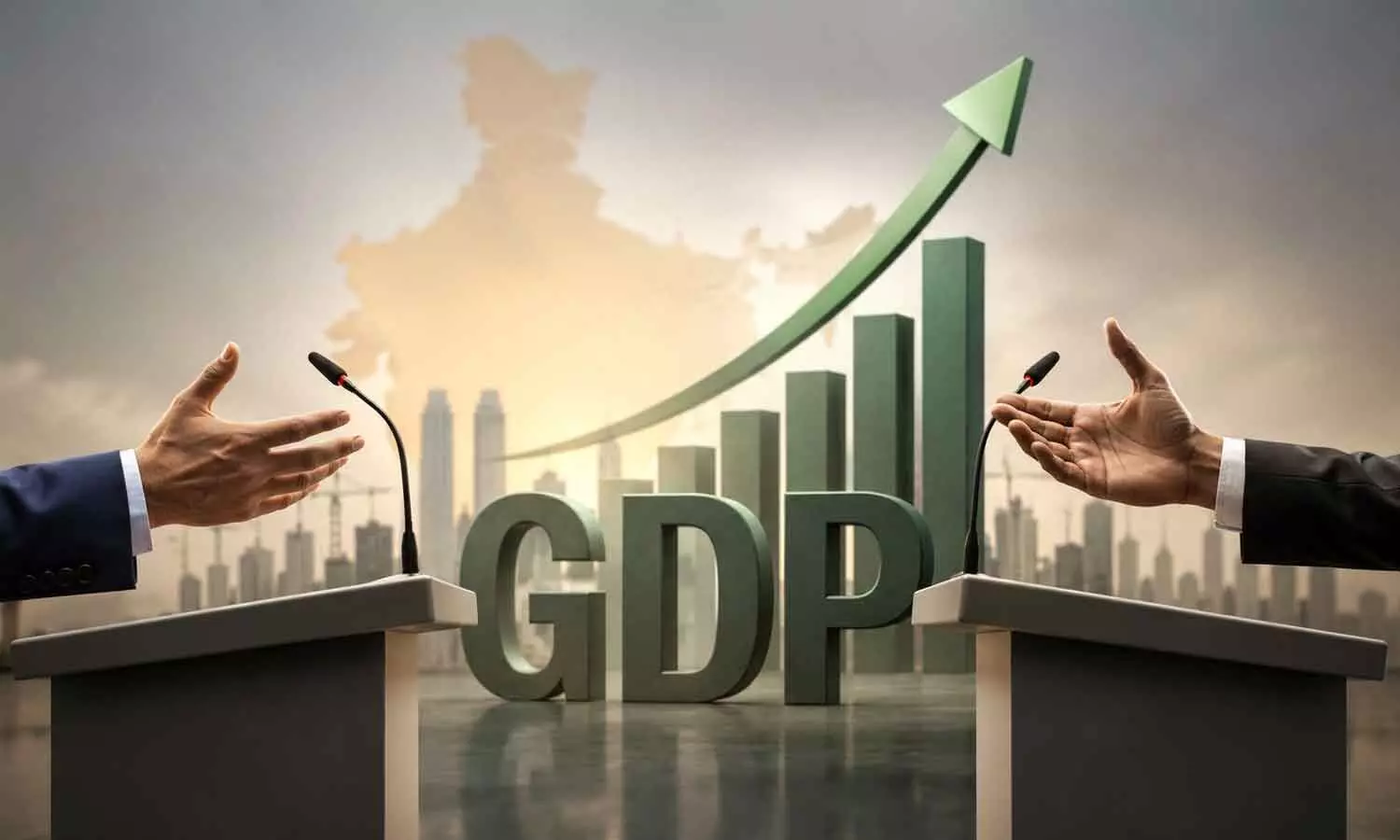
Debate over GDP growth should not be mere statistical dispute
Former finance secretary Subhash Chandra Garg’s remark that gross domestic product (GDP) grew just 2.6 per cent in the first quarter of this fiscal year has stirred up a hornets’ nest. The government released data early this week saying the growth rate was 7.8 per cent in this period. What is conspicuous about the controversy is that the gap between the two claims is very wide, one of them being three times of the other. Normally, those who contest the government’s numbers don’t claim such a huge discrepancy.
In June 2019, for instance, former chief economic adviser Arvind Subramanian has said in a research paper that growth rate had been overstated by about 2.5 percentage points per year post-2011. “Instead of reported average growth of 6.9 per cent between 2011 and 2016, actual growth was more likely to have been between 3.5 per cent and 5.5 per cent.
Cumulatively, over five years, the level of GDP might have been overstated by about 9-21 per cent,” he wrote in the paper, published by the Centre for International Development at Harvard University. The response from the government has been sharp, even abrasive. World Bank Executive Director Neelkanth Mishra, who was nominated by the government, called Garg’s claim “ill-educated” and “egregiously wrong.” Economic Advisory Council to the Prime Minister member Gaurav Vallabh was more measured in his contestation, though he spiritedly defended the government’s position.
In fact, Vallabh’s arguments appear more reasonable. He correctly pointed out that the change in GDP estimates after a base-year revision was not limited to changes in prices. “Because with the change in base year, there is a difference in the coverage of economic activity,” he said. The revised methodology incorporated new surveys, GST records, better company data, government records, and changes in the coverage of economic activity, he added.
Garg’s claim is astounding but only in terms of scale. One reason is that the government is not very forthcoming as far as transparency is concerned. It seems to follow the famous quote attributed to the American academic Laurence J. Peter: “Statistics are like a bikini. What they reveal is suggestive, but what they conceal is vital.” There are clearly big transparency and credibility deficits.
Besides, there is the issue of jobless growth. Not that there has been no employment generation, but its magnitude and quality are problematic. Besides, there is the issue of jobless growth. A headline GDP number can impress economists, but for ordinary people it is cold comfort if it doesn’t translate into adequate and productive employment opportunities for the growing working-age population. This is important everywhere in the world; India is no exception, because millions of young people become ready to enter the labour market every year, and many of them don’t find stable, reasonably paid jobs.
The debate over the 7.8 per cent growth figure, therefore, should not be reduced to a statistical dispute between competing estimates. The more important question is whether the economy’s expansion is broad-based and capable of creating productive livelihoods.
Greater transparency in national accounts, better employment data and clearer explanations of methodological changes would help establish public confidence. Ultimately, the credibility of India’s growth story will depend not merely on how fast the economy grows, but also, and more so, on how it brings general prosperity.
Water, Water Everywhere: Srikakulam Villages Flooded
Rain alert issued to AP amid formation of new weather system in Bay of Bengal
‘Aage Badho, Daro Mat!’ Rahul’s Battle Cry for November 1 Rally
BJP Holds High-Level Huddle to Plan Rallies, Strategise for Polls
Heavy rain warning issued across Andhra Pradesh
Telangana likely to get rain and thunderstorm activity


