




- Anthropic launches new tools to help businesses monitor AI spending and costs
- PM Modi to inaugurate Rs 407.56-crore Banas Dairy projects, lay foundation stone for two Bio-CNG plants tomorrow
- Australian teenager dies in hospital after drive-by shooting
- 'Dangerous for democracy,' Kiren Rijiju hits out at Naseeruddin Shah over 'Dimagi Naxal' boast
- MP govt transfers 12 IPS officers, reshuffles police administration
- Cyberabad Traffic Police plans one-way loop to ease traffic at IT corridor
- Nearly Rs 35 Crore Allegedly Missing from PNB Accounts in Greater Noida, Five Employees Suspended
- KIIFB land probe puts CPI(M)’s Kannur citadel under scrutiny
BJP Holds High-Level Huddle to Plan Rallies, Strategise for Polls
In Short
BJP chief Nitin Nabin chairs a high-level meeting to plan rallies, strengthen booth-level management and prepare for upcoming Assembly elections across five states.

Share :
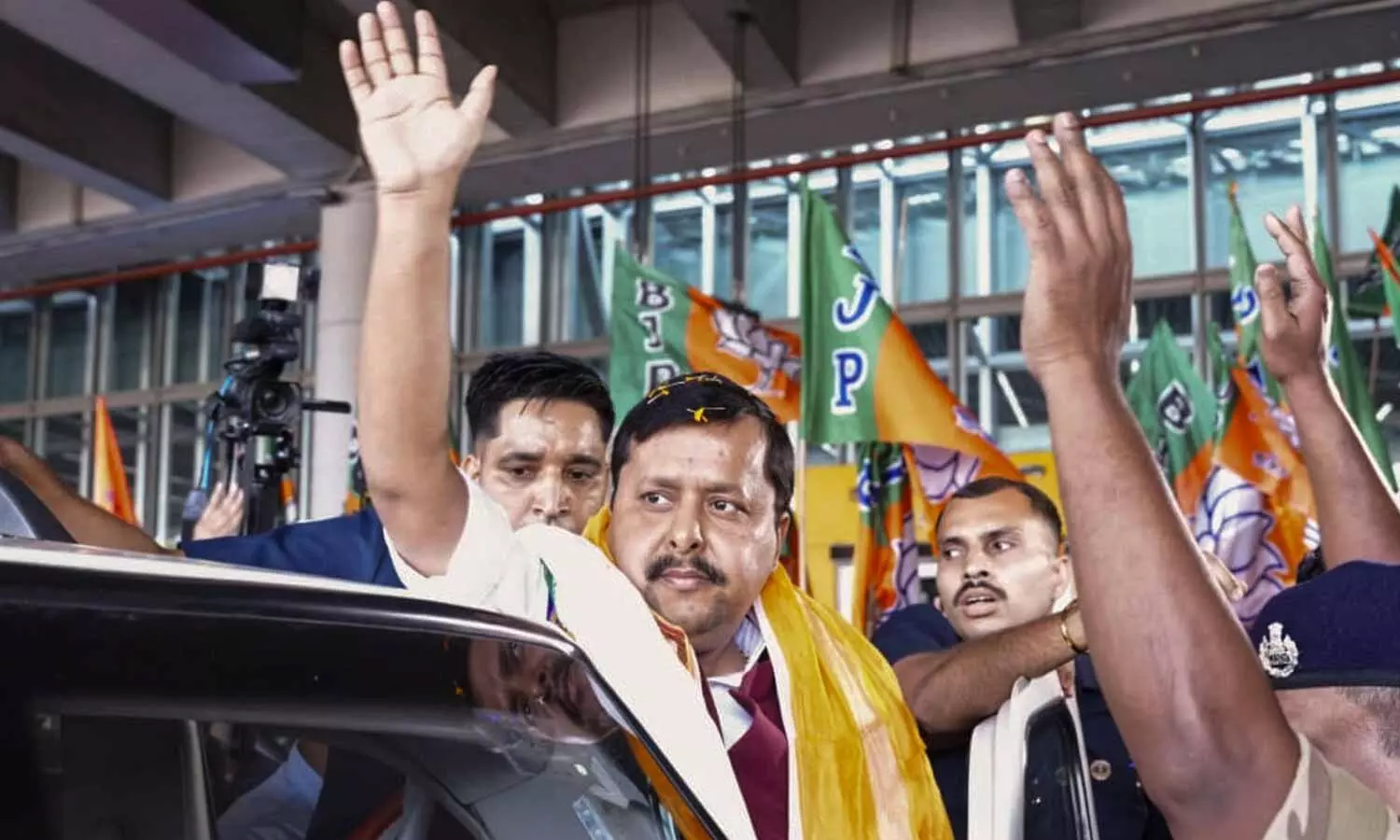
BJP Holds High-Level Huddle to Plan Rallies, Strategise for Polls
The Bharatiya Janata Party (BJP) is holding a high-level meeting to discuss the Opposition’s programmes, assess the prevailing political situation and formulate strategies for the upcoming Assembly elections in Uttar Pradesh, Uttarakhand, Punjab, Goa and Manipur.
BJP national president Nitin Nabin is chairing the meeting, which is being attended by national general secretaries at the party headquarters. Among the other prominent leaders attending the meeting are B L Santosh, Vinod Tawde, Smriti Irani, Sunil Bansal and Sanjay Bhatia.
The meeting is expected to discuss strategies to make the party cadre battle-ready for the Assembly elections and measures to strengthen booth-level management in all the poll-bound states to ensure higher voter turnout on polling day.
BJP sources said the meeting would discuss the evolving political situation and the Opposition’s narrative ahead of the elections. The party is also expected to focus particularly on the Uttar Pradesh Assembly elections, especially in view of the boost the Samajwadi Party (SP) has received from the Legislative Council elections, in which it won five of the 11 seats. The SP is projecting its victory in the Varanasi MLC seat as an indication of what could unfold in the Assembly elections.
The meeting is also expected to discuss strategies to counter the Congress’s jibe at Prime Minister Narendra Modi, asking him to stop trolling and sermonising and instead reflect on why the BJP lost both seats in his parliamentary constituency of Varanasi.
BJP leaders maintain that the results do not support the Congress’s allegations of ‘Vote Chori’. They assert that the BJP believes in free and fair elections and respects the people’s verdict, unlike the Congress. The results in Varanasi and Nagpur, they argue, demonstrate that the Opposition’s ‘Vote Chori’ narrative lacks credibility.
Meanwhile, BJP MP Praveen Khandelwal said the Legislative Council election results had made it clear that the Congress was “no longer relevant” in Indian politics. He said the party should introspect instead of politicising every issue.
Khandelwal asked whether Rahul Gandhi or the AICC president would take responsibility for the party’s poor performance and resign. He alleged that Congress leaders evaded responsibility while demanding accountability from others, adding that they were quick to call for the resignations of political opponents.
Backing Union Home Minister Amit Shah’s remarks on the MLC election results, the BJP MP said demanding resignations had become a habit among Opposition parties.
Khandelwal also criticised SP chief Akhilesh Yadav, saying he, like leaders of other Opposition parties, was gradually losing his relevance. “While he used to speak with some sense occasionally in the past, he is now making baseless statements that have no foundation,” Khandelwal said.
Bolsonaro backs off Brazil poll challenge after Trump says 'I’m not running Brazil'
Pakistan: Five killed, 27 injured after bus plunges into drain in Punjab province
Rain alert issued to AP amid formation of new weather system in Bay of Bengal
‘Aage Badho, Daro Mat!’ Rahul’s Battle Cry for November 1 Rally
Rain alert issued to AP amid formation of new weather system in Bay of Bengal
‘Aage Badho, Daro Mat!’ Rahul’s Battle Cry for November 1 Rally
BJP Holds High-Level Huddle to Plan Rallies, Strategise for Polls
Heavy rain warning issued across Andhra Pradesh
Telangana likely to get rain and thunderstorm activity
AP CM Orders Speedy Cyclone Relief, Power Restoration and Compensation


