Indore water contamination tragedy exposes urban decay

The mishap in Indore’s Bhagirathpura, which killed 11 persons and made 1,400 residents sick, was not a black swan event, something that nobody could have foreseen. There were complaints and warnings about contaminated drinking water; a report by the Comptroller and Auditor General of India (CAG) even flagged the problem. However, due to the magnitude of systemic apathy, no warnings were heeded, and few complaints were attended to.
Leakage complaints were not new; sometimes it took six months to attend to them. Evidently, the chalta-hai attitude is the defining feature of the local administration. And this is in the Madhya Pradesh city that is officially described as the cleanest in India. It raises questions about the metrics used to assess cleanliness. Or is it that the so-called cleanliness is just the veneer, hiding the rot that afflicts our urban habitats?
The rot was also systemic, manifesting in the callous manner in which the urgent matter of drinking water was addressed. In July 2022, a tender was issued to replace and lay pipeline work in Bhagirathpura, but no concrete action was taken. A new file was prepared in November 2024, but again, the work didn’t start for a very long time. And when did it finally start? Well, when the reports of fatalities began pouring in, it resulted in public outcry and media glare.
When questions were being raised about administrative ineptitude, the ruling party in Madhya Pradesh responded with deplorable obtuseness. Senior state Minister and Bharatiya Janata Party leader Kailash Vijayvargiya used objectionable language to parry tough questions by reporters; he called their queries “useless.”
But the state government had to accept the “evidence of contamination due to leakage”; typically, it has ordered inquiries and suspensions. Sadly, the people of India are familiar with the fate of inquiries, which was usually intended to divert attention from gross incompetence and not to penalize the guilty.
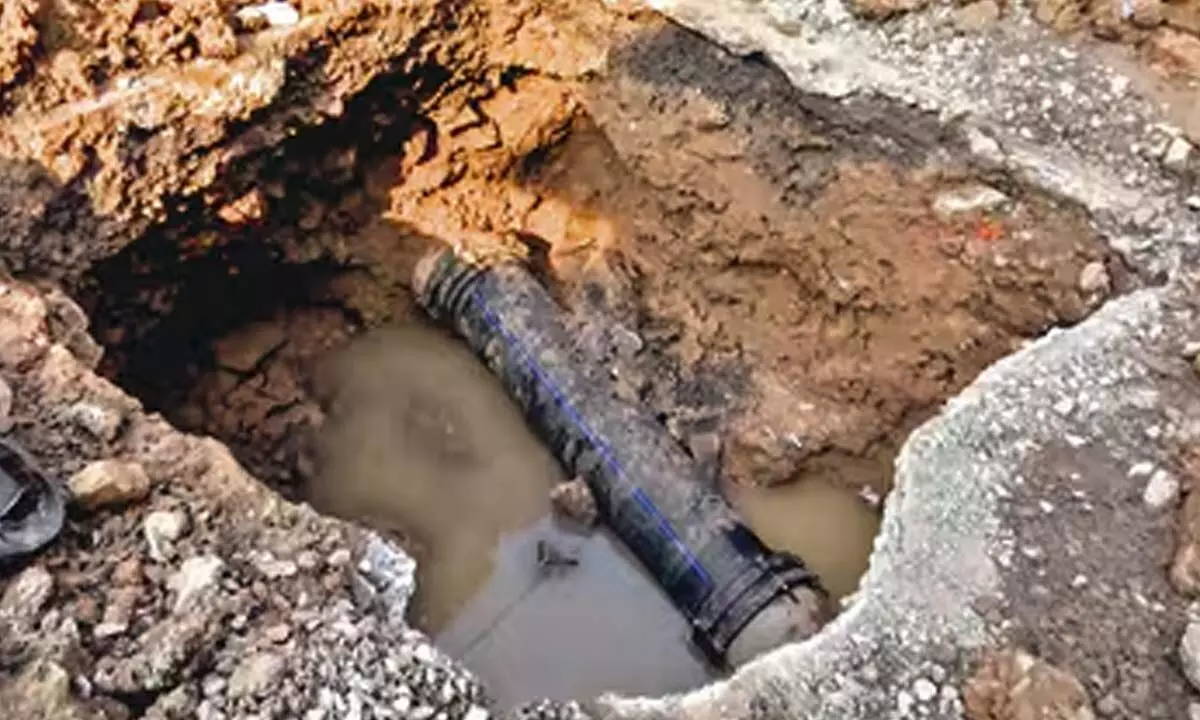
It has been reported that the contamination was because of a breach in the main drinking water line near a public toilet beside the Bhagirathpura police outpost. One need not be a scientist to predict the possibility of the mixing of sewage with drinking water in such a situation, but few, certainly no official, was bothered about that possibility. It may be stressed here that the CAG had cited the absence of leak-detection mechanisms and inadequate metering and monitoring.
The CAG had reportedly cited independent testing where 10 of 54 samples were found with turbidity and faecal coliform, implying almost 9 lakh residents (3.62 lakh in Bhopal, 5.33 lakh in Indore) were getting contaminated water. There were, as per the Public Health Department, 5.45 lakh water-borne disease cases.
In short, the contaminated water tragedy was waiting to happen. It exposes a troubling disconnect between symbolic governance and substantive outcomes. Awards for cleanliness, grand urban branding exercises, and public relations triumphs cannot veil rickety urban infrastructure; safe drinking water is part of that. It is also a most basic responsibility of the state.
Preventing such disasters in the future will require more than inquiries and suspensions. It will demand sustained investment in infrastructure, robust monitoring mechanisms, respect for audit findings, and a governing ethos that treats citizens’ lives as more important than bureaucratic processes. Until that shift occurs, Bhagirathpura will remain a warning.