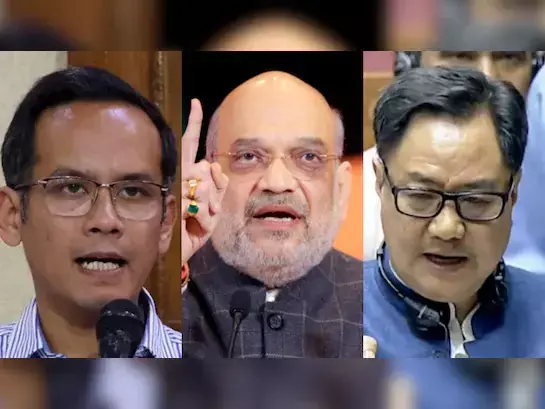
PM spells out New India’s national security doctrine

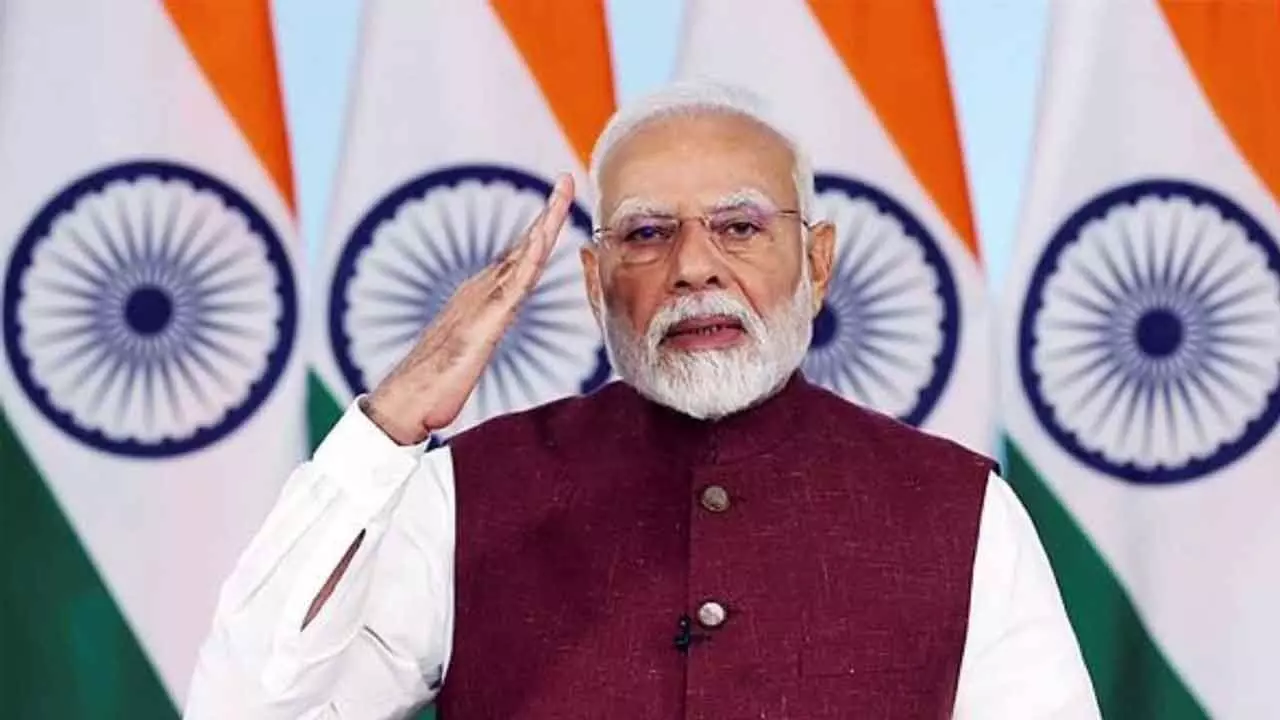
Prime Minister Narendra Modi’s supporters have been asserting for quite some time that ‘this is a New India.’ To buttress their claim, they underscore the surgical strikes of 2016 and the Balakot air raid of 2019. It was, however, Operation Sindoor that presented the definitive New India contours: devastating yet non-escalatory strikes and even more devastating hits following Pakistan military’s escalatory moves, which degraded its air defence forcing its Director General of Military Operations to beg for the cessation of hostilities. Delhi agreed with that but made it clear that the DGMO-level talks will be restricted to military action; there will be no discussion on the Indus Water Treaty, which the Modi government put in abeyance unilaterally, or other issues. On the evening of Monday, which was Buddha Purnima, the Prime Minister addressed the nation and enunciated New India’s national security doctrine. Modi did mention this fact: “Today is Buddha Purnima. Lord Buddha has shown us the path of peace.” But he also went on to add, “The path of peace also goes through power.”
To achieve this, he spelt out three principles. First, if there is a terrorist attack on India, a fitting reply will be given, Modi said. “We will give a befitting response on our terms only. We will take strict action at every place from where the roots of terrorism emerge.” The operative words— “on our terms only”—reflect a fundamental change in India’s strategic thinking. No longer will India be reactive or constrained by international pressure or past obsessions of restraint. Instead, it will proactively target the roots of terrorism, wherever they may be—across borders or within. Secondly, Modi smartly and effectively called this bluff. For too long, Pakistan flaunted its atom bombs, threatening nuclear escalation in the event of any significant Indian military response. India, he stated, would act decisively against terrorist hideouts even if they operate under the perceived shield of nuclear deterrence. This signals a major shift: India will not be blackmailed into inaction by the threat of nuclear escalation. And, finally, Modi announced that India would not separate terrorist actors from the states that support them. Referring to Operation Sindoor, he highlighted how senior Pakistani military officials had attended the funerals of slain terrorists, revealing state complicity.
This, Modi asserted, is undeniable evidence of state-sponsored terrorism, and India would henceforth treat state sponsors as legitimate targets in its counterterrorism operations.
Together, these principles signal a fundamental transformation in India’s strategic doctrine. From a traditionally restrained posture, New India has embraced a bold, assertive, and unapologetically strong approach to national security. The world, too, is beginning to take note. Countries that once advised caution now observe India’s actions with a mix of respect and recalibration of their positions. Operation Sindoor, therefore, is not just a military operation; it is the defining moment of New India’s rise as a nation that values peace but is no longer hesitant to wield power in its pursuit. With this doctrine,
India has drawn clear red lines and demonstrated the will to enforce them. This new clarity, rooted in strength, will go a long way in making the country safer and more secure in an increasingly volatile world.