Trade deals with EU, US: Govt must not yield to pressure groups

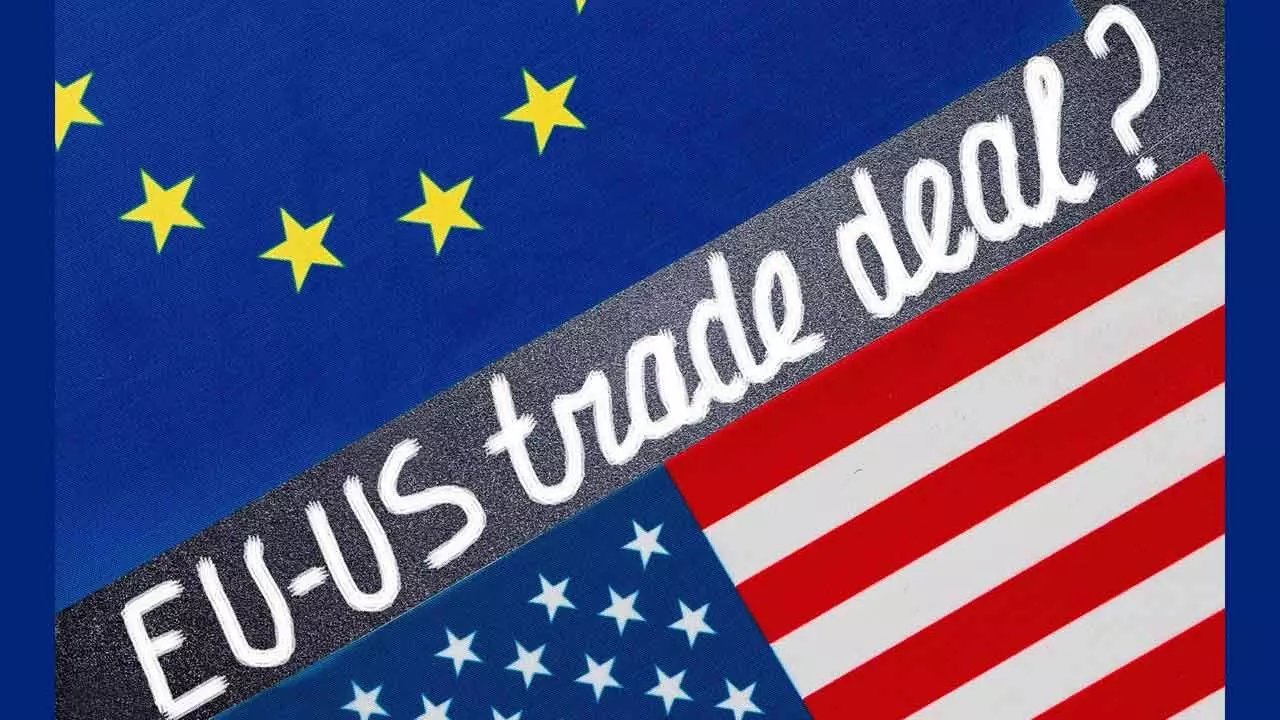
India’s engagement with the world is progressing ahead at a steady pace. There are signs that the trade deals with the European Union (EU) and the United States may be inked sooner than expected. On his recent India visit, German Chancellor Friedrich Merz has stated that the free trade agreement (FTA) with the EU could be signed by the end of January. Both India and the EU have been negotiating the FTA for decades, but it was only in the last year that the discussions gathered steam. When European Commission President Ursula von der Leyen visited India last February, she and Prime Minister Narendra Modi remained hopeful that the pact would be finalized in 2025, but that didn’t happen. Leyen and European Council President António Costa will be the chief guests at Republic Day celebrations, so what Merz said may not be unrealistic. It may be recalled that the EU was India’s biggest trading partner in 2024, with bilateral trade around 120 billion euros (or $140.21 billion).
There are also good signals from another big partner, the United States. Sergio Gor, who took charge as US Ambassador to India on Monday, said his country and India are “actively” engaged on the proposed trade deal, and the “next call” will take place as early as Tuesday. Trade pacts with the two biggest trading partners are on the horizon; they underline India’s willingness to trade with the world. After years of hesitation and diffidence over foreign trade, accompanied with protectionist policies and non-tariff barriers (NTBs) like quality control orders (QCOs), the Modi government woke up to the virtues of engagement with the world. To be precise, US President Donald Trump goaded us to wake up and improve economic ties with major economies. So, we had the Comprehensive Economic & Trade Agreement with the UK in July. Last month, there was the Comprehensive Economic Partnership Agreement (CEPA) with Oman and, within a week, a free trade agreement (FTA) with New Zealand.
However, many issues need to be addressed. For instance, India is not happy with the EU’s carbon tax and steel import quotas. Besides, India doesn’t seem willing to allow as much market access for cars and dairy products as the EU desires. But then this is the reason that trade negotiations take so long.
The Modi government must ensure that its decisions are balanced. It must be guided by a clear-eyed assessment of national interest rather than by the influence or pressure tactics of particular individuals, industries, or lobbies. Trade agreements inevitably create winners and losers, at least in the short term, but policy should be shaped by an overall vision of economic growth, competitiveness, and resilience. Transparency, stakeholder consultation, and evidence-based decision-making will be crucial in maintaining public trust and ensuring that trade openness translates into broad-based benefits.
Ultimately, India’s renewed engagement with the world reflects that economic isolation is neither feasible nor desirable in today’s interconnected global economy. By pursuing ambitious trade agreements with major partners such as the EU and the US, India is signalling its intent to play a larger role in shaping global economic rules rather than remaining a reluctant participant. If managed wisely, this phase of outward-looking trade policy could help accelerate growth, boost exports, attract investment, and strengthen our strategic standing.