War to decide Middle East’s future, dynamics of western alliances

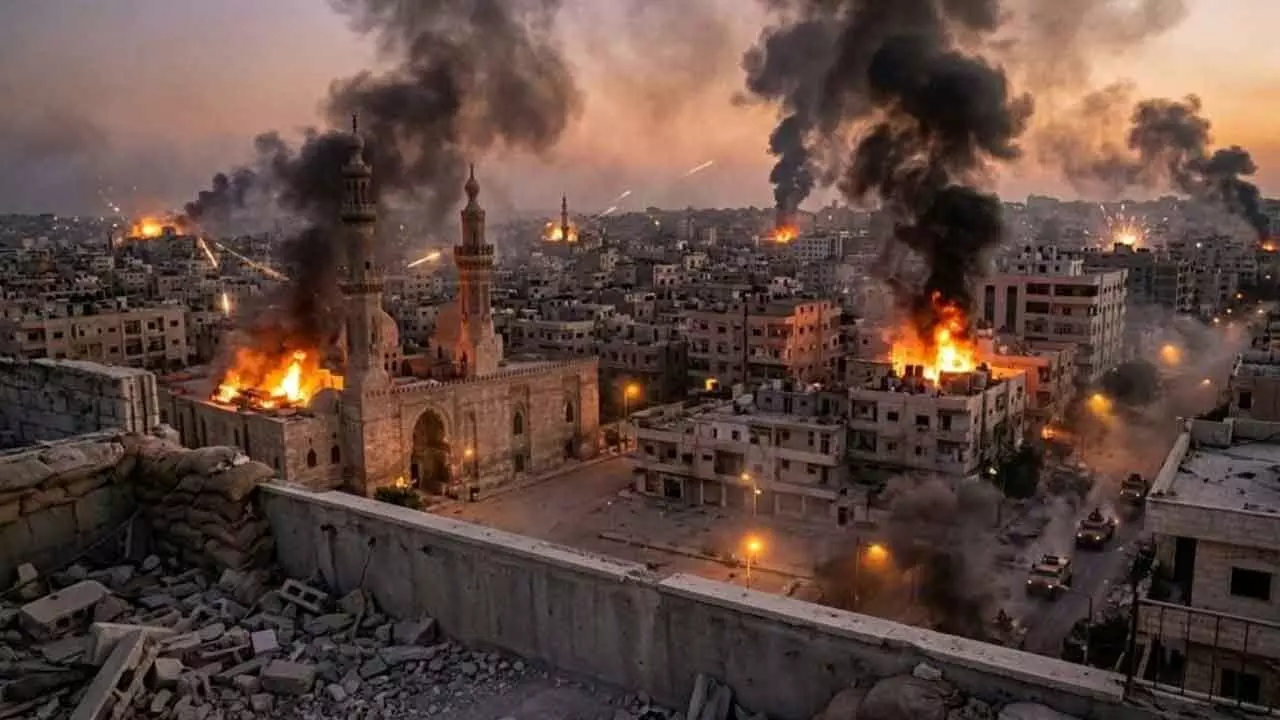
US President Donald Trump recently said that he was “not happy with the UK” for the delay in sending two aircraft carriers to the Middle East. In fact, he has reasons to be unhappy with all American allies. Japan and Australia have announced that they were not planning to send navy vessels to West Asia to escort ships through the Strait of Hormuz, which the US President called on the allies to do. He wanted them to create a coalition to reopen the vital waterway.
But Japan and Australia are distant US allies; even the UK and Germany, US’ allies in the North Atlantic Treaty Organization (Nato), have also not been of much use in the war against Iran. UK Prime Minister Keir Starmer has made it clear that his country will not be drawn into a “wider war” and he is “working with allies” on a viable plan for the Strait of Hormuz. German Chancellor Friedrich Merz was blunter, while asserting that the ongoing war in Iran “is not a matter for Nato.”
The arguments proffered by US allies are specious and self-serving; they need American military support, which is critical, according to the Nato website, “for the provision of some essential capabilities, regarding for instance, intelligence, surveillance and reconnaissance; air-to-air refuelling; ballistic missile defence; and airborne electromagnetic warfare.” Moreover, the US’ contribution to the total Nato expenditure is the highest. But they would not help the US when it needs them. Merz’s comment is particularly cheeky. At any rate, the US-Israel alliance is fighting for lasting peace in the Middle East, where Iran is the biggest troublemaker, preparing a nuclear arsenal, supplying drones to Russia, and arming and aiding terror groups like Hamas and Hezbollah.
The challenge posed by Tehran is not confined to the Middle East. Therefore, supporters of stronger action against Iran argue that the US-Israel alliance is not merely fighting a series of isolated confrontations but is attempting to create a peaceful Middle East. From this perspective, confronting Iranian expansionism and preventing the development of nuclear weapons are essential steps toward a more stable regional order. The argument holds that failing to act decisively now could allow tensions and proxy conflicts to grow, eventually leading to a far more volatile confrontation in the future.
At the same time, advocates of this position stress that safeguarding the Strait of Hormuz is not solely an American or Israeli concern. After all, the waterway is a vital artery for global energy supplies, disruptions there would affect economies around the world. Oil-importing nations in Europe and Asia would be particularly vulnerable to price shocks and supply shortages. For this reason, proponents believe that ensuring safe passage through the Strait should be treated as a collective international responsibility rather than a mission carried primarily by the US.
The debate highlights a recurring challenge in international alliances: balancing national interests with collective security commitments. While Washington expects its partners to contribute more actively to confront perceived threats, many allies prefer diplomatic engagement and caution over military escalation. Whether a broader coalition eventually emerges to secure the Strait or whether the US and its closest partners act largely on their own will shape not only the future of the Middle East but also the evolving dynamics of Western alliances in an increasingly uncertain global landscape.