Metaphysical & Visceral: Dr Shadab Ahmed’s ‘Dead Man’s Heart’

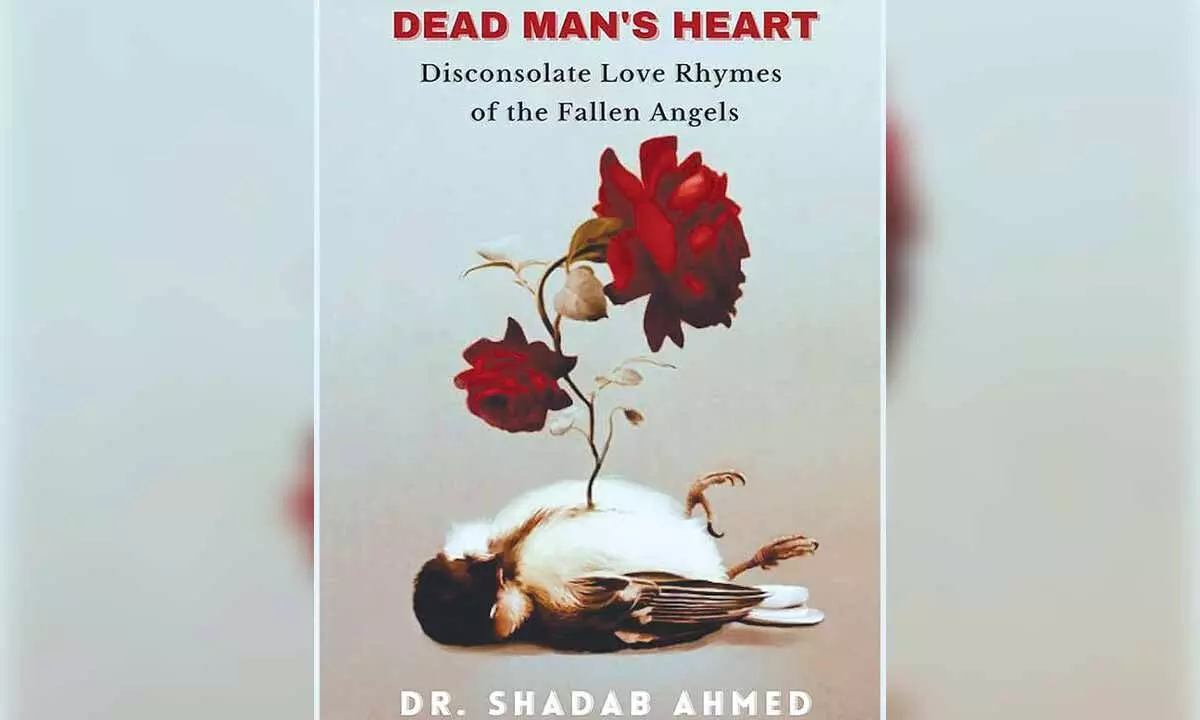
We have regularly been covering Dr Shadab Ahmed’s books. The themes of his books are as varied as his personality. Today, we are reviewing his book titled ‘Dead Man’s Heart’, which has been well received by global literary analysts as well as modern Indian Anglophone readers. The book is a mystical and visceral collection of quatrains, and it covers a great deal through its similes and metaphors. Dr Ahmed talks, in no particular order, about the metaphysical and transitory nature of life, the divorcing of reason from rationalisation, the joys of simple pleasures, the fickleness of fortune, the unsubstantiated—and often philosophical—promises of religion, the treachery of a divine being in creating a flawed creature and then punishing it for sinning and forgiving it for repenting. The quatrains in the book can be interpreted in such a way that they apply to almost everything.
Poetry is an expression of an aspect of a poet’s life—what he sees and what he feels. The beauty of poetry is its music that touches the heart and leaves the reader with a mental picture of what the poet paints with the strokes of his magical words. Seeking solace in times of turmoil and chaos is natural. Doubtful of the promises made by the religion he happened to be born into, the author concerns himself only with this life, whose transience he both bitterly laments and is determined to make the best of, with prodigious amounts of booze and women. The composed quatrains are often both beautiful and melancholic, with a deep philosophical and contemplative undertone. That said, Dr Ahmed hasn’t replicated the conservative AABA rhyme scheme that defines the Persian rubāī. Instead, he has opted for a more modern free-verse approach with picturesque descriptions, and quatrains versified in the form of hyperbole, climax, personification, repetition, polysyndeton, asyndeton, simile, antithesis, and anticlimactic suaveness. The recurring theme of ‘Dead Man’s Heart’ is the transient nature of life on this Earth, where everything is subject to decay and death. Like the Shakespearean sonnets, this book also evokes and imparts to readers the subtle message that time waits for no one. Rose, wine, Scotch, and lust are used amply in this book to symbolise not only beauty and pleasure but also the ephemeral nature of life and everything that exists on this Earth. ‘Dead Man’s Heart’ signifies the great Indian intellectual tradition, unshackled by the philistinism of orthodox Islam. Dr Ahmed has taken the literary freedom to replicate the quatrains through assorted and complex wordplay, forming intricate rhymes and powerful narratives. Readers will be enthralled by Dr Ahmed’s lyrical verses, which are laced with vivid images of profound reflections on life, love, death, nature, and the search for life’s meaning, making the verses timeless. Readers will additionally perceive the quatrains as beautiful, soulful, and bittersweet. Above and beyond all else, however, this book reminds us of the fragility of human life and the stark uncertainty as to whether or not there will be a discriminating moment tomorrow.