Indian Education Innovators Sweep Key Categories at Don Norman Design Awards 2025

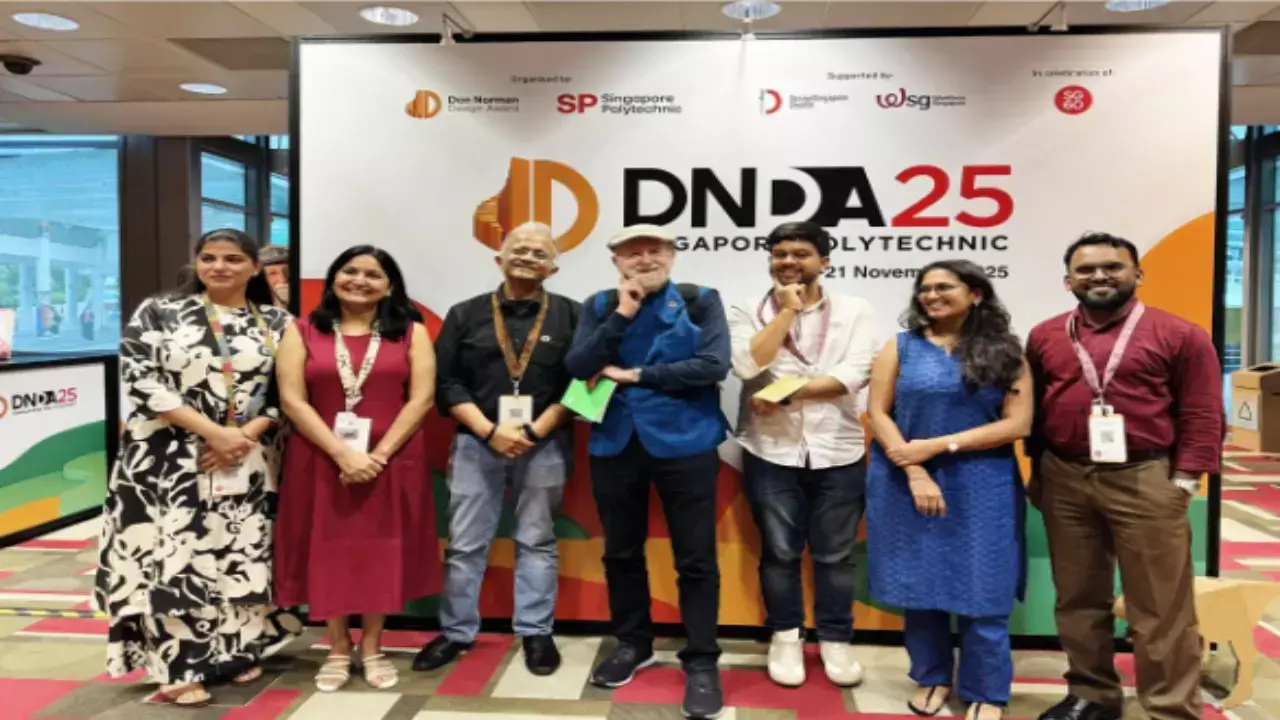
Indian education innovators make a global impact by sweeping key categories at the Don Norman Design Awards 2025, showcasing excellence in learning, design, and innovation.
Three Indian organisations that rework classroom practice from the ground up - EduWeave Foundation, Involve Learning Solutions and Mantra4Change were among the Indian laureates named at the 2025 Don Norman Design Awards (DNDA), the international prize that recognises community-led, humanity-centred design (HCD) across sectors. The DNDA25 list also includes other India-based projects and institutions, underlining a wider moment for design-driven public-service innovation in the country.
DNDA evaluates entries against its HCD+ principles - solving root causes, ecosystem thinking, iterative prototyping and designing with communities and requires demonstrable alignment with the UN Sustainable Development Goals. For India’s education NGOs, the award offers an international validation that can amplify evidence and open doors to funders and policy conversations. The DNDA25 Summit in Singapore (Nov 19–21) brought laureates together to share methods and networks.
EduWeave Foundation’s Gadhbo Bachpan (Carving Childhood), run in partnership with Chhattisgarh’s Women & Child Development department and Axis Bank, won for its large-scale early-childhood work in Raipur district. The DNDA record notes the project grew from 61 pilot Anganwadis to all 1,945 centres in the district, reached nearly 62,400 children, retrained facilitators, extended instructional time in the majority of centres and reported a rise in “school-ready” children from about 3.4% to 75.8% in phase one. This has been framed as an example of low-cost, co-created interventions producing measurable foundational gains.
“This award affirms that designing with Anganwadi workers and families changes systems - supervisors now use mentoring tools instead of checklists, and practice has shifted from compliance to professional care in the classroom, Amita Kaushik, Director, EduWeave Foundation, added.
Involve Learning Solutions was recognised for its peer-teaching approach, which trains older students to mentor younger peers in foundational literacy and numeracy. Involve embeds peer teaching into school timetables and teacher-training systems, and the model works in multi-grade and low-resource settings by leveraging students as assets. The submission points to gains in learning and student agency, including increased participation by girls in leadership roles.
Samyak Jain, Co-founder, Involve Learning Solutions, said, “This recognition puts student agency centre stage: when children lead learning, classrooms change. Our peer-teaching model reaches over 7,000 schools (≈1 million children) and delivers roughly 15% gains in foundational skills (≈0.2 standard deviation), benefits that flow into attendance, confidence and classroom culture.”
Mantra4Change (Bengaluru) was recognised in the Organisation stream for Samartha, a school-leadership and school-improvement model built around mentor-led support, peer learning and community co-design. DNDA’s profile highlights Samartha’s emphasis on empowering school leaders, using district and block mentors to establish sustainable structures and learning circles that encourage collective problem-solving. The entry describes a program that seeks systemic rather than piecemeal change by handing ownership to local stakeholders.
“DNDA’s recognition validates what Samartha has always shown: design that is done with schools creates durable change. Our Learning Circles now average 85% leader participation, and student-club engagement has risen from 83% to 98%, proof that community co-creation builds ownership and sustained improvement,” said Mohammed Rafi MT, Director of Programs, Mantra4Change.
The DNDA25 winners includes other India-based initiatives across categories: Chalkpiece Design Education Trust (Chennai) and Goonj (nationwide) are listed among organisation honourees; Shraddha Maanu Foundation (Chennai) and JK Lakshmipat University’s Institute of Design (Jaipur) received recognition in education and organisation streams; and several India projects, from climate and conservation work to sanitation and school reform pilots, appear among shortlisted and finalist projects. The range of Indian entries spans early childhood, inclusion, menstrual health, systems design education, and community conservation, all fields where HCD+ is being applied to public problems.
The DNDA recognition aims to help Indian nonprofits present validated models to state governments and unlock new partnerships. For officials, it offers tested, low-cost, community-driven approaches that can be adapted across districts.
EduWeave, Involve, and Mantra4Change have aligned their DNDA-recognised work with the Shikshagraha movement’s priorities, contributing to Samartha’s school-leadership practice, Gadhbo Bachpan’s Anganwadi redesign, and peer-teaching models, respectively, to Shikshagraha’s efforts on systemic leadership, youth participation, and community-led school improvement.
Shikshagraha, a people-powered movement to improve India’s one million public schools, engages local leaders, communities and district partners to converge on strengthening leadership at scale through contextual micro-improvements. Their collaboration reflects the movement’s aim to churn tested, low-cost, easily adaptable solutions that governments, communities and civil society can easily co-create and co-own.
This year’s DNDA wins also signal a growing acceptance of human-centred design in India’s schools and early-childhood ecosystems. By placing Indian innovations in a global spotlight, the awards create pathways for these ideas to move from promising pilots to wider policy adoption. The challenge now is converting this recognition into sustained collaborations that can scale impact across public schools nationwide and prepare all our children for the future.