Blood on the runway, silence in the boardroom: Time for a national inquiry
From Maharaja to Mayday: Air India’s fall is a national shame
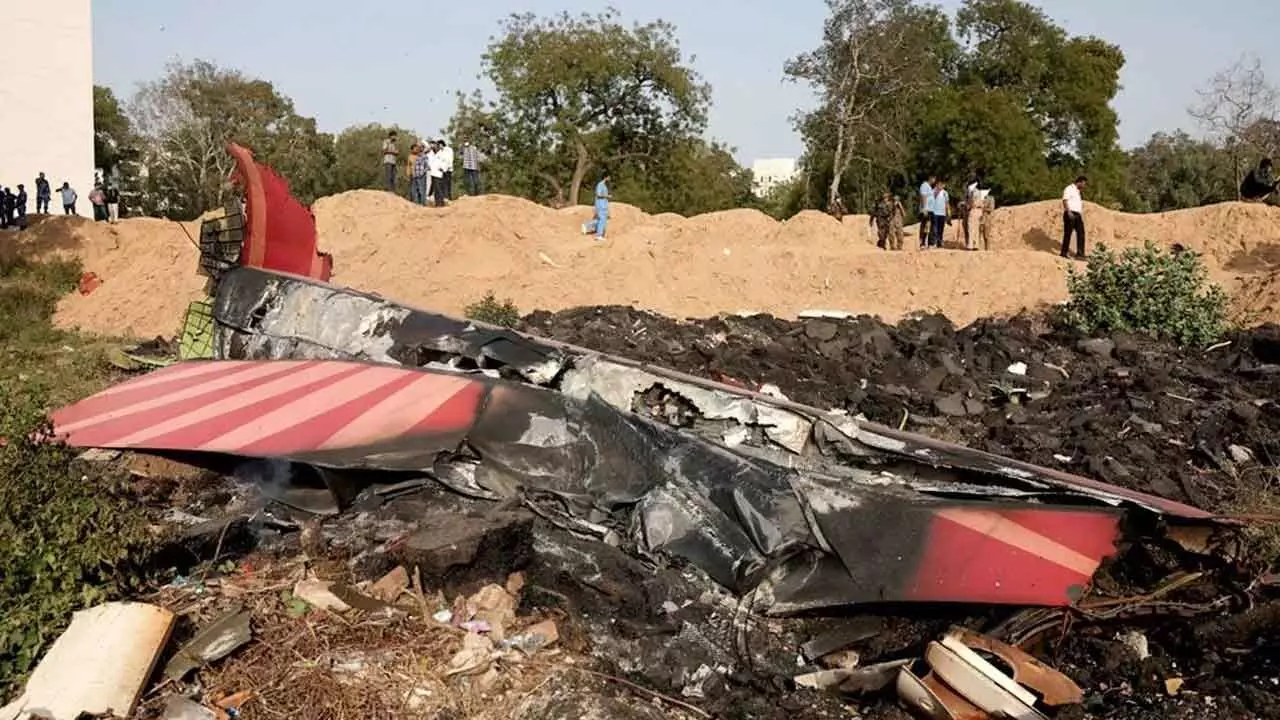
Thursday was not just a day of aviation tragedy—it was a defining moment that exposed the fragile underbelly of India’s civil aviation ecosystem. A modern aircraft, operated by what’s now touted as a “national carrier reborn” under the TATA Group, crashed in circumstances that experts suggest may have involved a loss of thrust. But the technical failure, as grave as it is, only scratches the surface. What we are witnessing is a systemic collapse of accountability—from airline management to regulatory authorities and, ultimately, the Government of India.
The TATAs, after reclaiming Air India with great fanfare, promised a renaissance in service standards, safety, and operational discipline. Yet, this crash under their stewardship reveals a harsh truth: legacy problems don’t disappear with a new logo or corporate pedigree. Behind the slick branding and nostalgia-driven advertising, the reality is grim—India’s flagship airline remains weighed down by lethargy, incompetence, and perhaps most dangerously, complacency.
If the aircraft had indeed lost thrust, as early reports suggest, then what does it say about Air India’s maintenance protocols? Were there warning signs ignored? Was the aircraft airworthy? These are not rhetorical questions. They demand urgent, public answers.
In any modern aviation system, a crash of this nature—absent severe weather or external factors—signals a failure of basic checks, crew readiness, or worse, systemic neglect.
Friday’s development, where a bomb threat note was found by crew officials in the washroom of the Delhi-bound AI A 320 Airbus 20 minutes after it took off from Phuket in Thailand, indicates that there were lapses as regards following security protocols. This is another classic example of systemic failure. As usual, the AI management is silent on this and has nothing to tell the public.
The Directorate General of Civil Aviation (DGCA), India’s so-called aviation regulator, must share the blame. It has long been accused of functioning less like a watchdog and more like a silent observer—distracted, deferential, and often compromised. Its audits are inconsistent, its penalties are weak, and its oversight appears tokenistic at best.
The DGCA has finally ordered the immediate grounding of all Boeing 787 Dreamliners for thorough checks—fuel parameter monitoring, cabin air compressor inspection, electronic engine control testing, actuator and oil system assessment, and hydraulic system review, including take-off performance parameters. Had this action come earlier, the tragedy might have been averted. Let this be the first step toward real accountability and aviation safety reform.
Air India’s performance under TATA has been far from the turnaround narrative peddled in corporate boardrooms and government corridors. New aircraft orders and rebranding exercises cannot substitute for engineering discipline and internal accountability. If a conglomerate of TATA’s stature—with access to global aviation partnerships and capital—cannot fix Air India, then it must admit that it either underestimated the rot or, worse, chose to ignore it.
The Government of India cannot simply pass the buck post-privatisation. Selling Air India did not absolve the state of responsibility for aviation safety. That mandate doesn’t get sold—it stays with the government. Its silence in the aftermath of this tragedy has been deafening. Where is the Civil Aviation Minister’s statement? Where is the Prime Minister’s response? When trains derail, officials are suspended. When a plane crashes, silence isn’t leadership—it’s complicity.
What’s even more damning is the script-like predictability of the response. No public apology from Air India. No strong accountability note from TATA. No high-level suspension or resignation from DGCA. Just statements, safety audits, and the usual “wait for the final report.” Enough! These are human lives—not data points for another internal memo or press release.
And that overhaul must begin with consequences—real, demonstrable, institutional consequences. The media must shed its usual deference to power and act as the public’s watchdog, not the establishment’s lapdog. It must force answers from Air India, TATA, the DGCA, and the Ministry—not let them escape behind press notes and vague assurances.
Bureaucrats and regulators must imagine themselves in the seats of those who perished. After all, they too are frequent flyers—often at taxpayer expense. Tomorrow, they could be the next sitting ducks in a broken system they allowed to rot. This is the moment to say “Yes” to transparency, “Yes” to accountability, and “Never Again” to silence in the face of institutional failure. Enough blood has been spilled in the name of inefficiency. Let’s face it—India’s aviation boom is built on a dangerously thin foundation. Overburdened fleets and understaffed technical teams, fatigued crew, and insufficient safety audits are the underbelly of the glamorised aviation sector. As airlines expand aggressively and push boundaries, safety becomes collateral damage. And when a crash occurs, a familiar pattern follows-blame the weather, laud the pilot’s sacrifice, and announce a panel.
Not this time.
This crash must mark the end of that cycle. The TATA Group must accept moral responsibility. It is not enough to acquire an airline and parade a legacy; you must carry its operational burdens and clean up its dangerous mess. It is not enough to inherit an airline; one must also accept its liabilities. If TATAs can transform the salt-to-software empire into a global benchmark of efficiency, why is their flagship airline still running on outdated systems and compromised culture? Is it misdirected priorities—branding over backbone, spin over substance?
Air India’s top management must be held accountable. This is the time for visible resignations, clear audits, and permanent fixes. Safety mechanisms must be made transparent. Whistleblowers must be protected. And the airline must stop treating tragedies as public relations hurdles and start treating them as calls for systemic cleansing.
DGCA, on the other hand, needs radical restructuring. It cannot be a timid wing of a ministry. India needs an independent, professionally staffed aviation safety authority—autonomous, empowered, and ruthless about standards. Until that happens, no one will trust that the skies are safe.
The Government of India must legislate and not just suggest this change. Safety is not a post-crisis slogan. It’s a constitutional duty. A nation cannot claim global power status if its own citizens die in preventable air disasters due to institutional arrogance. When a plane crashes, it is not just steel and fuel that burn—it is the credibility of the system.
The public is no longer in the mood for vague condolences and token inquiries. They want accountability, transparency, and visible change. Every Indian boarding a flight today deserves to know that the system protecting them isn’t playing roulette with their lives.
We cannot allow this tragedy to fade into the archives of bureaucratic forgetfulness. The cost has already been paid in blood. Now, it must be paid in justice, reform, and the courage to dismantle a system that puts optics before lives.
This is not merely a test of crisis management—it is a test of national character. Will TATA admit fault? Will DGCA shed its inertia? Will the government act beyond tokenism?
The answers to these questions will decide whether India’s skies remain a gateway to opportunity—or become graveyards of avoidable death.
(The author is former Chief Editor of The Hans India)