






- Trinamool infighting: Ritabrata faction's X account suspended, blames Mamata group
- Apple Smart Glasses May Launch in 2027, Takes on Meta Ray-Bans
- Mahesh Babu’s Varanasi Team Teases A Massive Update
- Adani Group a hard-asset play, Jefferies bullish on six firms amid $51 billion capex
- Drought forcing K'taka farmers to sell cattle at throwaway prices: BJP
- Jay Shah Reappointed As ICC Chairman For Second Term, Elected Unopposed
- TN govt to restore dilapidated ancient Choleeswarar temple
- Shiv Sena(UBT) questions legality of 'phone tapping'; cites Telecom, Telegraph Acts in 'Samaana'
Chemical Pollution: No place is safe in today’s world

Share :
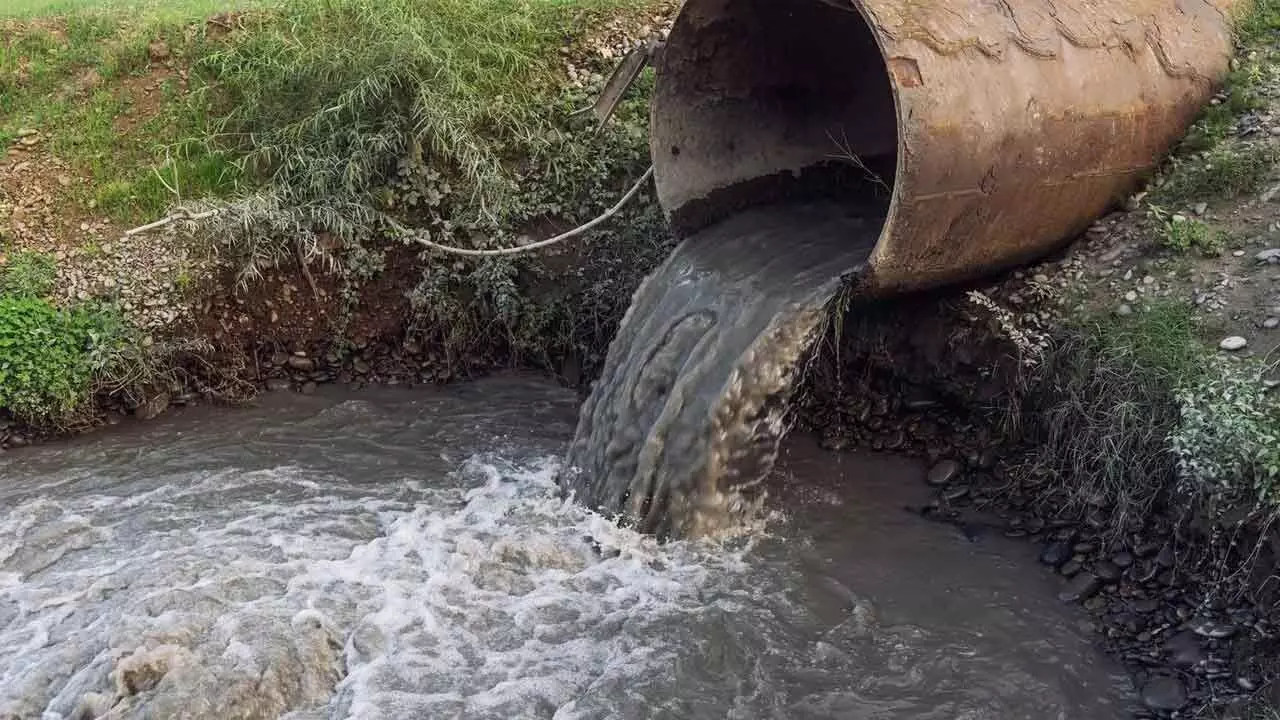
In 2019, chemicals in the environment reportedly accounted for two million deaths worldwide. New chemicals are often released into the market before we have fully understood their impacts. As a result, there are gaps in our understanding of the scale and threat of the risks posed by them in our environment
In 2019, chemicals in the environment reportedly accounted for two million deaths and 53 million disability-adjusted life years worldwide, says the State of India’s Environment 2025 report, quoting WHO data. The report published annually by Centre for Science and Environment (CSE) and Down To Earth magazine released at this year’s Anil Agarwal Dialogue.
India’s G20 Sherpa Amitabh Kant, former deputy chairperson of the Planning Commission Montek Singh Ahluwalia, management and financial guru Raj Liberhan, and CSE director general Sunita Narain released the report Over 80 journalists and more than 20 subject experts from across India come together to discuss and understand the environmental issues and concerns that India faces
Nimli (near Alwar), Rajasthan, February 27, 2025: “In the Anthropocene age, human-made chemicals are not only “forever”, but have also become “everywhere” pollutants. From high in the atmosphere to deep inside oceans, from soils and trees to uninhabited regions – they are everywhere”, according to the State of India’s Environment 2025.
The Anil Agarwal Dialogue 2025was an annual conclave of journalists from India who write on environment and development issues. Over 80 journalists from across the country participated in this one-of-its-kind platform, organised every year by CSE at its facility, the Anil Agarwal Environment Training Institute, located in Nimli, Rajasthan. CSE director general Sunita Narain released the report along with India’s G20 Sherpa Amitabh Kant; former deputy chairperson of the Planning Commission Montek Singh Ahluwalia; and management and financial guru Raj Liberhan. Over three days, the media conclave touched upon a wide range of issues – from human-animal conflicts in India and the phenomena of urban heat islands and warm nights to India’s targets on renewable energy and the return of zoonotic diseases and outbreaks.
The chemical clutter
Anchoring a special session at the Dialogue on ‘chemicals in the environment’, Down To Earth correspondent Rohini Krishnamurthy said: “In 2019, chemicals in the environment reportedly accounted for two million deaths worldwide. New chemicals are often released into the market before we have fully understood their impacts. As a result, there are gaps in our understanding of the scale and threat of the risks posed by them in our environment.”
According to the World Health Organization, some 160 million chemicals are known to humans. Data from the Chemicals Abstracts Service, a global inventory of these substances, indicates that countries across the world are making, using and importing some 60,000 chemicals that are not well understood and regulated. The State of India’s Environment 2025 report says humans have “synthesised some 140,000 chemicals and mixtures of chemicals”. These are chemicals that did not exist till a few decades ago. New chemicals are being invented and developed at an unprecedented rate. As per 2019 data, the US produces an average of 1,500 new substances a year. Says Krishnamurthy:
“Naturally, the rate at which chemicals are released into the environment is also very high. Annually, some 220 billion tonne of chemicals are released.
In fact, humans are responsible for pumping in 65 kg of cancer-causing chemicals every second into the atmosphere.” Speaking at the Dialogue, Dr Donthi N Reddy, visiting senior fellow, Impact and Policy Research Institute, New Delhi, said: “We are indiscriminately using pesticides in our rural regions – 255,000 tonne every year – when even a single gramme is lethal.”
The disease burden
Says Krishnamurthy: “Once they get into our bodies, synthetic chemicals first encounter the lungs, skin and gut. They can also travel through the bloodstream to affect other organs like the kidneys or the immune system. They can enter individual cells and affect how instructions in the DNA are converted into protein. Long terms exposure to chemicals leads to a range of health issues such as cancer, organ damage, weakening of the immune system, development of allergies or asthma etc.”
The State of India’s Environment report asks if the world has reached a critical situation in terms of chemical pollution – aside from it accounting for two million deaths (2019, WHO), 53 million disability-adjusted life years have also been lost due to exposures to certain chemicals.
For more details and additional data, please refer to the chapter ‘The toxic cover’ under the Chemicals section in the State of India’s Environment 2025 report.
Arjun Rampal commences the shoot for 'Billionaire' in London
Sachin backs Jay Shah’s vision for cricket’s growth, wishes him success for second term as ICC Chair
Bangladesh: Dead for over 7 months, freedom fighter named in November sabotage case
Kumaraswamy performs special Navachandika Yagna with family; says Rahul's phone tapping remark not serious
"It Was Between Modibhai and Me, Not Congress and BJP": Pitroda
Another Severe Cyclone Threatens AP; Fishermen Told Not to Venture into Sea till November 19
BJP-SAD alliance nears final shape: BJP seeks 40 seats; formal announcement likely on Nov 24
Jay Shah Reappointed As ICC Chairman For Second Term, Elected Unopposed
PM Modi heads to Philippines for ASEAN-India, East Asia summits, says it will impart new energy to ties
Apple Tests New AI App for Health Questions


