Ethical leadership can ensure corruption-free governance in India

Francois Valerien, the Chair of Transparency International, says that “Corruption is an evolving global threat that does far more than undermine development – it is a key cause of declining democracy, instability and human rights violations”.
In India, corruption is rampant as reported by the Corruption Perception Index, published in February 2025. It ranks 96th among 180 nations with a score of 38. As per this report, 89 per cent of the people think that corruption in the government is the biggest problem, while 39 per cent of citizens stated that they had paid bribes for a public service in the last 12 months. It specifically pointed out that “India (38) embroiled in a US indictment of a clean energy business due to more than $250 million paid in bribes to Indian government officials to obtain solar energy contracts worth billions of dollars”.
On January 13 of this year, the Supreme Court delivered a split verdict in the Centre for Public Interest Litigation Vs. Union of India (2026), which examined the legality and constitutionality of Section 17A of the Prevention of Corruption Act (PCA), 1989. This section was introduced through Section 12 of the PCA (Amendment) Act, 2018 following the recommendations of the Law Commission of India in its 254th report on Prevention of Corruption (Amendment) Bill, 2013. It mandates that “No police officer shall conduct any enquiry or inquiry or investigation into any offence alleged to have been committed by a public servant under this Act, where the alleged offence is relatable to any recommendation made or decision taken by such public servant in discharge of his official functions or duties, without the previous approval”.
The core issue is whether prior approval is required or not to investigate public servants in the matters of corruption.
The competitive authorities for the prior approval are the Union Government, State Government and any other person, respectively. The petitioner challenged the constitutional validity of Section 17A on the grounds that it violates Article 14 and 21 of the Constitution and the provisions of the Lokpal Act and Lokayuktas Act, 2013. The division bench, comprising Justice B V Nagarathna and Justice K V Viswanathan, provided different, yet opposite, rulings in this instant case. The former struck down Section 17A of PCA as it ‘violates Article 14 of the Constitution’, whereas Justice Viswanathan upheld Section 17A provided the grant or refusal of approval is based on Lokpal/Lokayukta recommendation. The Court ordered that the matter be placed before the Chief Justice of India (CJI for “constituting an appropriate Bench to consider the issues which arise in this matter afresh”.
Justice Nagarathna highlighted that “in substance, the classification based on the nature of duties is illegal and therefore violates Article 14 of the Constitution of India” She also pointed out that “prior approval being required for the purpose of protecting honest officers is not a valid reason for saving the provision from being declared unconstitutional as a regime of prior approval at the stage of inquiry/enquiry/investigation is fundamentally opposed to the objects and purpose of the Act and hence has to be struck down on that ground also”. Justice Viswanathan opined “policy paralysis” does not set in…. a “play it safe syndrome” may set in and decision making will be avoided, causing serious detriment to the progress of the nation”.
The reasons provided by both the judges seem to have their own validity in terms of arguments. Justice Nagarathna’s reason of protecting honest officers shall not become constraint in declaring the Section 17A as unconstitutional as it provides exclusion from the principle of equality and the classification based on duties as illegal and arbitrary.
The point of ‘policy paralysis’ brought out by Justice Viswanathan merits value. However, the political economy of institutions like Lokpal and Lokayukta and the lack of robust functioning of the same does not enthuse confidence either in these institutions or the political regimes that govern them.
Need for ethical leadership:
Given this peculiar scenario, the court’s order of approaching the Chief Justice of India for the constitution of a larger bench to decide the matter is inevitable; however, due to the prolonged appeal and counter appeal the very purpose of Section 17A of the PCA gets defeated in the process of judicial adjudication. Any statutory law is enacted to serve the purpose of the legislative intent and if an Amendment (2018 PCA) significantly reduces the legislative intent and purpose then the validity of such an amendment is questionable. It is here that Justice Nagarathna’s contention finds merit as a separate clause or provision in the name of protecting the honest officers is an exclusionary principle rather than inclusiveness in governance. By striking down the Section 17A as unconstitutional and the issue to be placed before the larger bench the issue is back to square one and makes for justice delayed is justice denied for citizens seeking a corruption-free governance.
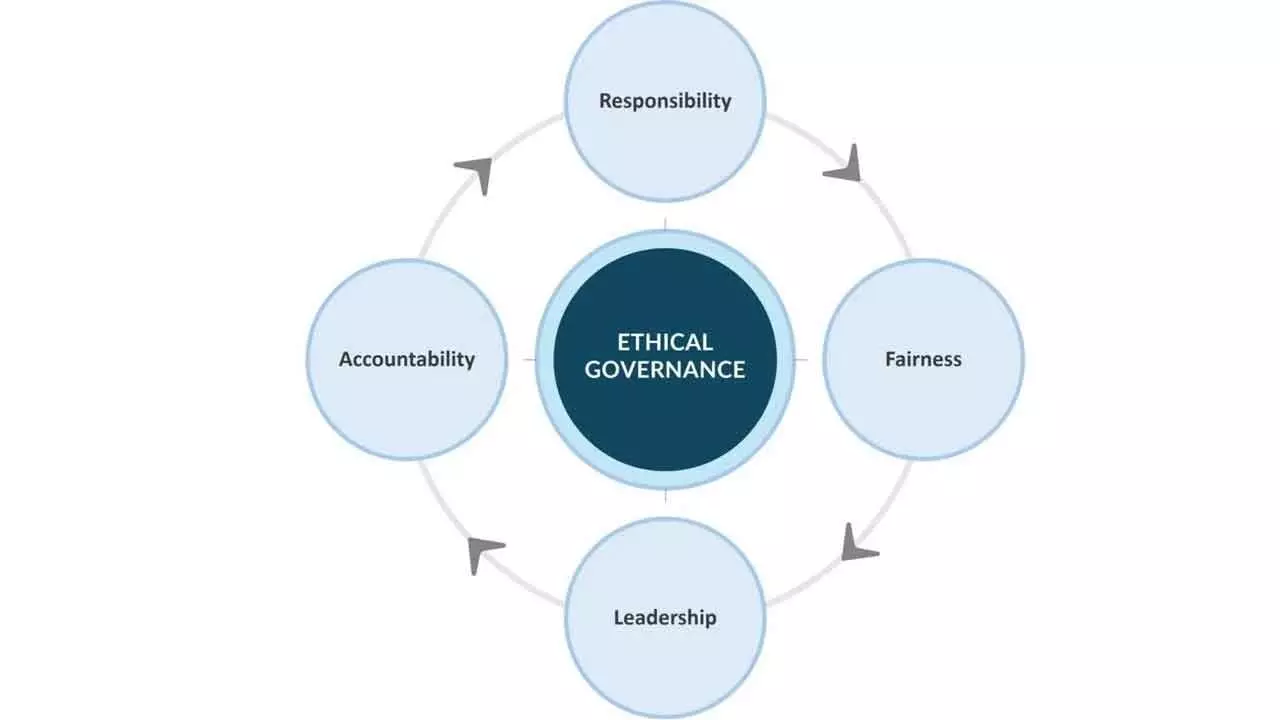
The corruption-free governance is a citizen’s right; providing good governance is an obligation of a democratic government. The question shall be asked here is the constitutional fidelity of the political regimes and administrative machinery rather than focusing on the constitutional validity of the PCA. The transparent governance is of ethical dimension which in turn directly correlates to the ethical political leadership to deliver good governance to the citizens. India on this account have a long way to go.
(The writer is Assistant Professor, Symbiosis Law School, Symbiosis International (Deemed University), Pune. Views are personal)