Ground zero aviation alarm: Time for rethink on safety and justice

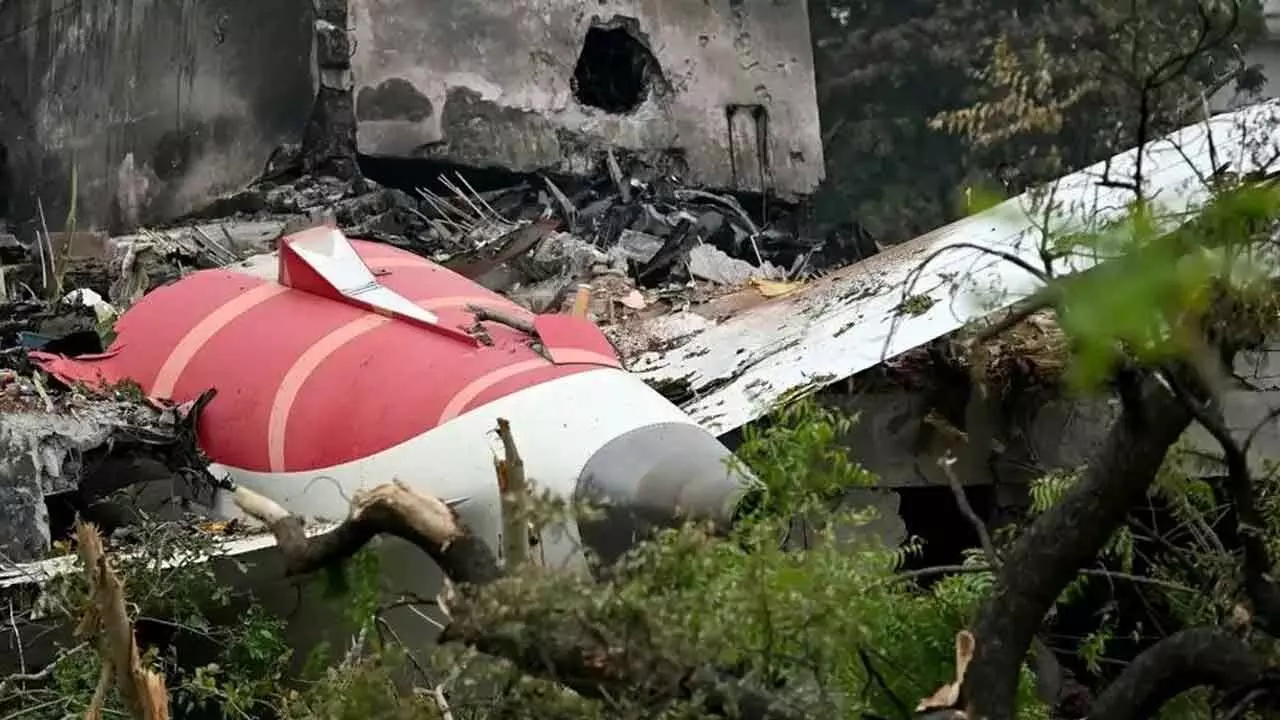
Airports are traditionally located away from city centers to provide safety buffers for flight operations. However, rapid urbanisation fueled by the economic opportunities’ airports generate has led to encroachment of residential, commercial, and industrial developments into these buffer zones. This phenomenon, known as urban encroachment, transforms once-safe areas into high-risk zones, as tragically demonstrated in Ahmedabad.
The recent catastrophic plane crash in Ahmedabad, which claimed nearly 270 lives, has painfully exposed a tragic dimension of aviation disasters that often goes unnoticed—the devastating impact on innocent people on the ground.
When a plane crashed into a hostel where students were having lunch, it revealed the vulnerability of communities living near airports. This highlights a critical gap in aviation safety and compensation frameworks: the issue of collateral damage on the ground. The tragedy demands urgent attention towards an urban planning overhaul around airports and to establish international guidelines that minimize such damage while ensuring fair compensation for all those affected.
Aviation accidents are rare but catastrophic, especially during take-off and landing when planes fly closest to populated areas. The Ahmedabad tragedy starkly illustrates the risks faced by those on the ground—residents, workers, and passersby—who bear the brunt of disasters they have no control over. The current aviation safety and compensation systems primarily focus on passengers and crew, often overlooking these collateral victims. This disparity is unjust and calls for immediate corrective action by urban planners, aviation authorities, and policymakers worldwide.
Airports are traditionally located away from city centers to provide safety buffers for flight operations. However, rapid urbanisation fueled by the economic opportunities’ airports generate has led to encroachment of residential, commercial, and industrial developments into these buffer zones. This phenomenon, known as urban encroachment, transforms once-safe areas into high-risk zones, as tragically demonstrated in Ahmedabad. Historical data confirms that many aviation accidents occur near airports, making the shrinking of safety buffers a serious threat to human lives. Economic benefits from development cannot justify any compromise on safety aspects.
To protect communities near airports, urban planning must prioritise safety over short-term economic gains. This requires stringent regulations and enforcement, including expanded “no-build” zones extending well beyond airport boundaries, prohibiting construction directly beneath take-off and landing corridors where most accidents occur, and addressing existing encroachments through relocation or repurposing strategies that balance economic interests with the imperative of safety. These measures will face resistance from developers and local governments focused on revenue. However, the cost of inaction—measured in human lives lost—is far too high. Robust legislation and uncompromising enforcement are essential to ensure that safety comes first.
Aviation safety has advanced tremendously, with innovations in aircraft design, pilot training, and air traffic control making flying one of the safest modes of transport. Yet, these improvements primarily focus on preventing crashes or mitigating their impact on passengers and crew. Ground communities remain vulnerable when accidents occur near airports. A dual approach is needed: continue enhancing flight safety while proactively protecting those on the ground through spatial planning and risk mitigation.
The Montreal Convention of 1999 provides a clear framework for compensating passengers in aviation accidents, standardising liability and ensuring timely financial redress. However, it does not adequately cover collateral damage victims on the ground. These individuals-residents, students, workers-often face inconsistent, inadequate compensation, relying on national tort laws or disaster relief that can be slow, complex, and insufficient. This glaring gap in the global aviation legal framework denies justice to those who suffer through no fault of their own.
The international community must urgently create a new global framework to minimise collateral damage from aviation disasters and ensure fair compensation for ground victims. This framework should clearly define collateral victims to include fatalities, injuries, and property losses caused by crashes, regardless of proximity. Liability must be fairly shared among airlines, airport authorities, and governments, possibly through a global insurance pool or disaster relief fund to guarantee swift payments. The claims process should be compassionate and efficient, reducing bureaucratic delays and delivering timely aid through an international or coordinated national system. Additionally, standardised criteria for assessing economic and non-economic damage are essential to ensure equitable compensation worldwide. Such a framework would affirm global commitment to justice, extending protection and support to all victims—both in the air and on the ground.
The Ahmedabad tragedy, along with past aviation disasters, underscores the urgent need to address collateral damage comprehensively. Proactive urban planning—through enforced no-build zones and flight path protections—can significantly reduce risks to ground communities. Simultaneously, a new international compensation framework is essential to deliver justice to collateral victims. While challenging, these measures are indispensable to prevent further loss of innocent lives.
By prioritizing safety and equity, the global community can transform aviation tragedies into catalysts for meaningful change. Protecting those on the ground with the same diligence as those in the sky is not only a moral obligation but also a practical necessity for building resilient, humane societies. The time to act is now—before another preventable tragedy reminds us of the stakes involved.
(The writer is a senior Advocate)