The changing face of protests and strikes in India


The Supreme Court of India has described the process of collective bargaining by workers agitating for meeting their demands as ‘the technique by which disputes regarding conditions of employment are resolved amicably by agreement rather than by coercion’
Freedom is never voluntarily given by the oppressor; it must be demanded by the oppressed-Martin Luther King Jr.
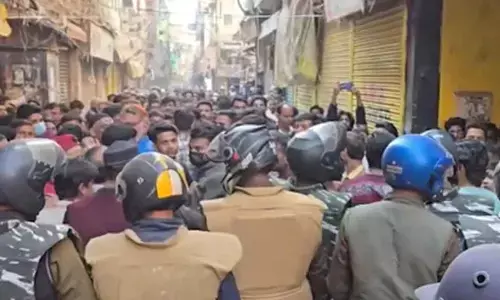
An important feature of any democracy is that protests are allowed, and citizens can express their opinions, hold those in power accountable, and advocate for change. They act as a vital check on government power, ensuring that Vox Populi, or the Voice of the People, especially those marginalised or underrepresented, is heard. They often also spark social movements, educate the public and contribute to a more inclusive and responsible political landscape.
Such protests can take various shapes such as a relay hunger strike, where a group of people take turns participating in a hunger strike; a fast unto death, a hartal or a mass protest, involving total shutdown at the workplace, offices, shops, and courts; a gherao, when people show that they disagree with something by standing around a person in authority and not letting him leave until what their demand is granted, or a bandh, a form of protest usually used by political activists, similar to a general strike.
In this context, one recalls that Mahatma Gandhi often employed hunger strikes as a weapon of protest through non-violent resistance. Without being intended as a means of self-harm, but rather as a means of seeking political and social change. It served as a powerful tool to pressurise the British government and awaken the conscience of the people.
As far as industrial relations are concerned, workers with demands to be met go on strike as a last resort measure, when continued efforts to persuade managements to concede their demands have not been met. A striking feature of the mixed economy approach in the country is that the right to strike, while not quite a constitutionally provided fundamental right, is recognised as a crucial element in industrial solutions, allowing, as it does, workers to collectively withdraw their labour to advocate for better working conditions or other demands. The Industrial Disputes Act 1947 recognises it as a legitimate tool of trade unions.
The Supreme Court of India has described the process of collective bargaining by workers agitating for meeting their demands as ‘the technique by which disputes regarding conditions of employment are resolved amicably by agreement rather than by coercion’.
When the relationships between the management and agitating workers in a given situation, failed to produce an agreement between the two sides, what are known as conciliation proceedings are set in motion by the central/state government concerned. They are conducted by an official known as a Conciliation Officer (CO) appointed by the government. The proceedings begin once the CO receives the notice of strike or lockout. Their task is to investigate the causes of the dispute, mediate and promote a settlement. Alternatively, the government concerned appoints, on occasion, a Board of Conciliation, represented in equal numbers by both parties, namely the management and the agitating workers, to conduct the proceedings during which, however, a strike is not allowed to take place.
An interesting incident concerning strikes by employees took place while I was working at the Register of Cooperative Societies of Andhra Pradesh in 1986. Each Primary Agricultural Credit Society (PACS) in the state, of which there were about 6700. Each PACS had an employee called a paid secretary, who was supposed to work under the management of the PACS concerned and be accountable to it for discharge of their functions. The superintendence, control and guidance over them rested with the management. Somehow or the other, partly on account of political considerations, a statewide cadre of paid secretaries came into being, following which the authority to order transfers, postings, promotions, and other service conditions of them was transferred to a state level mechanism. Feeling that it was a pernicious system that eroded the authority of the PACSs and worked as the creator, preserver and destroyer of Cooperatives (as the RCS is commonly called), I took action to dismantle that system in the interest of preserving, protecting and defending the independence of the managements of PACSs. The result was a statewide strike by paid secretaries.
I recall, partly with amusement, an incident that took place while I was once on an official visit to Eluru town with my family. As we looked out of the upstairs room of the guest house in which we stayed, we heard loud slogans, of “RCS down down”, from the agitating employees, an incident that amused the children to no end!
Another notable event in this context was the historic fast unto death, undertaken by Indian freedom fighter, and a leader committed to social justice and the uplift of Dalits, Potti Sriramulu, for the cause of carving out a separate state for the Telugu speaking people from the erstwhile Madras state.
A person who had been influenced by Mahatma Gandhi and who participated in major independence movements, including satyagrahas and the Quit India Movement, was imprisoned by the British several times. The 58-day hunger strike led to his tragic end, sparking, in its wake, widespread riots and public outcry ending with Prime Minister Jawaharlal Nehru announcing the formation of a separate Andhra state. That event also set a precedent for the reorganisation of states in the country on linguistic lines.
Sriramulu’s legacy is commemorated in Andhra Pradesh, and beyond, as a symbol of sacrifice and dedicated to regional and social causes. The erstwhile Nellore district is, in fact, now named after him.
While on the subject of protest, here is something I heard recently, to end this piece ona humourous note.
Tired of endless, unproductive meetings, employees of an organisation decided to fight back with humour. During one particularly long meeting, they brought snacks, blankets, and even a board game. When the manager asked what was going on, they replied, “We’re just preparing for the next three hours!” The manager got the hint and started keeping meetings short and to the point.
(The writer was formerly Chief Secretary, Government of Andhra Pradesh)