




- Harish flags illegal blasting near Mallanna Sagar Bund
- KTR seeks diversion of Musi funds to rescue Telangana farmers
- Bhatti Vikramarka pushes for full utilisation of SC, ST Sub-Plan funds
- Bank of Baroda walkathon promotes integrity, transparency
- Hanuman idol reinstalled at Sunnam Cheruvu temple
- Gachibowli to get Leather Common Facility Centre
- Telangana rushes power teams to cyclone-hit AP
- Piyush Goyal backs Revanth Reddy’s $3 trillion TG vision
The monsoon left. The cost remains
In Short
But the aggregate rainfall figures conceal a more disturbing reality. In June, when crops are sown, rainfall was 39.8% below normal. Monsoon rainfall across states is just as uneven

Share :
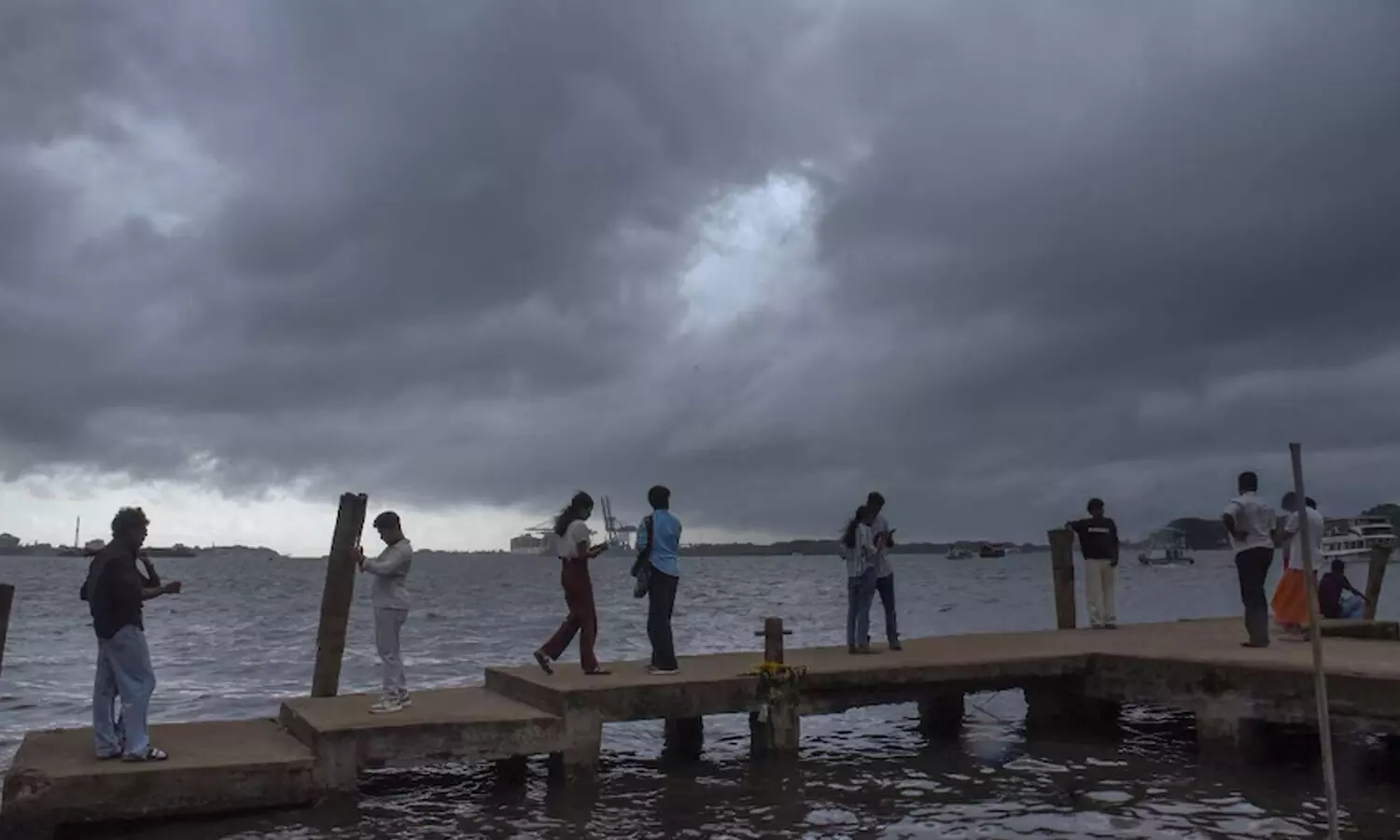
The monsoon left. The cost remains
The India Meteorological Department (IMD) recorded that the 2026 Southwest monsoon endedwith the country receiving 759.4 mm of rain, 12.6% less than the normal 868.6 mm. This is the 13th lowest level since 1901, the 4th lowest since 2001, and the first deficient monsoon since 2015.
But the aggregate rainfall figures conceal a more disturbing reality. In June, when crops are sown, rainfall was 39.8% below normal. Monsoon rainfall across states is just as uneven. For instance, Karnataka had a 35% rainfall deficit, the worst monsoon the state has seen in 55 years. East and Northeast India had a 26% rainfall deficit and thus experienced their driest monsoon since 1901, while South India experienced its driest monsoon since 2002. At the same time, Odisha had its wettest monsoon in 20 years, with a 29% surplus.
The official commentaries have continued to state that, although there is a large cumulative rainfall deficit, the season has been “manageable”. The total area under crops (1,107 lakh hectares) has been only slightly above the five-year seasonal average (1,104 lakh hectares). Paddy cultivation has decreased “only” by 3.6% compared with the previous year. These figures are not incorrect. Yet the account is incomplete because the farmer in Mysuru, who received 172 mm of rain instead of the normal 419 mm, is not included in the national total, and the aquifer under his farmland is likewise left out.
The University of Chicago estimates that the current Super El Nino could cause excess heat-related deaths to the tune of 451,000 globally between September 2026 to February 2027, India’s share at 15,800 (+/-1600). However, this number includes only direct heat-related deaths and excludes those caused by droughts, depletion of groundwater, floods, or collapse of livelihoods. The World Bank estimates that a partial loss of ecosystem services could lower global GDP by $2.7 trillion each year by 2030. Even these forecasts fall short of what India’s monsoon cost this year.
India extracts more groundwater than any other country, more than the US and China combined, drawing 241 billion cubic meters annually at a meagre 38% irrigation efficiency. A recent study by Punjab Agricultural University found that the water table in Punjab dropped sharply from 4.82 meters in 1972 to more than 21 meters in 2025.
A study published in Nature Communications found that MSP-linked crop procurement has led to a 30% overproduction of water-intensive crops in India. More specifically, rice procurement in Punjab may account for at least 50% of the state’s groundwater depletion over the last 34 years. Insurance claims are not made when aquifers are depleted, and the GDP does not adjust when the water table drops.
The Lancet Countdown report found that India suffered the highest-ever loss of 247 billion potential labour hours due to heat exposure, equivalent to $194 billion in lost income. Economists estimate that for every one-degree Celsius increase in the daily mean temperature, daily net earnings for informal workers drop by 16%. This loss does not enter any ledger. GDP continues to grow.
The Pradhan Mantri Fasal Bima Yojana (PMFBY)has paid out ₹1.92 lakh crore in claims to more than 23 crore farmers since 2016. The Pradhan Mantri Krishi Sinchaye Yojana (PMKSY) has promoted micro-irrigation. Millet promotion has now shifted fundamentally away from water-intensive crops. These are genuine achievements, which is why the current monsoon deficit might be described as “manageable”. The system has absorbed the impact. The monsoon’s most visible carry-forward cost is that 107 of India’s 146 major reservoirs stand below 40% capacity as rabi sowing begins. Yet the system does not tell us what this absorption has cost.
Earlier this month,MoSPI launched its Strategy for Environmental Economic Accounts 2026–2030 – afive-year programme aimed at bringing groundwater depletion, soil degradation, and ecosystem services into India’s national accounts alongside GDP. Although this is a positive development, genuine progress will rely on governments making effective use of the data. At the same time, the Finance Ministry should include in the Union Budget a climate-adjusted fiscal annex which sets out the natural capital losses incurred during the previous monsoon season.
Neither measure replaces GDP, but both make clear what GDP currently fails to show and provide India with a ledger it can finally read.
Naidu puts preliminary cyclone loss at Rs 4,600 cr
Double Trouble: Fresh system in Bay of Bengal threatens AP with heavy rain
Cabinet nod for Rs 3,125-cr payout to farmers today
Post devastation by Arnab: Vizag limps back to normal in 48 hours!
5.42 lakh farmers hit, losses put at Rs 177 cr
Hyderabad staring at summer water crisis


