With BJP riding on 2nd Modi wave, bigger challenges up ahead for oppn parties

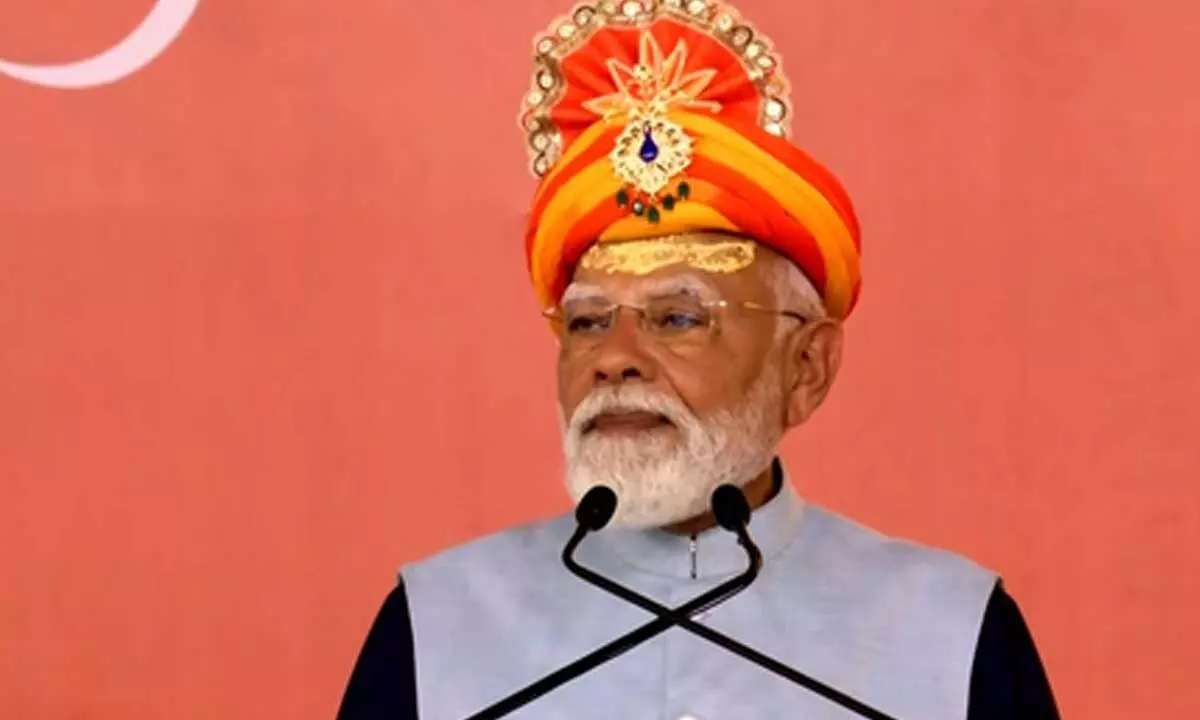
After electoral setbacks to the Bharatiya Janata Party (BJP) in some crucial states in the 2024 General Elections, a talk gained traction that the saffron party’s decline had started and Prime Minister Narendra Modi’s charisma is gradually fading out. Modi, aiming at a third consecutive term as the Prime Minister, went to the polls with a target to secure around 400 MPs for the BJP-led National Democratic Alliance (NDA) out of 543 seats in the Lok Sabha. That was the reason why the BJP coined the ‘Abki Baar 400 Paar’ slogan for that election. It created a history of sorts by winning 282 seats in 2014 and formed the government at the Centre under Modi’s leadership. NDA’s tally was 336 then. BJP increased its seat count to 303 in the 2019 polls, while that of the NDA rose to 353.
The party expected a similar incremental increase in seats in 2024. But the saffron party received major setbacks in its key states like Uttar Pradesh, Maharashtra, Rajasthan, West Bengal and Haryana. Consequently, its seat count was reduced to 240 seats, below the half-way mark, and that of NDA fell to 293 seats. The last-minute tie-up with the Telugu Desam Party (TDP) in Andhra Pradesh saved it the blushes as the alliance secured 21 seats.
It was the first time in his long political career that Modi did not get a clearcut poll mandate for his own party. His aggressive push on Hindutva also didn’t help. The impact of the near adverse outcome was clearly visible in his body language when the results for the 2024 Lok Sabha polls were out.
However, the saffron party shifted gears post the 2024 General Elections and started focusing more on its development agenda and welfare schemes for women instead of pushing its Hindutva strategy aggressively. Within a few months after it yielded ground to the Congress in the Lok Sabha polls in Haryana, the BJP made a stunning comeback by retaining power in the state. It won the Assembly polls in October 2024 despite many surveys predicting its defeat.
In the Maharashtra Assembly polls more than a month later in November, the Mahayuti alliance led by BJP won hands down by emerging victories in 235 seats out of 288 seats. The scale of the victory was so high that none of the opposition parties won enough seats to secure the status of the Leader of the Opposition (LoP). In the Lok Sabha elections a few months earlier, Mahayuti won only 17 MP seats out of 48 seats. This shows the kind of turnaround the BJP-led alliance achieved in the Assembly polls.
In 2025 too, the BJP continued its winning streak by defeating Aam Aadmi Party (AAP) in the Delhi Assembly polls in February. Last November, the BJP-led NDA secured a landslide victory in Bihar by pocketing 202 of the 243 seats that were up for grabs. Two days ago, Brihanmumbai Municipal Corporation (BMC), the country’s richest municipal body with an annual budget of Rs 70,000 crore, saw BJP’s surprise surge. BMC was the bastion of Shiv Sena founder Bal Thackeray’s family for over 25 years. It will now have a BJP Mayor! Mahayuti also won most municipal bodies in the state this time. All these victories seem to indicate that BJP’s development agenda is resonating with voters, both young and old.
Further, the saffron party seems to be on a strong footing in the states which will go to polls later this year. In West Bengal, BJP reached a stage from where it can storm to power in the event of the Mamata Banerjee-led All India Trinamool Congress (TMC) losing the upcoming Assembly polls scheduled for April. BJP won 77 MLA seats in the 2021 polls. In Tamil Nadu too, it gained some traction. There should be no surprise if BJP will be part of the winning alliance in the event of DMK’s defeat. Both Bengal and Tamil Nadu are to go to polls around the same time. These two states are a kind of final frontiers for the saffron party as Tamil Nadu is known for its strong anti-Hindi stand and West Bengal remained an epicentre of Leftist politics for a long time.
In the 2014 General Elections, the country witnessed a BJP wave fuelled by the Narendra Modi phenomenon and the momentum continued into several state Assembly polls thereafter. With a string of stunning electoral victories after the 2024 General Elections, the BJP seems to be riding on the second Modi wave. That will obviously pose a bigger challenge to the opposition parties.
But as I mentioned in many of my earlier columns, the Indian National Congress (INC) will remain central to any attempt to dislodge BJP from power as the Grand Old Party (GOP) still has presence across the country and is the only alternative to the ruling dispensation in some key states. But does it have the wherewithal to blunt BJP’s developmental narrative?
The Congress could have showcased its developmental performance in Telangana to counter BJP’s development narrative at the national level. Telangana has all the ingredients to fuel rapid growth on economic and development fronts. It has a mega city in Hyderabad that can be leveraged for overall development of the state. Sadly, that’s not happening as the state is weighed down by unbridled welfare schemes and high-value freebies. On his part, Chief Minister A Revanth Reddy announced a slew of mega projects, including the Musi riverfront development, expansion of metro rail and massive development of educational infrastructure. But all these projects need massive funds which the state lacks.
Telangana’s performance in attracting private capital is also not that great despite the presence of major IT and pharma hubs in Hyderabad. This is largely due to lack of an aggressive approach to attract investors. Further, the aggressive investment push by Andhra Pradesh led by its Chief Minister N Chandrababu Naidu and IT Minister Nara Lokesh also took the sheen off Brand Telangana as an attractive investment destination. That way, the Congress government in Telangana is unable to present an optimistic narrative to its people. So, Telangana is unlikely to give a platform to Congress to portray itself as a development-oriented party to check the BJP’s narrative. Therefore, like many other opposition parties across India, Congress can’t take on BJP effectively unless it reinvents itself and counters the saffron party’s strategies effectively. It should also take other political parties along with it to pose a formidable challenge to the saffron party. All said and done, there are only two ways to defeat BJP and Modi. One way is that BJP and Modi should defeat themselves. That can only happen if there is severe anti-incumbency against the Modi government. Going by his track record, Modi doesn’t yield ground to the Opposition once he enters the portals of power. The second option for Congress is to convince voters that it can offer a better alternative to BJP. Will that happen?
In this era of artificial intelligence, there seems to be a transformational change in the country’s political landscape as well. Those who continue to rely on the old school politics of empty rhetoric, false narratives, false promises and propaganda tactics will not last for long in power. Further, such people or parties will not come to power easily even when the right opportunities arise. Sometimes, inefficient parties may come to power when voters exhibit seething anger against the incumbent government. But that’s more like a flash in the pan. Indian voters are increasingly looking for those who can genuinely develop their state and the country as a whole. Unless the opposition parties correctly decipher these changing dynamics in Indian politics and adopt their strategies accordingly, the BJP and NDA, the alliance that the party leads, will continue to win, one election after another. That’s the reality.