Firewood cooking continues at Siddaganga Mutt feeding thousands daily

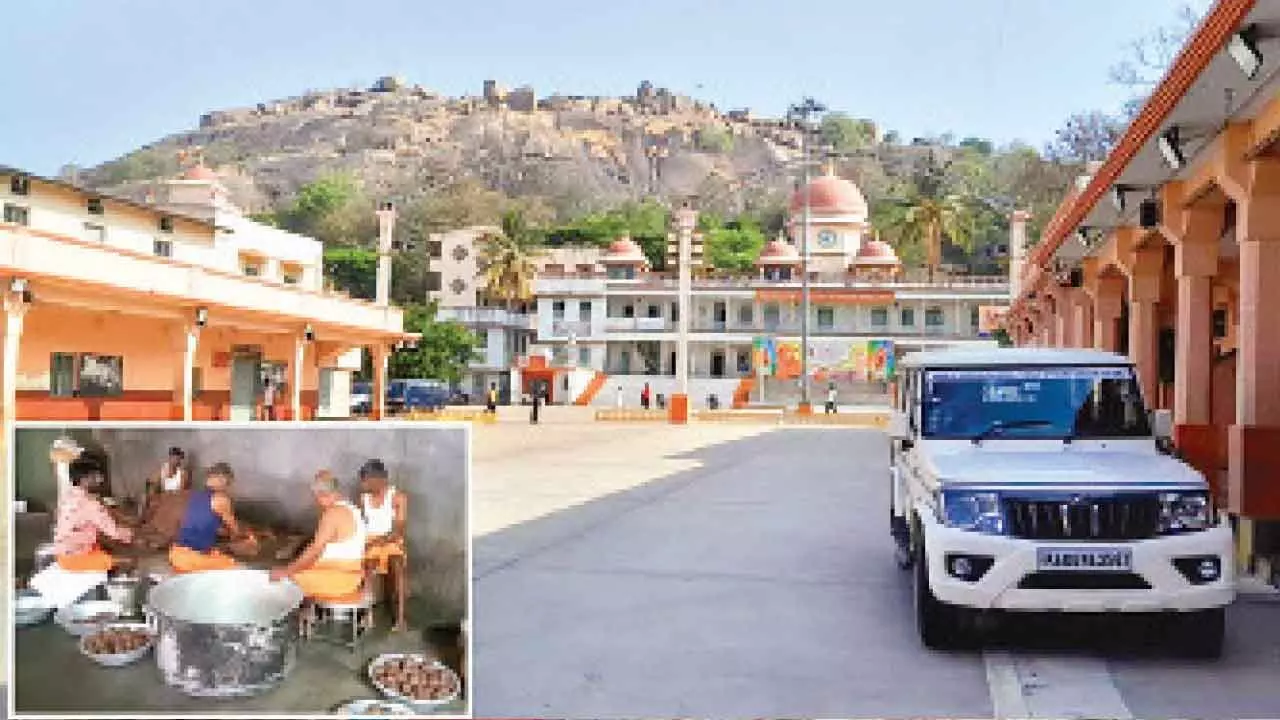
The centuries-old tradition of large-scale community feeding continues at the renowned Siddaganga Mutt, where food for nearly 30,000 people is prepared every day using traditional firewood stoves instead of LPG gas. The unique practice has drawn attention at a time when many institutions depend heavily on modern cooking fuel.
Located in Tumakuru, the mutt serves meals to thousands of devotees, visitors and students as part of its long-standing dasoha (free food service). Around 9,000 students studying in institutions run by the mutt are provided three meals a day. The daily menu generally includes rice, sambar and the traditional Karnataka staple ragi mudde.
Despite the massive scale of cooking, the kitchen continues to rely on firewood-based systems that have been in use for decades. According to seers at the mutt, large firewood stoves have been modified into steam-based cooking units to efficiently prepare food in bulk.
Speaking about the system, seer Shivakumar Siddalinga Swamiji said the mutt has consciously avoided dependence on LPG cylinders.
He also expressed concern about global conflicts affecting essential resources.“War and international tensions should end soon.
If conflicts continue for a long time, shortages of fuel and essential items may push people to cut trees for firewood, which can harm forests,” he said.
Apart from the resident students, thousands of visitors travelling towards Bengaluru often stop at the mutt to have meals. Anganwadi workers and members of various organisations also visit the mutt during their journeys and partake in the free food service.
To manage cooking needs sustainably, the mutt uses innovative methods. Solar energy is used during evening hours for part of the cooking process. In addition, agricultural by-products are used as fuel. Teachers and students collect dried arecanut husks discarded along roadsides, which are later dried and used as fuel for cooking.
Earlier, the kitchen used rice husk obtained from rice mills as fuel. However, as the number of rice mills in the region has reduced, the mutt switched to alternative biomass such as arecanut husks.
The traditional cooking system at Siddaganga Mutt continues to function efficiently, demonstrating how age-old practices combined with sustainable fuel use can support large-scale community feeding.