Karnataka Governor Walks Out Of Assembly After Reading Only Two Lines, Triggering Constitutional Row

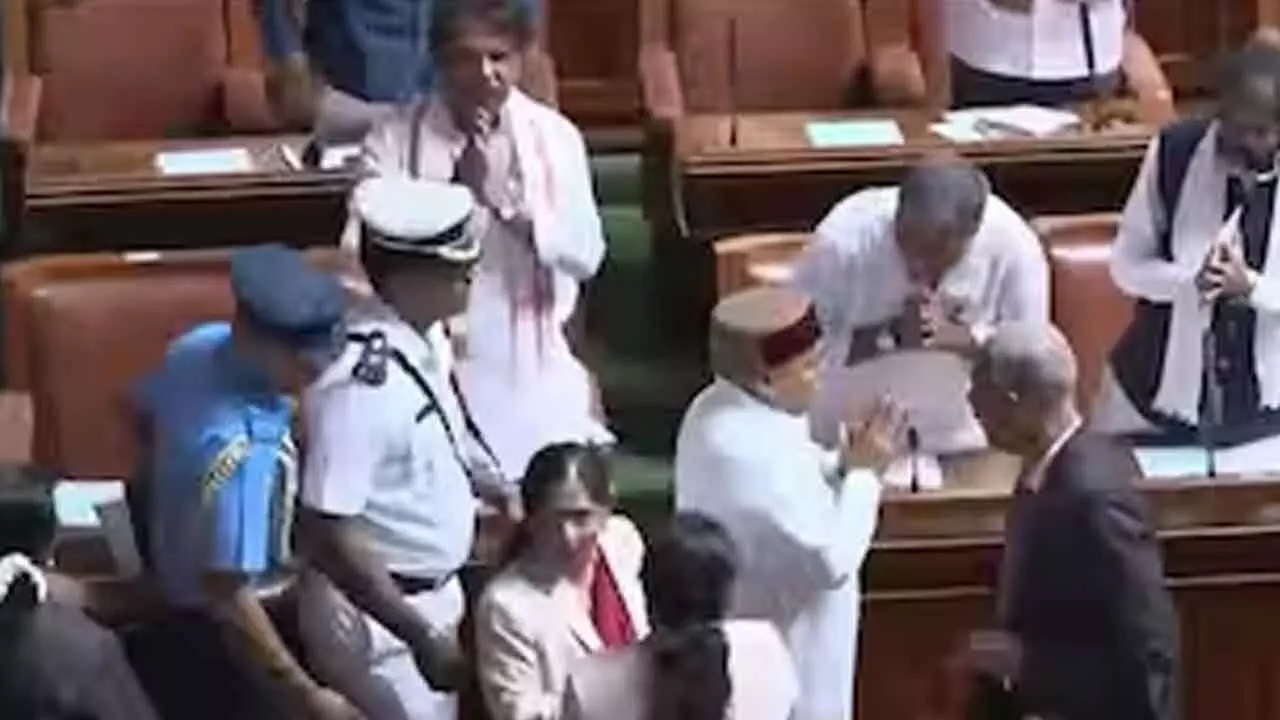
Karnataka Governor Thawarchand Gehlot exited the Assembly without completing his address after objecting to parts of the government-drafted speech, prompting sharp reactions from the Congress-led state government.
A fresh confrontation between a governor and an elected state government unfolded in Karnataka on Thursday when Governor Thawarchand Gehlot abruptly ended his address to the joint sitting of the legislature after reading just two lines and walked out of the House. The move followed a dispute over the contents of the speech prepared by the Congress-led state government, which reportedly included criticism of the Centre and its policies.
The governor’s arrival at the Vidhana Soudha had initially raised hopes of easing political tension, with Chief Minister Siddaramaiah personally welcoming him. However, the optimism was short-lived as Gehlot limited his remarks to a brief greeting, stating the government’s commitment to development before concluding with slogans and leaving the chamber.
According to reports, the governor had objected to around 11 paragraphs in the official address, particularly those referring to the alleged repeal of the Mahatma Gandhi National Rural Employment Guarantee Act, the Viksit Bharat–Guarantee for Rozgar and Ajeevika Mission (Gramin), and issues related to fiscal devolution. He had sought the removal of these portions, a demand the state government did not accept.
The Congress reacted strongly to the walkout, with legislators protesting inside the House and chanting slogans against the governor’s conduct. Chief Minister Siddaramaiah accused Gehlot of violating constitutional norms by refusing to read the full address approved by the elected government and alleged that the governor was acting at the behest of the Centre. The state government is now considering legal options, including approaching the Supreme Court over the issue.
Senior Congress leaders echoed the criticism, alleging that the Centre was undermining states’ rights through financial policies and legislative changes. They maintained that the contested portions of the speech merely reflected factual concerns raised by the state government and questioned the governor’s authority to alter or reject them.
The Karnataka episode adds to a growing list of similar standoffs in non-BJP-ruled states, with recent confrontations reported in Tamil Nadu and Kerala as well. Political observers see these repeated clashes as part of a broader pattern of friction between governors and state administrations, raising concerns over constitutional conventions and the functioning of India’s federal structure.
Next Story