Tragic Accident Claims Life During Muharram Observance In Karnataka

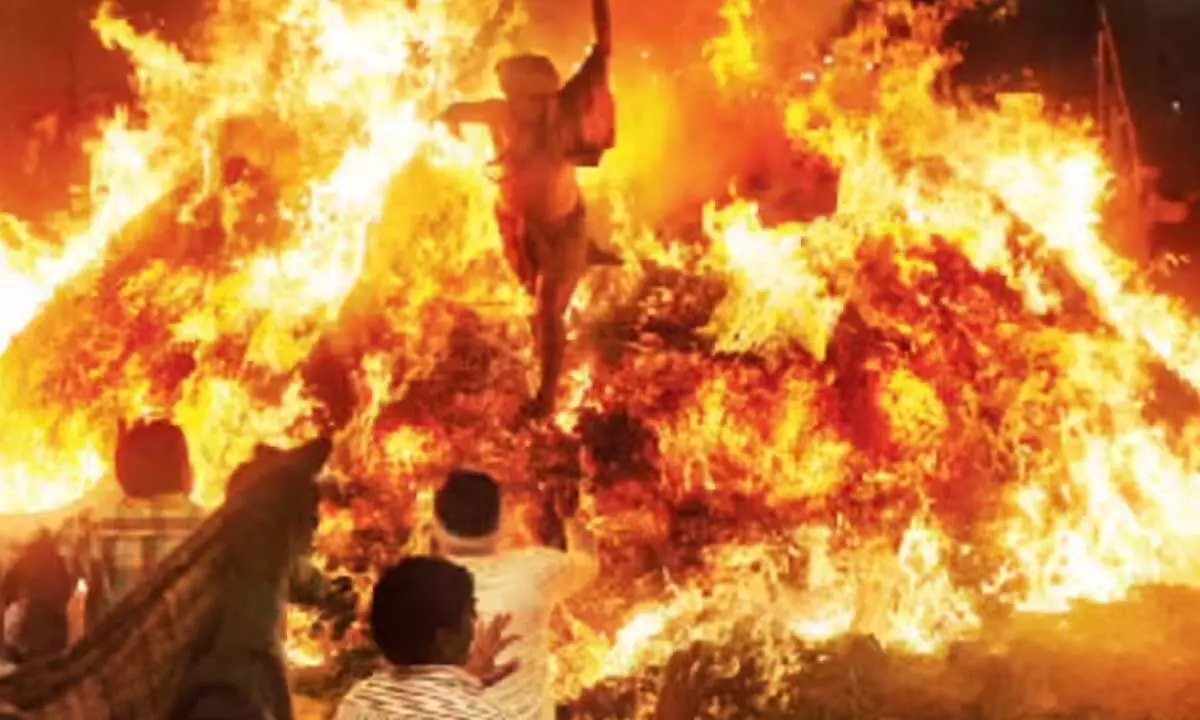
A 40-year-old man died after accidentally falling into a ceremonial fire pit while preparing for Muharram celebrations in Karnataka's Raichur district, highlighting safety concerns during religious festivals.
A devastating accident during Muharram observances in Karnataka has resulted in the death of a 40-year-old man who accidentally fell into a ceremonial fire pit while participating in festival preparations. The incident occurred on Sunday in Raichur district, casting a shadow over the religious celebrations.
The victim, identified as Hanumanth, was engaged in preparatory activities for the Muharram festival when the fatal accident took place. According to Lingasur Police, the man inadvertently fell into the fire pit that was being used as part of the traditional ritual observances associated with the religious commemoration.
Emergency responders immediately transported Hanumanth to Laigasur Government Hospital, where medical professionals attempted to save his life. Unfortunately, despite their efforts, doctors were unable to revive him and pronounced him dead upon arrival. The incident has prompted local authorities to review safety protocols for religious gatherings involving fire-related rituals.
The tragedy in Karnataka was not an isolated incident during this year's Muharram observances. In a separate but equally tragic event in Bihar, at least one person lost their life and 24 others sustained injuries due to electrocution during a Muharram procession in Darbhanga district on Saturday evening.
The Bihar incident occurred when participants in the religious procession were passing through Kakorha village, which falls under the jurisdiction of Sakatpur police station. According to Darbhanga District Magistrate Kaushal Kumar, the accident happened when a portion of the tazia, a decorative structure carried during Muharram processions, came into contact with high-tension electrical wires.
District Magistrate Kumar confirmed the casualty figures, stating that one person died while 24 others were injured in the electrocution incident. He provided reassurance about the condition of the injured, noting that they were receiving medical treatment at local hospitals and that their conditions were reported to be stable and out of immediate danger.
The swift response of district administration officials and police personnel at the scene ensured that victims received prompt medical attention. Emergency services immediately transported the injured to the nearest medical facilities, where they continue to receive care.
This year's Muharram observance, which took place on Sunday, July 6, has been marked by heightened security measures across the country. Authorities in multiple states, including New Delhi, West Bengal, Uttar Pradesh, and Jharkhand, have implemented comprehensive safety protocols in anticipation of large-scale processions and gatherings.
In the national capital, Delhi Police have established detailed traffic management arrangements to ensure both public safety and smooth vehicular movement during the religious observances. Additional Commissioner of Police (Traffic) Dinesh Kumar Gupta outlined the comprehensive preparations made for the occasion.
Gupta explained that the police department had developed detailed traffic arrangements specifically for the Muharram processions scheduled for July 6 in Delhi. He emphasized that the primary objective was to provide necessary traffic diversions while minimizing inconvenience to the general public. The police have committed to maintaining field presence to closely monitor the processions and ensure smooth operations.
The traffic arrangements include strategic diversion routes that will be implemented when processions are underway, allowing for the safe passage of religious participants while maintaining normal traffic flow in other areas. These preparations reflect the authorities' commitment to balancing religious freedom with public safety considerations.
Looking ahead, Gupta also mentioned that preparations are simultaneously underway for the upcoming Kanwar Yatra, another significant religious event that attracts hundreds of thousands of devotees. This advance planning demonstrates the coordinated approach being taken to manage multiple large-scale religious gatherings.
The tragic incidents in Karnataka and Bihar serve as stark reminders of the importance of comprehensive safety measures during religious festivals. They highlight the need for careful planning and risk assessment when organizing events that involve large crowds, electrical installations, and fire-related rituals.
These accidents underscore the delicate balance that must be maintained between preserving religious traditions and ensuring participant safety. As communities across India observe Muharram with deep reverence and solemnity, these incidents serve as important reminders of the vigilance required to protect the safety of all participants while respecting the sanctity of religious observances.