Born in a Fortress: The Hill Fort That Shaped Shivaji Maharaj’s Destiny

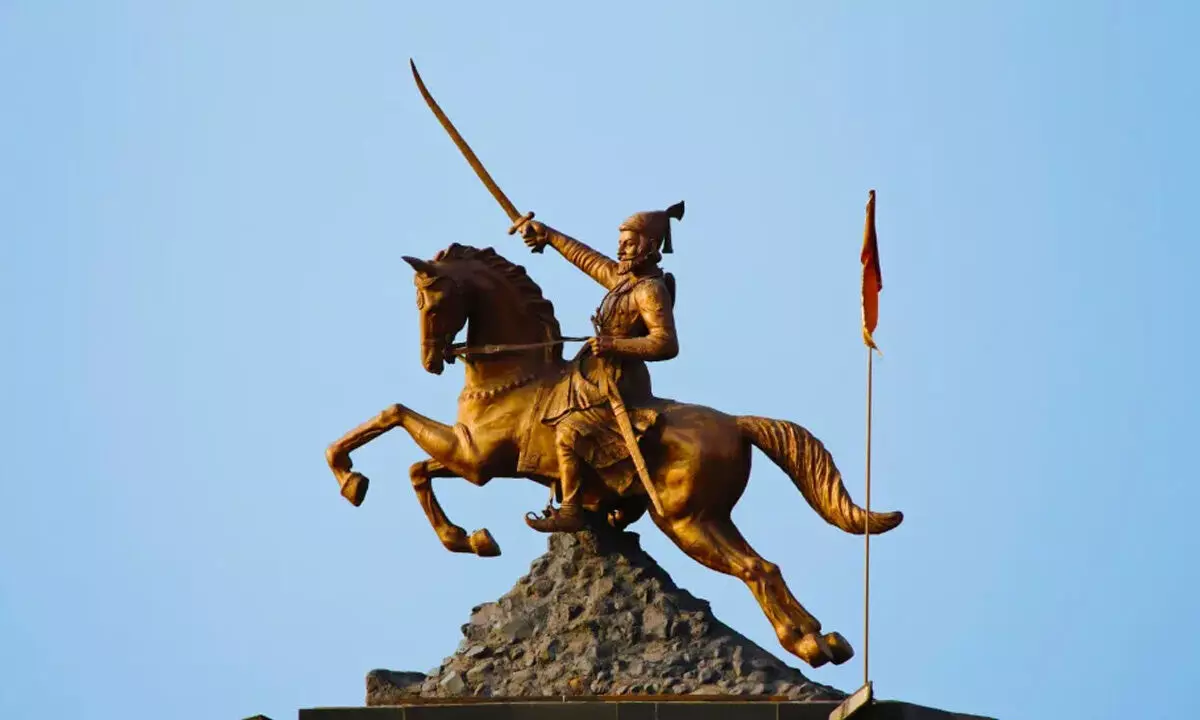
Shivaji Maharaj’s remarkable journey began at Shivneri Fort, a powerful stronghold that symbolised resilience, strategy and Swarajya.
Every year on February 19, Maharashtra celebrates the birth anniversary of Chhatrapati Shivaji Maharaj with pride and devotion. The slogans, cultural programs and processions honour a ruler whose vision transformed the political map of 17th-century India. Yet, before he built an empire fortified by hundreds of strongholds, his own life began within the protective walls of a formidable hill fort — Shivneri Fort.
Perched above the historic town of Junnar in Pune district, Shivneri Fort stands amid the rugged terrain of the Sahyadri ranges. Its steep cliffs and strategic elevation made it nearly impregnable in its time. It was here, on February 19, 1630, that Chhatrapati Shivaji Maharaj was born to Shahaji Bhonsle and Jijabai.
The fort’s natural defenses — sheer rock faces on all sides and a narrow access route — ensured security against invasions. For a child destined to establish Swarajya, the surroundings were both symbolic and strategic. Even today, visitors can see the site believed to be his birthplace, along with statues and remnants of the palace where Jijabai once lived.
Engineering Marvel of Its Time
Shivneri Fort is not just historically significant; it also reflects the engineering expertise of its era. The structure features seven massive gates, each designed to slow and exhaust advancing enemies. Within its walls lie ancient rock-cut water cisterns, famously known as Ganga and Jamuna, which ensured a steady water supply.
The fort is believed to be named after the local deity Goddess Shivai, to whom Jijabai is said to have prayed. This spiritual and cultural dimension adds another layer of meaning to the site, making it a place of reverence as well as history.
Today, Shivneri attracts thousands of tourists and history enthusiasts who climb its winding paths to witness the origins of a legacy that reshaped the Deccan.
The Architect of Fort-Based Power
While Shivneri gave him life, forts gave Shivaji Maharaj power. He understood the geographical advantage of the Deccan’s hills and coastlines better than most rulers of his time. Fortifications became the backbone of his military strategy.
One of his earliest and most significant capitals was Rajgad Fort, which served as the centre of his administration for over two decades. With its sprawling base, multiple plateaus and central citadel, Rajgad was designed to withstand prolonged sieges.
Another defining stronghold was Pratapgad Fort, constructed in 1656. Strategically located to command important routes, it became historically significant due to key military encounters that strengthened Shivaji’s position in the region.
Later, the capital shifted to Raigad Fort, situated approximately 820 metres above sea level. Designed under the supervision of architect Hiroji Indulkar, Raigad became the ceremonial and administrative heart of the Maratha Empire. It was here in 1674 that Shivaji was crowned as Chhatrapati, marking the formal establishment of his sovereign rule.
Mastery Beyond the Mountains
Shivaji Maharaj’s strategic vision extended beyond hill forts. Recognising the growing presence of European colonial powers and regional naval threats, he strengthened coastal defenses as well. The construction of Sindhudurg Fort in the Arabian Sea demonstrated his foresight in maritime security.
Built on an island with massive stone walls rising directly from the sea, Sindhudurg symbolised a shift toward naval preparedness. Its robust foundation and design enabled it to endure powerful tides and enemy assaults, laying the groundwork for India’s naval traditions.
A Legacy Carved in Stone
By the end of his reign, Shivaji Maharaj controlled more than 300 forts — some newly built, others captured and strengthened. Each was carefully chosen for its geographic advantage, reinforcing his belief that terrain itself could serve as a weapon.
From the towering cliffs of Shivneri to the sea-facing bastions of Sindhudurg, his life was intertwined with fortresses that stood as guardians of Swarajya. His story began in a hill fort, but it was his unmatched understanding of defense, administration and geography that turned stone walls into symbols of resilience.
As Maharashtra marks his Jayanti, Shivneri Fort remains a powerful reminder that great journeys often begin in places shaped by courage and vision.