The art and science of cooking at scale

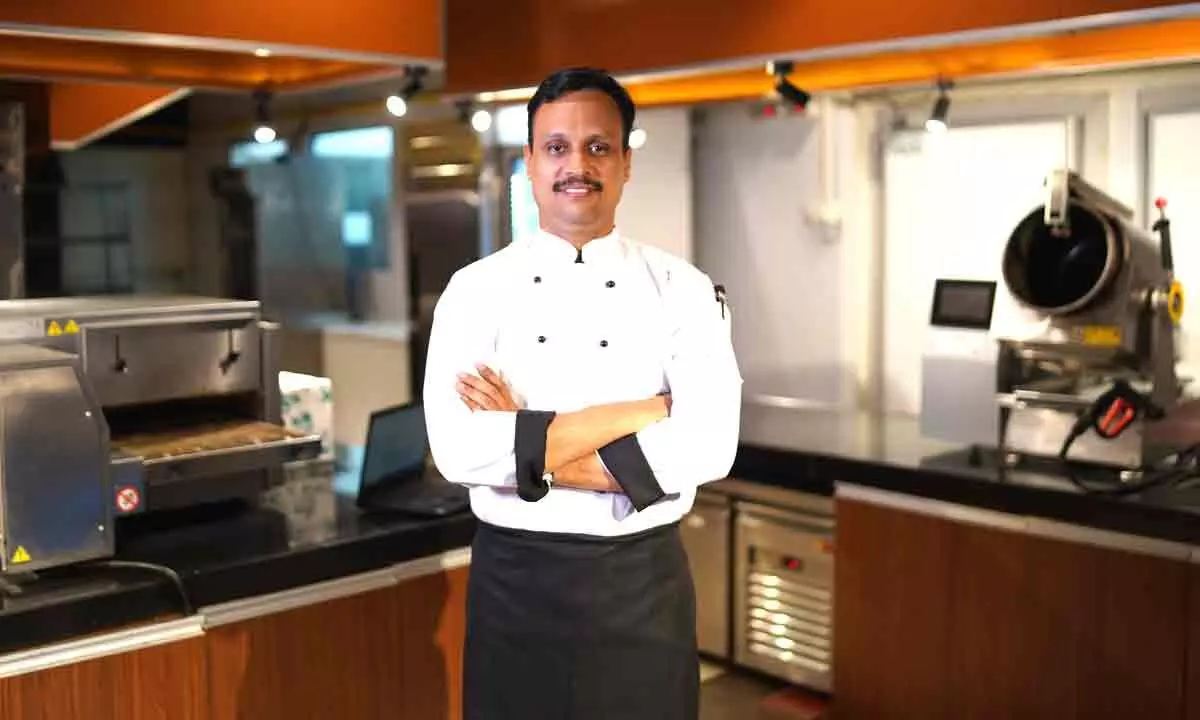
Balancing creativity with consistency is one of the toughest challenges in modern food businesses—and Chef Vijay Pandey has mastered it. As Corporate Chef at Rebel Foods, he applies deep culinary fundamentals across cuisines while building systems that deliver quality without compromise.
Balancing creativity with consistency is one of the toughest challenges in modern food businesses—and Chef Vijay Pandey has mastered it. As Corporate Chef at Rebel Foods, he applies deep culinary fundamentals across cuisines while building systems that deliver quality without compromise. Here, he talks about early lessons, large-scale cooking realities, and how a technical lens has transformed his approach to Indian food
What part of your early kitchen experience still influences how you cook today?
My early kitchen years taught me one fundamental rule: win the customer’s heart by delivering a true WOW experience. That means a chef’s promise never cutting corners, never compromising on ingredients or process. Even today, I believe in cooking only what I would proudly eat myself at that price point. That integrity has stayed with me throughout my journey.
What was the hardest food habit to unlearn when you moved into large-scale cooking?
In a restaurant kitchen, you have instant interaction with customers. You can rework a dish, respond immediately, and ensure the guest leaves happy. In large-scale cooking, feedback often comes days later. Unlearning that immediacy and instead building systems that consistently deliver the same quality without real-time interaction was one of the biggest challenges.
How has working across different cuisines changed your approach to Indian food?
Working across cuisines made me realise that all food, at its core, follows the same fundamental processes cutting, marinating or curing, steaming, frying, sautéing, baking, assembling, and garnishing. What truly sets a dish apart is the choice of ingredients, the precision of time, and temperature control. This understanding has helped me look at Indian food with a more technical yet creative lens.
What mistakes taught you the most in your journey as a chef?
One key learning was understanding that it’s better to deliver a product you truly know and believe in, rather than going extra miles without clarity. Over time, I learned to listen closely to customer feedback, refine dishes, innovate thoughtfully, and curate recipes that are dynamic yet familiar food that customers genuinely enjoy and come back for.
After years in professional kitchens, what still excites you about cooking every day?
Cooking has incredible depth and endless opportunity to showcase creativity, with the added thrill of seeing ideas come to life quickly. Customer appreciation and honest feedback motivate me to constantly upgrade recipes. That creates a flywheel faster evolution of dishes, staying ahead of trends, and continuously raising the bar on quality.