Gujjarakere pond water remains heavily polluted

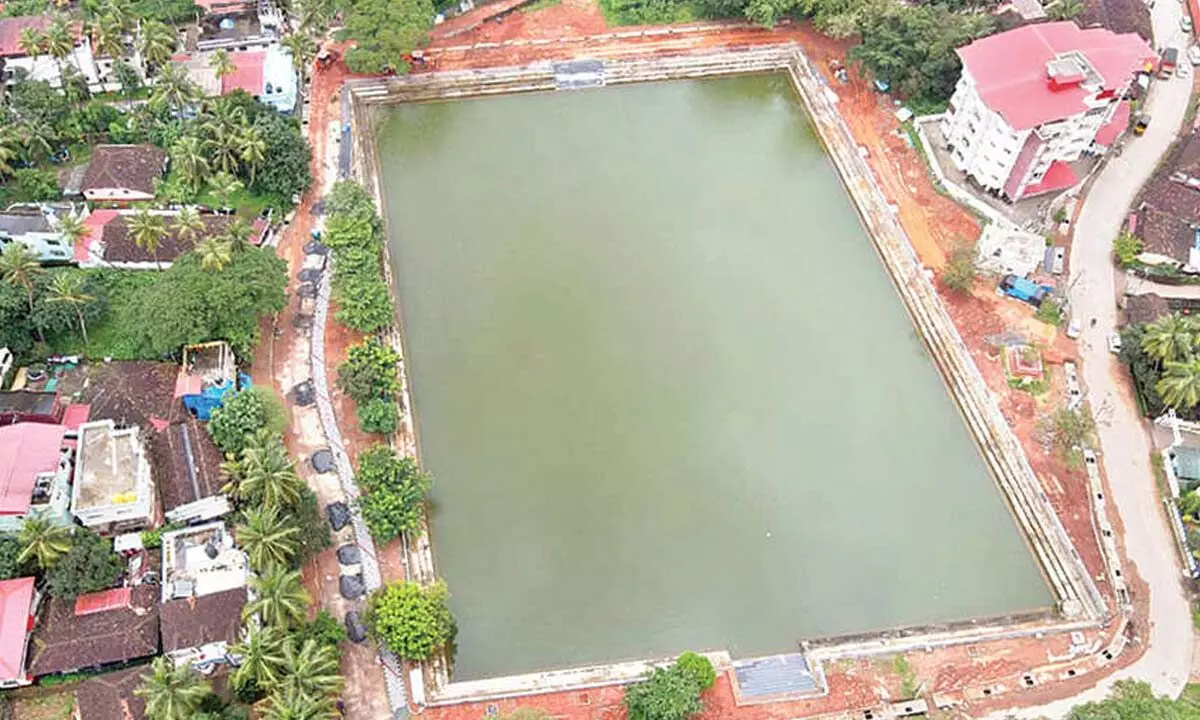
Mangaluru: Recent laboratory tests have once again confirmed that the water in Gujjarakere pond in Mangaluru is heavily polluted and entirely unfit for human consumption. Long regarded as a sacred site with supposed medicinal qualities, the pond is now overrun with harmful bacteria.
The latest analysis shows extremely elevated contamination levels, primarily due to ongoing sewage discharge into the water body. Under the Smart City initiative, substantial funds were allocated to enhance the pond’s appearance through landscaping and beautification efforts. While the surroundings now look more appealing, the water itself remains dangerously contaminated. Residents have repeatedly raised the issue with Mangaluru City Corporation and Smart City authorities, but effective steps to stop the sewage inflow or clean the pond have not materialised.
The most recent samples recorded a total coliform count of 1,600 per 100 ml and a faecal coliform count also at 1,600 per 100 ml. These figures far exceed safe limits and indicate severe health risks. The report clearly declares the water unsafe for drinking or any domestic use.
Just seven months earlier, tests had already shown serious pollution, with total coliform at 1,600 and faecal coliform at 500 per 100 ml. The doubling of faecal coliform in such a short time points to worsening sewage contamination.
Historical data further illustrates the persistent problem. Water quality checks in 2014 and 2015 detected bacterial counts around 1,100, and subsequent tests in 2016 revealed a steady upward trend in pollution levels.
Standard water quality guidelines consider total coliform counts of zero per 100 ml as ideal for potable water. Levels between 1 and 3 are tolerable, 4 to 10 are poor, and anything above 10 makes the water unsuitable for drinking. Faecal coliform bacteria should be entirely absent. The current readings of 1,600 for both indicators place the pond in an extremely hazardous category.
Despite its deep cultural and historical importance to the community, Gujjarakere continues to deteriorate. Local people are increasingly frustrated by the lack of decisive intervention and are pressing for urgent measures to divert sewage away from the pond and restore its water quality before the situation worsens further.