Court upholds death penalty in Dilsukhnagar bomb blast case; dismisses appeals

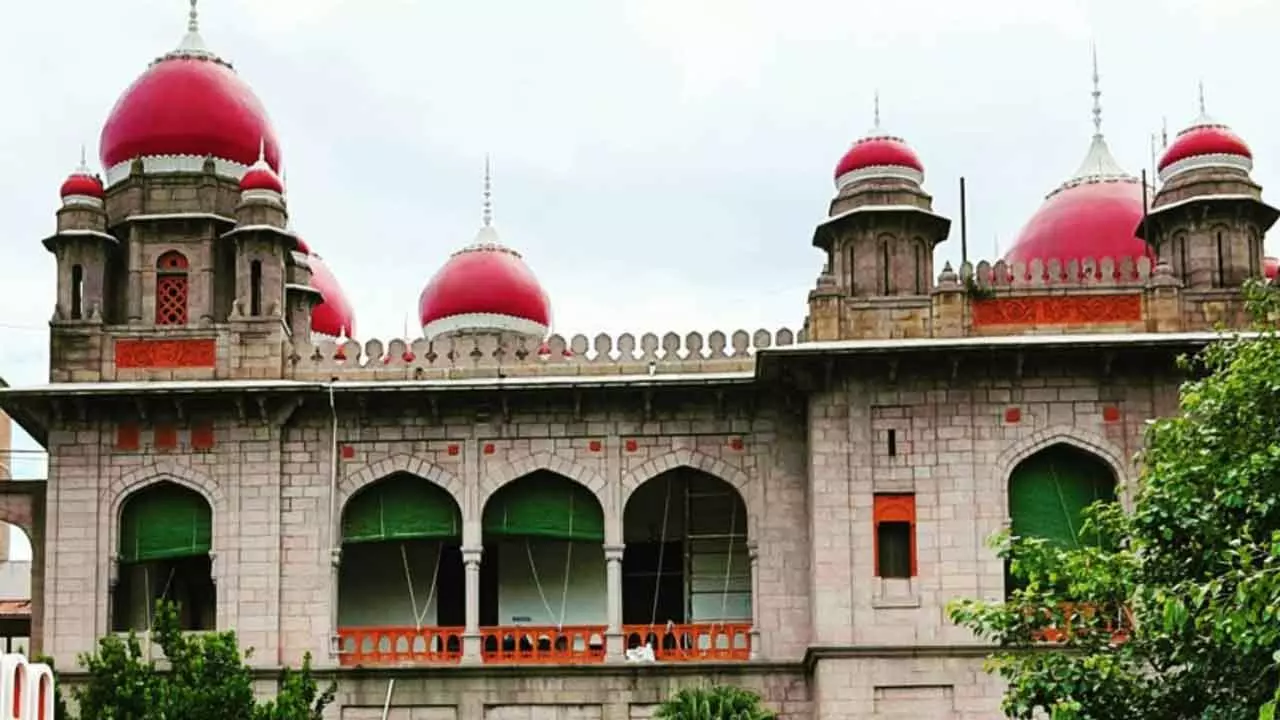
Hyderabad: In a significant judgment, the HC on Tuesday delivered a sensational verdict in the Dilsukhnagar bomb blast case, reaffirming the death penalty for all five convicts. The blasts, which shook the nation on February 21, 2013, claimed 18 lives and left over 131 injured.
The division bench of Justices Kunuru Laxman and P Sree Sudha dismissed appeals filed by convicts and upheld the special NIA court ruling. The National Investigation Agency (NIA) had conducted a detailed investigation into the serial bombings. On December 13, 2016, the court awarded death sentence to the accused. After nearly 45 days of hearings, the HC finalised its verdict, confirming the conspiracy charges and capital punishment.
Those whose death sentences have been upheld are: Asadullah Akhtar (A-2), Zia-Ur-Rehman (A-3), Mohammed Tahseen Akhtar Hassan (A-4), Mohammed Yasin Bhaktal (A-5) and Ajaz Sheikh Samar Arman (A-6). The main accused, Riyaz Bhaktal alias Mohammed Riyaz, remains absconding. Another key figure, Indian Mujahideen terrorist Syed Mukhbal, who played a significant role in the bombings, died at Gandhi Hospital last year due to illness.
The twin blasts were executed using improvised explosive devices (IEDs) concealed in tiffin boxes and planted on bicycles. The first explosion occurred at the Dilsukhnagar bus-stand, followed just six seconds later by a second blast 100 meters away at the Mirchi Centre. The incident caused widespread devastation and deep trauma among the victims and their families.
With the HC decision the convicts have the option to appeal to the Supreme Court. Additionally, they may seek clemency from the President as a final recourse. The upholding of the death sentences underscores the severity of the crime and the judiciary’s commitment to addressing acts of terrorism with stringent penalties.
KTR files criminal petition seeking to quash FIR; HC reserves orders
The HC single bench of Justice Kunuru Lakshman on Tuesday “reserved orders” on the criminal petition filed by BRS working president KTR seeking quash of FIR 205 of 2024 registered against him in Utnoor PS (Adilabad district}. The FIR was registered on a complaint by Athram Suguna, who had contested the Lok Sabha election-2023 on a Congress ticket, on October 3 stating that KTR had accused the Congress of siphoning of Rs. 25,000 crore from the Musi Project.
The complainant informed the police that KTR has made wild allegations against the Congress which is embarrassing to the party. Such comments damage reputation of the Congress.
BRS leader seeks quash of 3 FIRs for posting fake videos on Kancha Gachibowli land
*Notice issued to State, de facto complainant
On Tuesday, The Telangana High Court single bench of Justice N Tukaramji on Tuesday directed the investigating officer to issue notice to Manne Krishank, BRS social media convenor and investigate the case. Krishank is accused of posting fake videos of “dead deer” on X platforms (Twitter) trying to establish that it was killed by officials deputed to clear 400 acres of Kancha Gachibowli land, behind the HCU, of boulders, rocks, trees and plants, as the land was alienated to TGIISC.
Three FIRs were registered against Krishank--FIR 621, FIR 630 and 632 under Sections 353(2), 353 BNS in Gachibowli PS on a complaint by B Lakshman, Forest Range Officer, Chilkur, Manne Satish Kumar, chairman, TPCC Social Media department, and B Arundwaj Reddy, NSUI-Telangana.
The complainants contend that posting of fake videos of dead deer on “X” handle, by lifting such content from the internet, will promote enmity, hatred and ill-will between different religious groups, regional groups, castes and communities. They sought action against the petitioner. The complainants contend that such posting of fake videos on the X handle will damage the government reputation.
During the hearing, the judge observed that the alleged offence committed by the petitioner is the same; three FIRs are registered for the same offence in the same PS. He directed the IO to issue notice to the petitioner, investigate the case before taking action. Hearing in the case was adjourned by four weeks. The government was directed to file its counter-affidavits.