Irrigation expert averse to Banakacherla link project

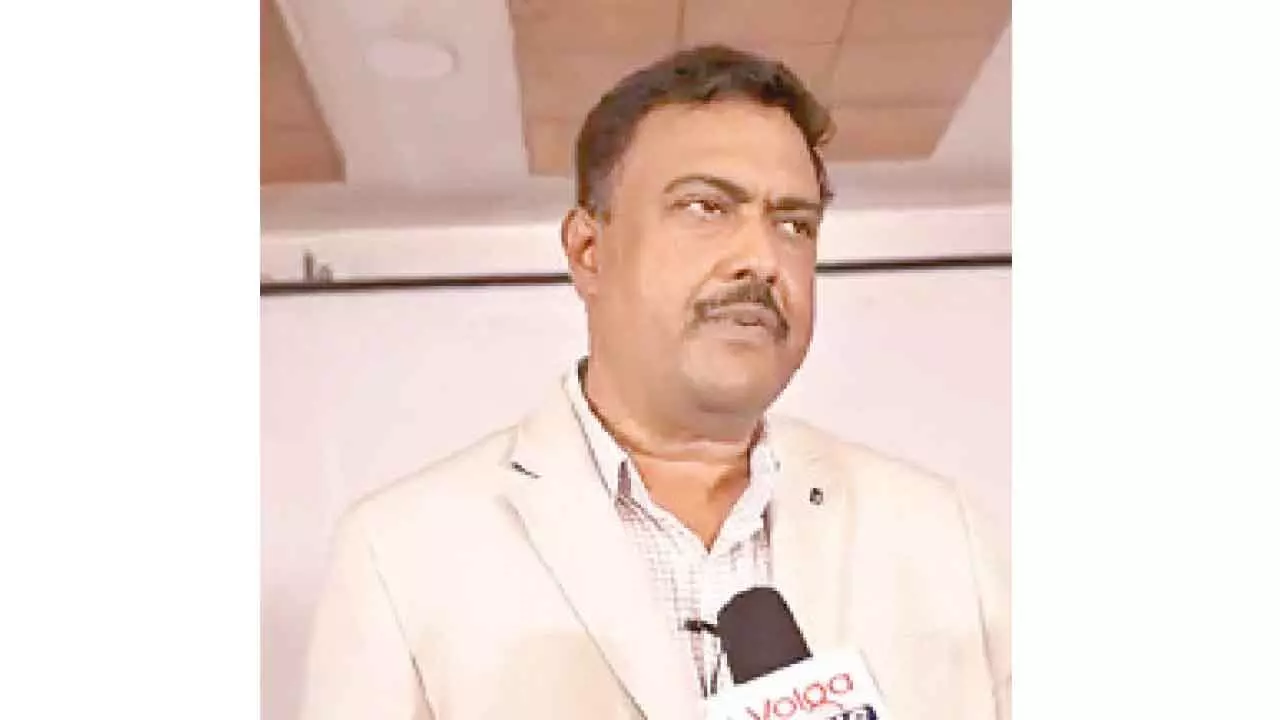
Hyderabad: Amidst the escalating political dispute between Telangana and Andhra Pradesh, Vedire Sriram, a prominent irrigation expert and Chairman of the Task Force on Interlinking of Rivers, Government of India, has expressed opposition to the proposed Godavari-Banakacherla Link project. He asserted that the project contravenes the Godavari Water Disputes Tribunal (GWDT) award.
Sriram, who also served as a former Advisor to the Jal Shakti ministry, highlighted that the project’s construction, utilising floodwaters, is not permitted under the tribunal award. He further noted that the project lacks the mandatory 70 per cent water dependability required for approval by the Central Water Commission (CWC) and the Union Ministry. He explained that the Pre-Feasibility Report suggests floodwaters from Polavaram Dam would be diverted to the River Krishna (Prakasam Barrage) through a new parallel canal alongside the Polavaram Right Main Canal, with a capacity of 510 cumecs. In this regard, the government should clarify how “flood water” is being defined and how its computation is being done. The Andhra Pradesh government should also clarify whether it conforms to the GWDT award.
“The CWC received a pre-feasibility report, and the legality of water utilisation is important,” Sriram stated. “The Commission has asked Andhra Pradesh about the dependability of water for the proposed 200 TMC project. A list of 7 states’ projects, assured water, and unapproved projects was also sought from Andhra Pradesh.” Sriram cautioned that “operational problems will arise once Banakacherla is completed without water allocations for the project.”
The irrigation expert also mentioned that Telangana is already opposing the Banakacherla project, and the ministry has already sought opinions from co-basin states, primarily Maharashtra, Chhattisgarh, Karnataka, and Odisha. He predicted that once these states voice their concerns, the demand for opposing the project would be strengthened.