Rajkot’s clutter-free city model wows GHMC delegation

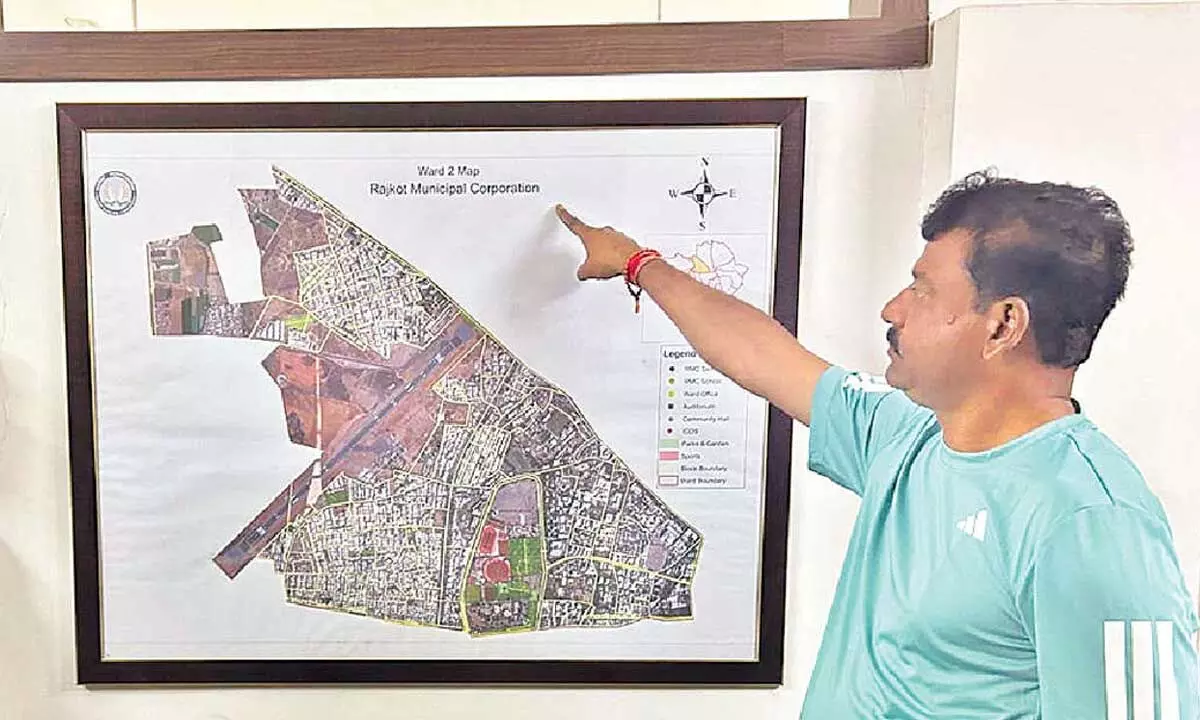
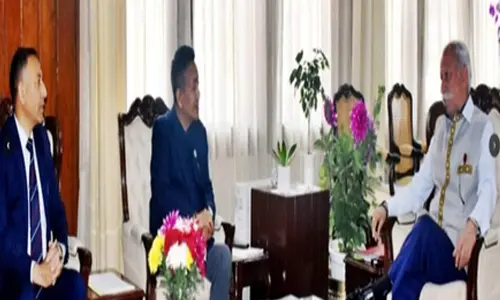
Hyderabad: Aspart of an official study tour, the Greater Hyderabad Municipal Corporation (GHMC) Mayor, Gadwal Vijayalakshmi, along with Deputy Mayor Mothe Srilatha Shobhan Reddy and a team of GHMC corporators, visited the Rajkot Municipal Corporation (RMC) in Gujarat’s Saurashtra region on Thursday.
During the visit, the GHMC delegation held detailed discussions with senior officials of the Rajkot Municipal Corporation, who made comprehensive presentations on the city’s governance model, administrative efficiency and key best practices being implemented at the field level.
The presentations covered areas such as sanitation, solid waste management, civic services, e-governance initiatives, urban greenery, environmental protection and long-term development planning.
Subsequently, the corporators undertook extensive field visits across Rajkot city to study these practices first-hand. One of the notable observations was the absence of flex banners and flex-based hoardings, contributing to a clutter-free urban landscape.
The delegation also noted the systematic installation of tree guards for all saplings and the provision of protective grills around all electrical transformers to enhance public safety.
A key practice that drew attention was Rajkot’s approach to household waste collection. Unlike GHMC, where a monthly user charge of Rs 100 is collected separately through Swachh autos, Rajkot has integrated the solid waste collection fee into the property tax system. Under this model, an annual charge of Rs 350 for residential properties and Rs 730 for commercial establishments is levied along with property tax.
The corporators identified these measures as significant best practices and undertook a detailed study of their feasibility for adoption in Hyderabad. They expressed their intent to work towards implementing suitable practices in Greater Hyderabad to further improve civic services and urban management.
The delegation also observed that in several other areas, including sanitation operations and the use of facial attendance systems for sanitation workers, the practices currently followed by GHMC were found to be on par or better.
Following the conclusion of the Rajkot visit, the GHMC delegation proceeded to Ahmedabad, where further field-level studies on urban best practices are scheduled for Thursday evening and Friday.
Upon completion of the study tour, the corporators will submit a comprehensive report on best practices to the GHMC for consideration and possible implementation.