
When terror groups won’t fight: Inside Pakistan’s losing battle with BLA
Share :
New Delhi: The plan to bring together the Lashkar-e-Taiba and Islamic State Khorasan Province (ISKP) to fight against the Balochistan Nationalist Army (BLA) and Tehreek-e-Taliban Pakistan (TTP) appears to have failed.
The Pakistan army and ISI hatched a plan to bring the two terror groups together to battle the BLA and TTP, as the battle against these two groups was proving to be extremely hard.
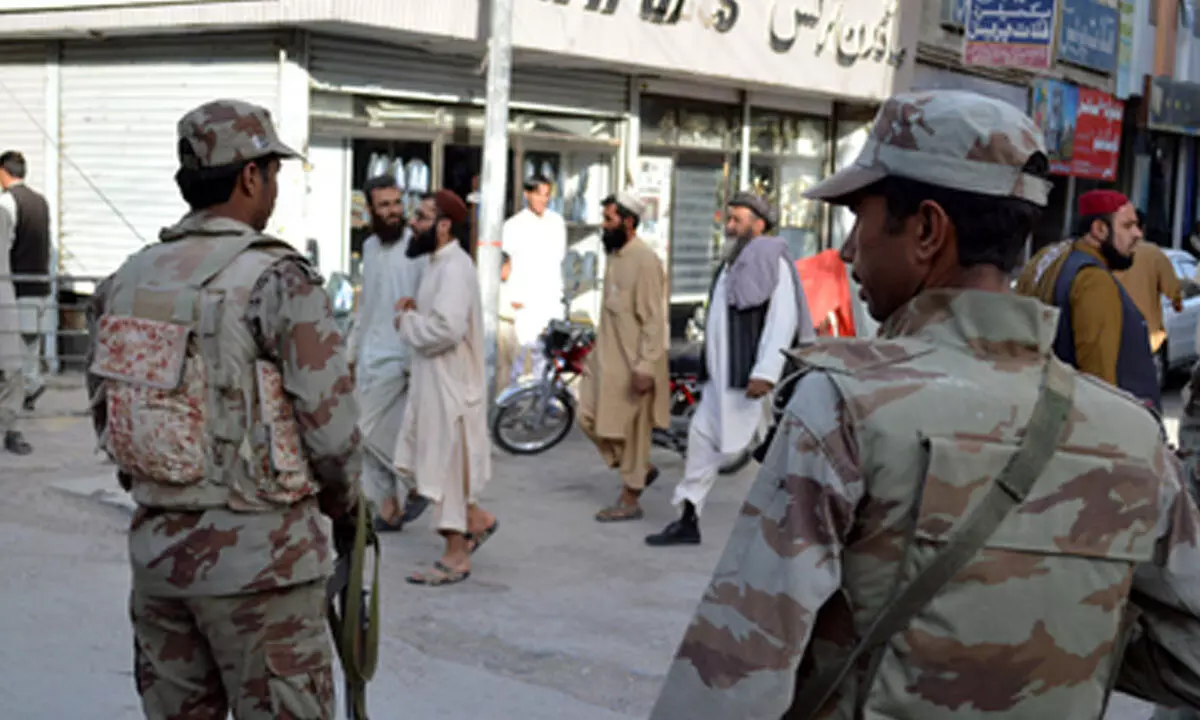
The BLA launched a series of attacks in Quetta and other places in "Operation Herof Phase 2". The attacks lasted for more than 40 hours, and the BLA has claimed that it managed to kill 200 Pakistani security personnel. While the claim by the BLA is not verified, the group says that these are preliminary and cautious estimates.
Balochistan Chief Minister Sarfraz Bugti said that 17 law enforcement personnel and 31 civilians were killed in the attacks. Officials say that the gamble of bringing together the ISKP and Lashkar-e-Taiba failed, and neither was able to overwhelm the BLA fighters. Instead, the Pakistan establishment was left red-faced owing to this massive attack, the official added.
Experts say that the establishment is finding it hard to battle the BLA since this has become a mass movement. The Baloch people are coming out in very large numbers to battle the Pakistani establishment, watchers say.
Another official mentioned that this will continue to be a bloody battle, and the BLA is not in any mood to slow down. The Pakistan establishment, instead of attempting to pit two terror groups and the army against the BLA, should instead negotiate and give in to the demands that are being made.
The Baloch people are ready to fight to the very end, but will not surrender to the establishment, the official added.
Given the kind of attacks that have taken place, it would be just a matter of time before the ISKP and Lashkar-e-Taiba withdraw from the fight, another official said.
When asked if Pakistan would try to deploy other terror groups, such as the Jaish-e-Mohammad, he said that it is highly unlikely. While the BLA is too powerful to battle against, many cadres within these terror groups are unwilling parties, and hence, this experiment has failed.
While analysing the attacks, it appears that the BLA has come out with a fresh resolve. Every fighter in the BLA is a willing party, and this resolve is what is making it hard for the Pakistan establishment to handle.
The BLA said that even women were part of the attacks. Among them was Asifa Mengal, who carried out a "VBIED (vehicle-borne improvised explosive device) operation during which the ISI headquarters in Noshki was targeted.
Pakistan Defence Minister Khwaja Asif acknowledged that two of the attacks involved women perpetrators. Officials say that there does not seem to be an immediate end in sight to the fighting.
BLA commander Bashir Zaire Baloch has called on supporters to mobilise. The people of Baloch will respond to this call, and this is what is causing a nightmare for the Pakistan establishment.
An Intelligence Bureau official said that Pakistan's proxies, especially the Jaish-e-Mohammad and Lashkar-e-Taiba, would tread more carefully in the future while responding to the calls made by the Pakistan establishment.
These groups are low on morale post Operation Sindoor. This has led to a sloppy recruitment drive, and the re-grouping is harder than what the ISI may have imagined.
Given the circumstances, these terror groups would not want to take up the Baloch assignment for fear of losing more face and people.
This would spell doom for the revival plans as more and more potential recruits would avoid joining these terror outfits.








