AAP slams govt’s cloud seeding experiment as ‘publicity stunt’


The Aam Aadmi Party (AAP) has launched a sharp attack on the Delhi government over its recent attempt to induce artificial rain through cloud seeding, calling the exercise a publicity stunt and a waste of public money.
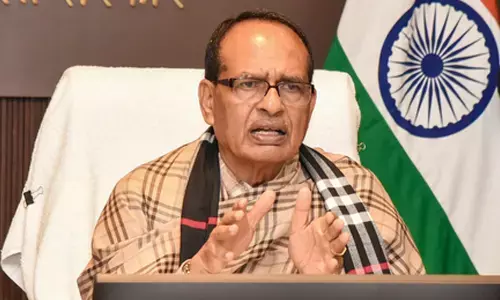
Addressing a press conference at the party office on Wednesday, state party president Saurabh Bhardwaj alleged that the entire campaign was unscientific and carried out only for show. “Pollution in Delhi is a serious issue, but it must be tackled through science, not drama,” he said, accusing the government of misleading the public.
According to Bhardwaj, officials had promised artificial rain after Diwali but failed to produce any results. “They first said rain would be induced at noon, then postponed it to 4 p.m., and finally, nothing happened,” he said. “This was an attempt to fool the people.”
Bhardwaj referred to official documents presented in Parliament in December 2024, in which three central scientific agencies — the India Meteorological Department (IMD), the Commission for Air Quality Management (CAQM), and the Central Pollution Control Board (CPCB), stated that cloud seeding is not feasible during Delhi’s winter.
“These agencies have clearly said that winter clouds over Delhi are formed due to western disturbances that naturally bring rainfall,” he said. “Aircraft cannot reach those high-altitude clouds, and even if rain is artificially created, the dry atmosphere causes it to evaporate before reaching the ground.”
He accused the Delhi government of ignoring expert advice and spending crores of rupees on what he called a “scientific mockery.” Bhardwaj demanded to know how such a project was approved despite clear warnings from national institutions and why taxpayers’ money was used to fund it. Bhardwaj also warned that the chemicals used in cloud seeding could pose risks to both the environment and public health. He demanded that Chief Minister Rekha Gupta disclose how much money was spent and what measurable results were achieved. “This is a complete scam,” he said. “Every rupee of public money must be accounted for.” Meanwhile, Delhi Environment Minister Manjinder Singh Sirsa defended the initiative, describing it as a scientific experiment aimed at reducing pollution levels in the national capital. Sirsa said that IIT Kanpur had conducted two rounds of cloud seeding using a Cessna aircraft equipped with salt-based and silver iodide flares, and a third phase was planned. The first test took place over Burari on September 23, followed by another round on Tuesday. “In the previous attempt, the moisture in the clouds was only 15 to 20 percent, which is too low for rainfall,” Sirsa said. “If we succeed, it will be a historic breakthrough.” He added that IIT Kanpur had launched eight flares during the process, each lasting two to two-and-a-half minutes, and expected improved outcomes in future tests.
Although the latest experiment did not produce rainfall, IIT Kanpur Director Manindra Agarwal described it as “a complete success.” He explained that while humidity levels were insufficient for rain, the process still led to a measurable improvement in air quality. Data from Delhi’s monitoring stations showed a 6 to 10 percent reduction in PM2.5 and PM10 levels following the experiment. “Even without rain, the fine particles in the atmosphere decreased, improving air quality slightly,” said Agarwal.