




- Arnab cyclone update: NTR District collectors urges officials to be alert
- Kashmir Marathon: J&K L-G calls for nurturing local talent, promoting healthy living
- Europe Braces for Another Weekend of Unrest as Protests Turn Violent in Several Countries
- Trump Says US Could Strike Iran on Sunday, Keeps Door Open for ‘Big, Beautiful Deal’
- Obama tears into Trump over Iran war, tariffs and ‘grifter’ presidency at Ohio rally
- CM Yogi welcomes PM Modi, Rajnath Singh to Varanasi for 'Wings over Ganges' air show
- Congress govt committed to advocates’ welfare, protection: Ministers
- Ponnam lays foundation for Rs 3.22-crore Uppal bus terminal
BJP Believes in Dividing People: Congress Believes in Unity-Kharge
In Short
"Governments stolen through 'vote chori' in West Bengal, Haryana, Bihar and Maharashtra must be removed," he said, urging people to take to the streets, fight for their rights and safeguard the Constitution.

Share :
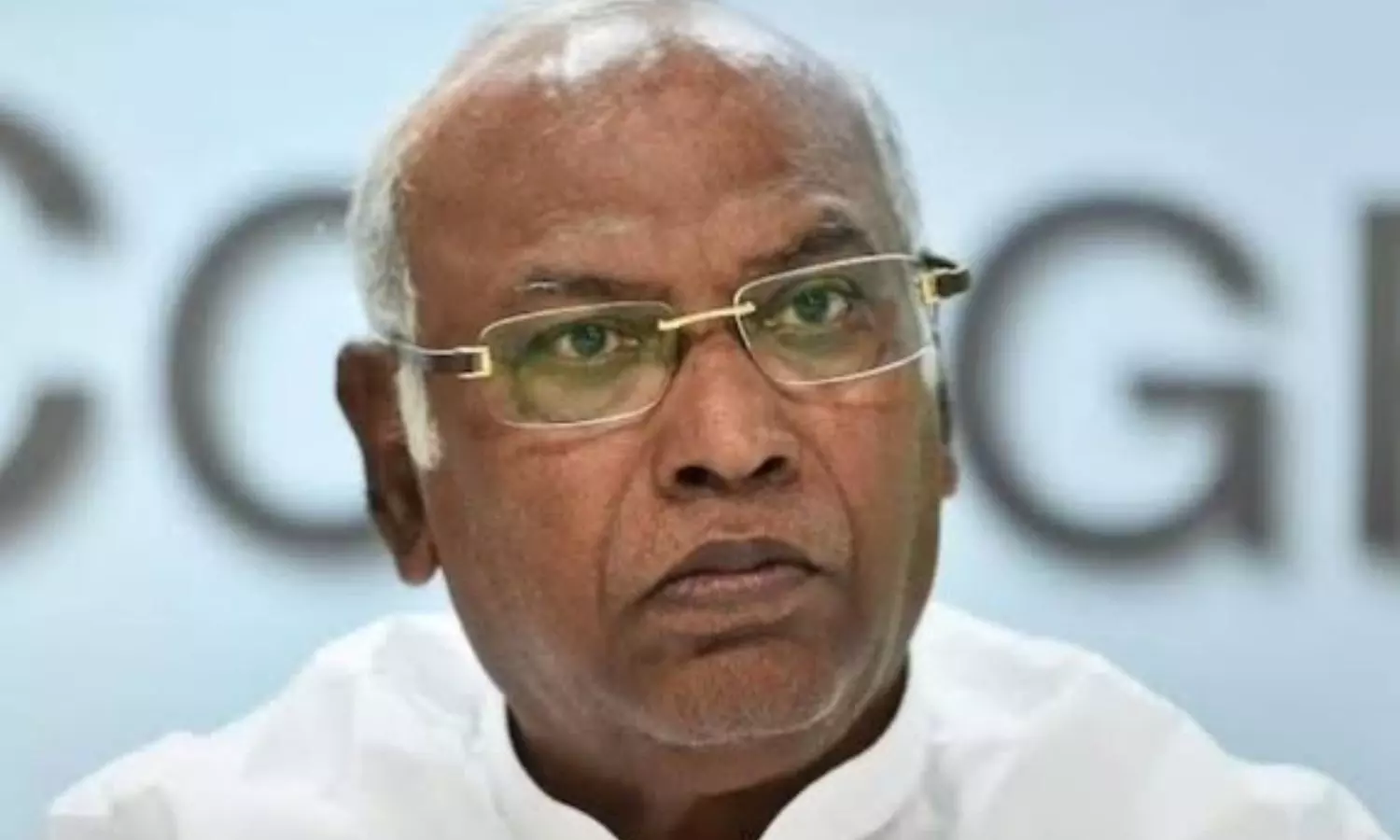
AICC president Mallikarjun Kharge
AICC president Mallikarjun Kharge alleged that large-scale manipulation of electoral rolls and deletion of names of opposition supporters were taking place in the country under the guise of SIR and questioned the integrity of the electoral process and the Election Commission.
"Governments stolen through 'vote chori' in West Bengal, Haryana, Bihar and Maharashtra must be removed," he said, urging people to take to the streets, fight for their rights and safeguard the Constitution.
Kharge demanded an immediate halt to the ongoing SIR exercise and annulment of all assembly elections held over the past two years, asserting that people deserved transparency and accountability from the Election Commission.
The Congress chief said, "Besides, elections should be held using ballot papers to ensure transparency and restore public confidence. Democracy must be protected, and every vote must count," he said.
Accusing the BJP of pursuing divisive politics, Kharge said, "We are patriots who believe in unity, equality and the Constitution -- not in dividing our people for political gain like BJP leaders," he said.
Paying tribute to Krishna Singh, Kharge said Bihar's first chief minister had helped lay the foundations of a modern state by building institutions and promoting agriculture, industry, education and irrigation.
Referring to JD(U) president Nitish Kumar, Kharge said the former chief minister had once stood alongside socialist leaders such as Ram Manohar Lohia and Jayaprakash Narayan but today he has aligned with the BJP. It is unfortunate that he opted for a dramatic shift from the legacy of socialist politics to sitting in the lap of the BJP, he said.
Kharge also called for action against those promoting untouchability and engaging in 'suddhikaran' (purification) practices, asserting that caste-based discrimination and exclusion undermined human dignity and equality.
"Our fight is not against religion; it is against discrimination in the name of religion. I take pride in my faith -- my name itself is inspired by one of the twelve Jyotirlingas. Faith should unite people, not divide them," he said.
The Congress president said Dalits must have the right to enter and worship at every temple in the country without discrimination.
He also criticised the filing of an FIR against Rahul Gandhi, who had visited Haldwani to protest an alleged 'suddhikaran' incident targeting him, saying it raised questions about the space available for those challenging the status quo.
Targeting the BJP over the controversy surrounding donations made at the Ram temple in Ayodhya, Kharge said, "I pray to Lord Ram to open his eyes and punish those who have looted wealth in his name."
BJP Believes in Dividing People: Congress Believes in Unity-Kharge
Subodh Uniyal apologises to Daler Mehndi, Mika Singh says, 'Hope we can put this behind us'
When Kareena Kapoor recalled dancing on Sridevi's popular songs
PM Modi's 'Mann Ki Baat' showcases citizens' contribution to nation-building: Nitin Nabin
Kharge’s Outburst Exposes Congress’s Frustration
Kejriwal more concerned about bus mafia, alleges Punjab BJP chief
LS Speaker Birla, Russian State Duma Speaker Volodin discuss expanding parliamentary cooperation
BRS Reviews Graduate Voter Registration Drive
PM Modi witnesses IAF's 'Wings Over Ganges' air show in Varanasi
PM Modi inaugurates new garment manufacturing facility in Varanasi, interacts with workers


