BJP Demands Apology After Offensive Remarks Target Modi At Bihar Rally


BJP condemns inappropriate language used against PM Modi at Congress rally in Bihar's Darbhanga, demanding Rahul Gandhi apologize despite his absence from the event during Voter Adhikar Yatra campaign.
A political storm has erupted in Bihar following a controversial incident at a Congress party event in Darbhanga, where offensive language was directed at Prime Minister Narendra Modi during the opposition's Voter Adhikar Yatra campaign. The Bharatiya Janata Party has launched a scathing attack on Rahul Gandhi, demanding an apology despite the Congress leader's absence from the particular event where the incident occurred.
A viral video from the Congress rally shows an unidentified individual from the crowd using the event's microphone to make inappropriate references about the Prime Minister's late mother. The incident took place during the Congress-led Voter Adhikar Yatra, a political campaign aimed at highlighting what the opposition calls electoral irregularities. The stage displayed prominent posters featuring Rahul Gandhi, Priyanka Gandhi Vadra, and Rashtriya Janata Dal leader Tejashwi Yadav, though neither Gandhi sibling was present at the time of the incident.
The BJP responded swiftly and strongly to the viral footage, expressing outrage over what it characterized as unprecedented political discourse. The party's official social media account condemned the language used, stating that such inappropriate references had never been witnessed before in Indian political campaigns. BJP officials emphasized that the remarks crossed fundamental boundaries of decency and respect that typically govern political discourse, even during heated campaign periods.
In their official response, the BJP highlighted the severity of the incident by noting that the offensive language was so inappropriate that it could not be repeated in their public statements. The party characterized the incident as representing a new low in political campaigning, suggesting that the opposition had abandoned traditional norms of respectful political engagement in their desperation to gain electoral advantage.
The ruling party extended its criticism beyond the immediate incident to encompass broader campaign strategies employed by the opposition alliance. BJP officials pointed out that the Voter Adhikar Yatra had featured participation from leaders whom they claimed had previously made disparaging remarks about Bihar and its people, including Tamil Nadu Chief Minister M.K. Stalin and Telangana Chief Minister Revanth Reddy.
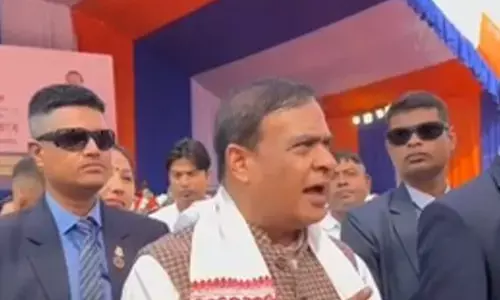
Senior BJP leader and Madhya Pradesh minister Vishwas Kailash Sarang reinforced his party's position while speaking to media representatives in Bhopal. He emphasized the global respect that Prime Minister Modi commands and criticized what he saw as attempts to undermine that reputation through inappropriate personal attacks. Sarang specifically called for Rahul Gandhi to personally apologize to the public for the incident, despite Gandhi's physical absence from the event.
The BJP's response included strong language suggesting that the incident represented such a serious breach of political norms that no amount of apologizing could adequately address the offense caused. Party officials stated that even if opposition leaders were to engage in dramatic gestures of contrition, the people of Bihar would not forgive such inappropriate behavior toward the Prime Minister and his family.
The controversy arises within the context of the Voter Adhikar Yatra, which represents Rahul Gandhi's broader campaign strategy to challenge what he characterizes as collaboration between the BJP and the Election Commission to manipulate electoral outcomes. This campaign has been touring various states as the opposition seeks to build momentum ahead of upcoming state elections, including the crucial Bihar assembly polls scheduled for October-November.
Neither Rahul Gandhi nor Tejashwi Yadav, nor their respective political parties, had issued immediate responses to the BJP's accusations at the time the controversy gained widespread attention. The absence of quick clarification or condemnation from Congress leadership has allowed the BJP to maintain pressure on the opposition alliance while framing the incident as representative of broader opposition campaign tactics.
The incident highlights the increasingly personal nature of contemporary Indian political discourse, where campaigns often feature attacks that extend beyond policy differences to include personal and family-related commentary. Such incidents raise questions about the boundaries of acceptable political rhetoric and the responsibility of campaign organizers to maintain control over event proceedings and messaging.
The timing of the controversy is particularly significant given the approaching Bihar state elections, where both the BJP-led alliance and the opposition coalition led by Congress and RJD are preparing for intense campaigning. Bihar has historically been a crucial battleground state where personal attacks and emotional appeals often play significant roles in voter mobilization strategies.
The viral nature of the video has amplified the controversy beyond Bihar's borders, making it a national political issue that both sides will likely use to shape broader narratives about their opponents' character and fitness for leadership. The incident demonstrates how quickly local campaign events can escalate into major political controversies in the current media environment, where social media amplification can transform isolated incidents into defining campaign moments.