Ganjam’s rich folk tradition captivates Delhi

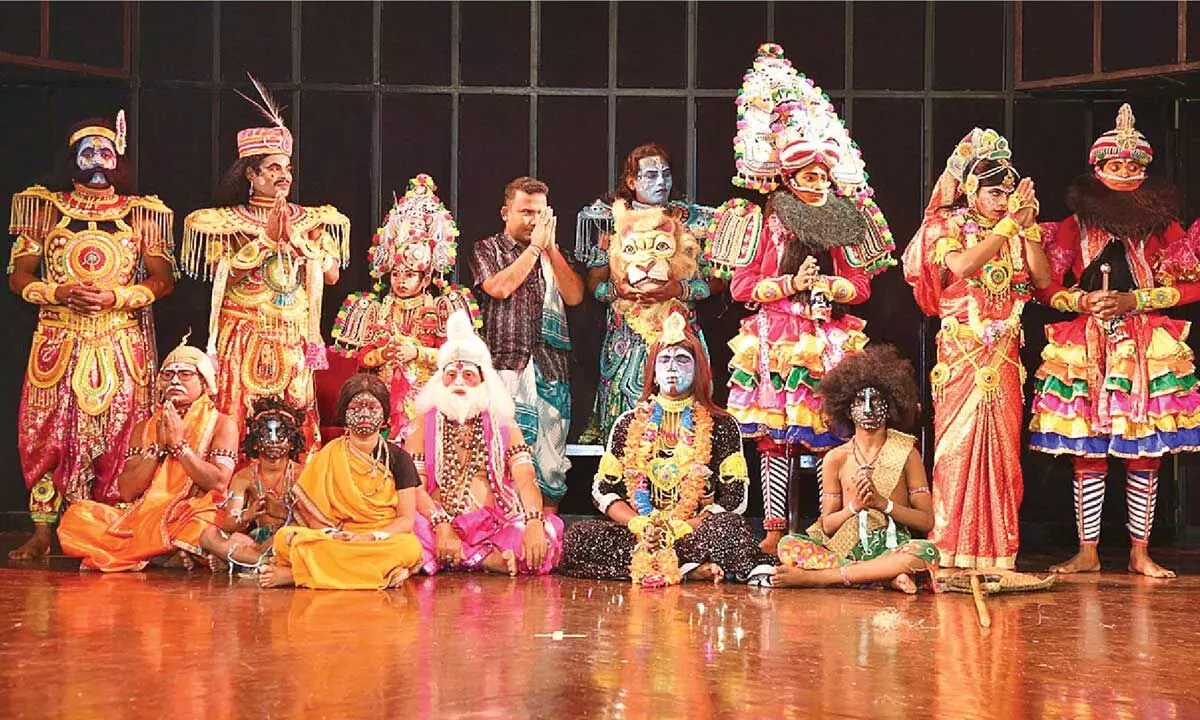
Berhampur: In a moment of cultural pride for Odisha, the fragrance of Ganjam’s ancient folk traditions wafted across national capital New Delhi. Anwesha Brahma, an ardent cultural practitioner from Ganjam district, presented “Bhanja Mati Ra Mahak – A Journey Through Odisha’s Folk Rhythms,” a two-day folk dance and theatre festival, on January 17-18 at India Habitat Centre in New Delhi. The festival resonated with heritage, devotion and living tradition.
Rooted in the culturally fertile land of Kabi Samrat Upendra Bhanja, the festival unfolded as a vibrant tapestry of rhythm, movement and storytelling, celebrating Odisha’s rich folk legacy through spell-binding performances by over 50 folk artistes from Berhampur and different parts of Ganjam district. The event was organisedby Anwesha Kala Kendra, Odisha, in collaboration with Sundar Odisha Foundation, New Delhi, with the larger vision of taking Odisha’s indigenous art forms to a national audience.
The inaugural day enthralled spectators with powerful folk-dance presentations, culminating in the majestic Prahlad Nataka, Odisha’s iconic open-air theatre tradition that blends spirituality, mythology and collective community expression. The second day unfolded with pulsating and ritualistic performances of Bagha Nacha, Chadheya Chadheyani, Nabadurga and Dholokirtana, offering Delhi’s cultural connoisseurs a rare and immersive encounter with Ganjam’s living folk traditions.
The festival was further elevated by the presence of Union Culture Minister Gajendra Singh Shekhawat, who lauded the initiative for carrying regional folk expressions to the national platform and showcasing the profound cultural wealth of Odisha.
Sharingher vision, Anwesha Brahma said, “Bhanja Mati Ra Mahak” is deeply personal. Ganjam’s folk traditions embody centuries of devotion, history and collective memory.
Bringing them to Delhi was my humble effort to ensure that the voices of our folk artistes are heard, honoured and celebrated beyond regional boundaries.”
The festival stood as a shining testament to months of meticulous preparation, artistic curation and logistical dedication, driven by Anwesha Brahma’s unwavering commitment to safeguarding Odisha’s intangible cultural heritage.
With ‘Bhanja Mati Ra Mahak,’ the heartbeat of Ganjam’s folk culture echoed far beyond its native soil, reaffirming that Odisha’s indigenous art forms continue to hold timeless relevance in the contemporary cultural landscape of India.