




- Anthropic launches new tools to help businesses monitor AI spending and costs
- PM Modi to inaugurate Rs 407.56-crore Banas Dairy projects, lay foundation stone for two Bio-CNG plants tomorrow
- Australian teenager dies in hospital after drive-by shooting
- 'Dangerous for democracy,' Kiren Rijiju hits out at Naseeruddin Shah over 'Dimagi Naxal' boast
- MP govt transfers 12 IPS officers, reshuffles police administration
- Cyberabad Traffic Police plans one-way loop to ease traffic at IT corridor
- Nearly Rs 35 Crore Allegedly Missing from PNB Accounts in Greater Noida, Five Employees Suspended
- KIIFB land probe puts CPI(M)’s Kannur citadel under scrutiny
Healthy Population Essential for Viksit Bharat 2047, Says JP Nadda at HealthWealth Summit
In Short
JP Nadda said a healthy population is crucial for Viksit Bharat 2047, highlighting India’s healthcare expansion, affordable medicines, cancer screening, digital health systems and preventive care.

Share :
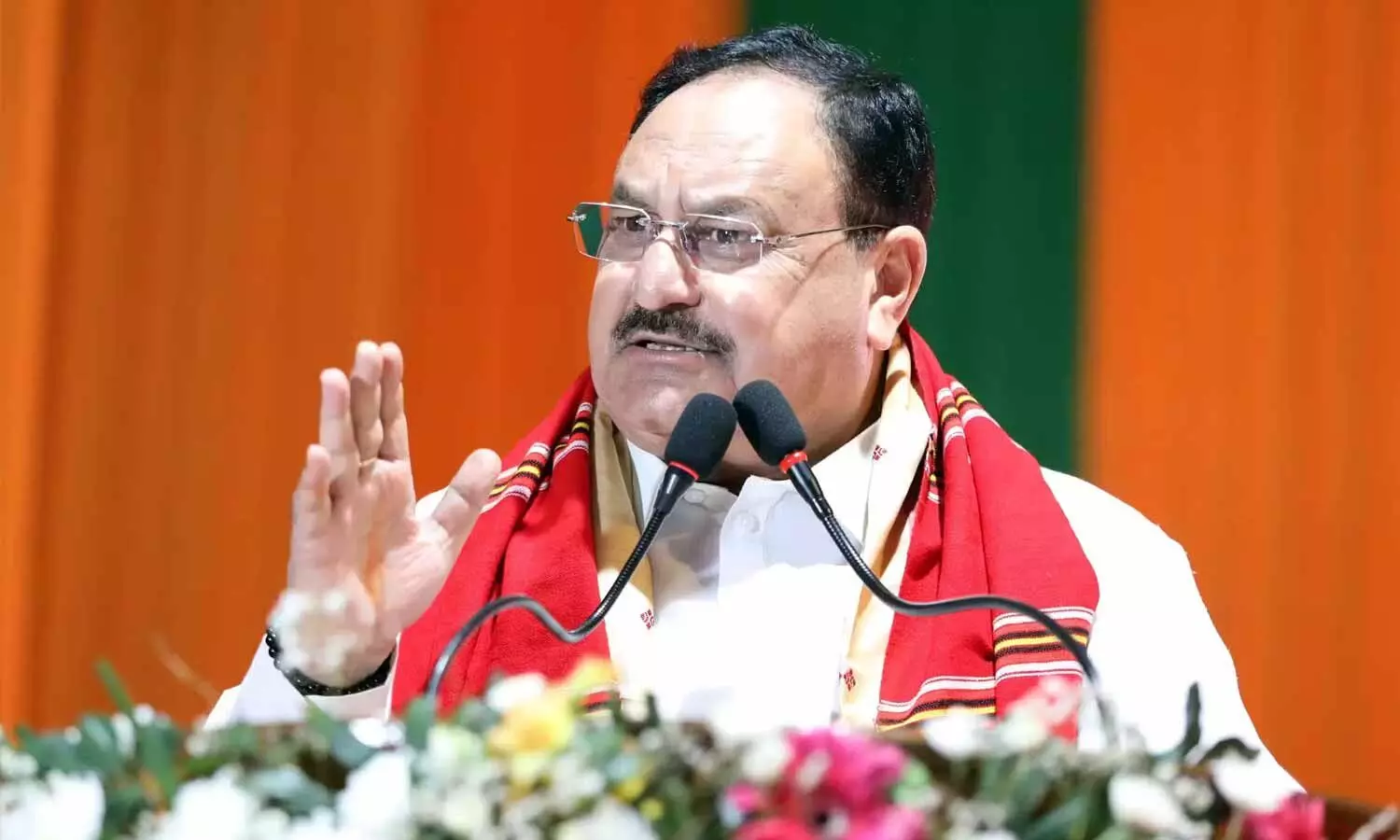
Healthy Population Essential for Viksit Bharat 2047, Says JP Nadda at HealthWealth Summit
The Union Health Minister JP Nadda on Thursday announced that development of Indian population would be the key to achieve the goal of becoming developed nation by 2047. At the first HealthWealth Summit hosted by India Today, he underscored the efforts of the Government to increase healthcare infrastructure, access to affordable medicines, digital healthcare systems and preventive healthcare.
The shift in the approach to healthcare in India, from the treatment centric to the prevention and community based one, was a welcome change, says Nadda. He highlighted the fact that the National Health Policy 2017 has taken a major step towards making healthcare more inclusive.
He emphasized that a robust medical workforce, medical technology and sufficient healthcare financing is essential to realizing the vision of Viksit Bharat.
1 Crore 86 lakh Ayushman Arogya Mandirs have been set up
Around 1.86 crore Ayushman Arogya Mandirs were set up in the country to enhance access to primary healthcare, Nadda said. They offer preventive services, disease screening and reproductive and child health care services in 12 service packages at these centres.
He also mentioned Mission Indradhanush to enhance immunisation coverage among children and pregnant women. Improving the health infrastructure was crucial to minimise movement of patients to big hospitals for regular treatment, Nadda said.
Cancer, Diabetes and Hypertension (HTN) screening for crores of people.Cancer, Diabetes and Hypertension (HTN) screening of crores people.
The minister pointed out the magnitude of the screening programs for non-communicable diseases. He said that about 44 crore people have been screened for hypertension and the same number for diabetes, and that five crore of them were diagnosed with diabetes.
He said that around 3.5 lakh people were detected with oral cancer during oral cancer screening, which was conducted on 37.7 crore people. About 91,000 breast cancer cases were detected through screening and 9.8 crore individuals were screened for cervical cancer with one lakh cases detected.
Nadda pointed out that the screening process has been digitalised and it would be further expanded, with the coverage expected to cross 100 crore people.
The aim of the AMRIT and Jan Aushadhi Schemes is to reduce medical costs.
Emphasising on affordable treatment, Nadda spoke about AMRIT stores and Pradhan Mantri Bhartiya Janaushadhi Pariyojana.
Around 6500 medicines were available on AMRIT stores with up to 50% discount margin and about 8.2 crore people benefited from the initiative, he said. Medicines at Jan Aushadhi stores are available for generic drugs at cheaper rates than some of the brand drugs.
The Jan Aushadhi network has grown to a size of about 2100 stores and has assisted patients in saving Rs 45 crore, Nadda said. Lowering out-of-pocket healthcare costs continued to be important, especially for those needing chronic care, he noted.
Financial Protection to Cancer patients under Ayushman Bharat Scheme
Ayushman Bharat was contributing in reducing the financial strain on the families of patients suffering from serious diseases like cancer, Nadda said.
He cited results reported in The Lancet to say that the scheme was helping patients to be treated for cancer within a month of diagnosis. He also remembered that some patients had expressed their fears of their families' savings drying up in order to pay for their treatments.
As per Ayushman Bharat, the insured family members will get coverage up to Rs 5 lakh per financial year. The aim was not to stop people from getting a proper treatment due to financial constraints, Nadda said.
Digital Health Systems Improves Patient Monitoring
The ASHA workers' role in pregnancy tracking and monitoring the health of mothers and children was mentioned by the health minister. Digital platforms enable workers to keep workers' information up to date and provide follow-up on key health care services.
He also mentioned the Ayushman Bharat Digital Mission to create an integrated digital health system. Aiming to create a digital health account, people can now maintain Ayushman Bharat Health Accounts (ABHA) under the initiative, which is connected with their medical records.
Around 98 crore ABHA account have been generated, Nadda said. The system aims to enable patients to access their health information and share it with their health care providers, with consent and under privacy and security protections. Data that is digitised can also help with medical research without compromising the confidentiality of individuals.
Around 220 Crore Covid Vaccine Doses were administered in India
Nadda said the country has the ability to put resources to work in a public health emergency, citing India's Covid-19 vaccination programme.
Around 220 crore doses of vaccines, including booster doses, have been administered to people, he said. India also developed two vaccines, he added, adding that it provided vaccines to 100 countries in nine months.
The minister stated that these efforts highlighted the significance of home resources such as research, production of medicines and an effective healthcare delivery system.
Healthcare Education and Facilities Improve
India had grown its capacity in medical education and healthcare infrastructure, with 23 AIIMS and 863 government medical colleges, Nadda said.
He shared the data that there were some 1.43 lakh undergraduate medical seats in the country and some 86,000 postgraduate seats. He added that the demand for doctors and other health workers was increasing and more could be added to the current number.
Highlighting treatment delays in newer medical institutions of the AIIMS, Nadda said it takes nine to 10 years to build a faculty and specialized skills in any medical institution.
He admitted he had struggled to recruit faculty due to the opening up of several AIIMS institutes around the same time. The problems with doctors moving between hospitals had also arisen. But he hasn't actually given an exact date for the cuts in waiting times for procedures like cochlear implant surgery on children.
Integrating the Centre-State Coordination – for better healthcare
Healthcare delivery needed cooperation between Centre and State governments, since it's a state subject, Nadda said.
He emphasized the Centre's cooperative federalism policy which includes financial and infrastructural support to the state. Some states are doing a good job of delivering health services, others require more support, he said.
The minister said that better health services would depend on "good coordination and increased infrastructure, tackling regional access gaps.
Alongside government initiatives, Nadda called on individuals to take greater responsibility for their health. He advised people to reduce their intake of carbohydrates, sugar and white rice, and to prioritise preventive healthcare.
He said developing healthy habits required consistency and encouraged people to exercise regularly without pushing their bodies beyond their limits.
“Have tasty food, but make sure it is healthy. Avoid heavy meals after sunset,” Nadda said, underlining the importance of making sustainable lifestyle changes.
Concluding his address, he said government programmes alone could not ensure a healthy population without individual efforts. He reiterated that better healthcare access, preventive measures and healthier habits would all be essential to achieving Viksit Bharat by 2047.
BJP Holds High-Level Huddle to Plan Rallies, Strategise for Polls
Heavy rain warning issued across Andhra Pradesh
Telangana likely to get rain and thunderstorm activity
UP govt bars those advocating ‘violent regime change’ from govt jobs
PM Modi chairs 54th PRAGATI meeting, reviews projects worth over Rs 16,000 crore
Cyclone Arnab damages Crops, CM Naidu to visit cyclobe hit areas


