




- Manoj Tiwari Takes Dip In Yamuna, Claims River Is Cleaner; AAP Challenges BJP To Drink Water At Kalindi Kunj
- Global security landscape increasingly fragmented, contested: Foreign Secretary Misri at VISV-2026
- Apple Raises iPhone, MacBook Prices as Chipmakers Gain Power
- West Bengal on Alert After Glacial Lake Outburst In Bhutan, Officials Monitor Sankosh River
- ‘Daya Karo, Soniaji!’ Delhi Chamber Makes an Emotional Appeal
- Recuperating Prasidh ruled out of NZ ODIs; Siraj added to India 'A' squad
- Chunky Panday wishes his 'little big girl' Ananya Panday on her birthday, shares adorable father-daughter moments
- ED raids four places in Bengal in Rs 280 crore bank fraud case
Manoj Tiwari Takes Dip In Yamuna, Claims River Is Cleaner; AAP Challenges BJP To Drink Water At Kalindi Kunj
In Short
BJP MP Manoj Tiwari dipped in the Yamuna at Sonia Vihar, saying that pollution has been reduced. The AAP disputed the BJP's assertion, citing data from the DPCC which demonstrated that several sections continued to be polluted, ahead of the Chhath Puja.

Share :
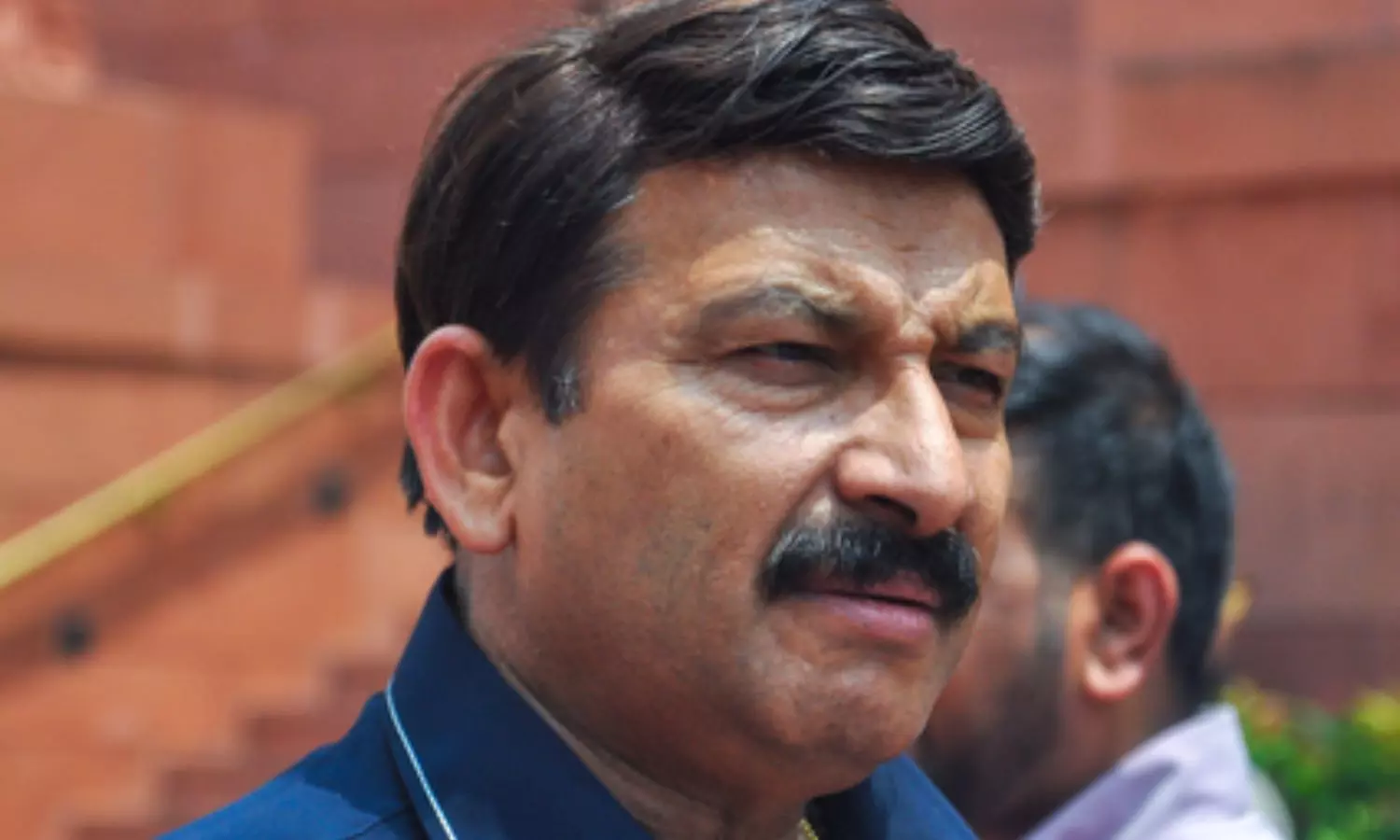
BJP MP Manoj Tiwari
BJP MP Manoj Tiwari’s dip in the Yamuna river has triggered a political exchange between the BJP and the Aam Aadmi Party (AAP), with both sides trading claims over the river’s cleanliness ahead of Chhath Puja.
Tiwari took a dip at Sonia Vihar ghat in Delhi on Thursday and also performed aachman, a ritual in which water is sipped. He claimed that pollution levels in the river had reduced by nearly half over the past year due to the cleaning initiatives undertaken by the BJP-led government under Chief Minister Rekha Gupta.
The North East Delhi MP also said the return of migratory birds to certain stretches indicated an improvement in water quality. He remarked that even crocodiles could be present in the river, arguing that their presence suggested cleaner water. Tiwari further claimed that devotees could once again celebrate Chhath Puja in the Yamuna.
In a post on X, he challenged former Delhi Chief Minister Arvind Kejriwal and Congress leader Rahul Gandhi to take a dip in the river. The Delhi BJP also claimed that its government had achieved in two years what the Congress and AAP could not accomplish in 27 years.
AAP questions BJP's claims
The AAP took on the BJP's assertion by Delhi party chief Saurabh Bharadwaj, who stated that the so called relatively clean part of the area where Tiwari took the dip was relatively clean even before the BJP government came to power.
The 26km stretch of land from Palla to Wazirabad was a part of the region where water quality had been observed to be good in the past, Bharadwaj said. He also pointed to the reports of the Delhi Pollution Control Committee (DPCC) which said that it was cleaner during the tenure of the AAP government.
The Najafgarh drain is the main source of pollution in the Yamuna in the downstream area and flows into the river near Wazirabad, Bharadwaj said. He said that whenever additional water is let off from Haryana's Hathnikund barrage before the Chhath Puja then the quality of water is enhanced which makes them look better.
Bharadwaj challenged Tiwari and Delhi Water Minister Parvesh Verma to drink water from the Yamuna at Kalindi Kunj ghat, near the Okhla barrage.
Water quality data paints a different picture
Pollution level in several parts of the city of Delhi in the Yamuna is still much more than the bathing water standard, while some parts of the river have improved. According to DPCC monitoring, that is the case.
Biochemical Oxygen Demand (BOD) is one of the parameters used to measure water quality and it is a good indicator of organic pollution. The bathing water standard (BWS) is 3 milligrams per litre (mg/l) or lower.
The BOD level at Palla, where river enters the urban area of Delhi is 2 mg/l, which falls within the prescribed limit. The downstream reading of the reading rises quickly, however, at 30mg/l at the ISBT Bridge and 18mg/l at ITO.
Pollution has decreased at ITO with a decrease in BOD from 70 mg/l in July 2025 to 18 mg/l in September 2026. The latest reading is still six times over the bathing water standard, although this has improved.
The presence of elevated levels of faecal coliforms which are associated with human or animal faecal pollution is also of concern. The ISBT Bridge had a count of 35,000 most probable number (MPN) per 100 millilitres where the desired bathing-water limit is 2,500 MPN per 100 millilitres.
The figures indicate that there has been some cleaning up of sections, but the river is contaminated at a few places along the route to Delhi.
Government announces projects to clean Yamuna
The exchange is taking place at a time when the river's state of health is being worked on. The Yamuna passes through Delhi for about a distance of 52 km of which 22 km from Wazirabad to Okhla is considered to be highly polluted.
Recently, Union Home Minister, Amit Shah announced the launch of 43 projects worth Rs 8,941 crore to clean the river. He also announced his plan to clean up Delhi's stretch of the river Yamuna by 2029.
Delhi Water Minister Parvesh Verma has confessed that it will take time to make the river clean and it will take two and a half-three years to make the river completely clean. This he said had been cleaned and the process was underway for the Wazirabad-Kalindi Kunj stretch.
With Chhath Puja approaching, the debate over the Yamuna's condition has intensified. However, the available water-quality data indicates that significant pollution concerns remain despite the improvements claimed by the government.
Bolsonaro backs off Brazil poll challenge after Trump says 'I’m not running Brazil'
Gas leak at Konaseema causes concerns among Machavaram residents
Priyanka Chopra Shares Adorable Karwa Chauth Pictures With Nick Jonas And Malti
'Insult to constitutional institutions': BJP leaders criticise Rahul, Oppn over Nov 1 rally against SIR
SIR deadline extended in AP and Telangana
‘Daya Karo, Soniaji!’ Delhi Chamber Makes an Emotional Appeal
Heavy rain alert issued to AP, Telangana amid expected low pressure
'Public banks are not assets to be sold off': Rahul Gandhi amid IDBI bank sale row
'Insult to constitutional institutions': BJP leaders criticise Rahul, Oppn over Nov 1 rally against SIR
Telangana Congress leaders Head to Delhi for INDIA block rally


