Punjab Cabinet clears pvt digital universities policy

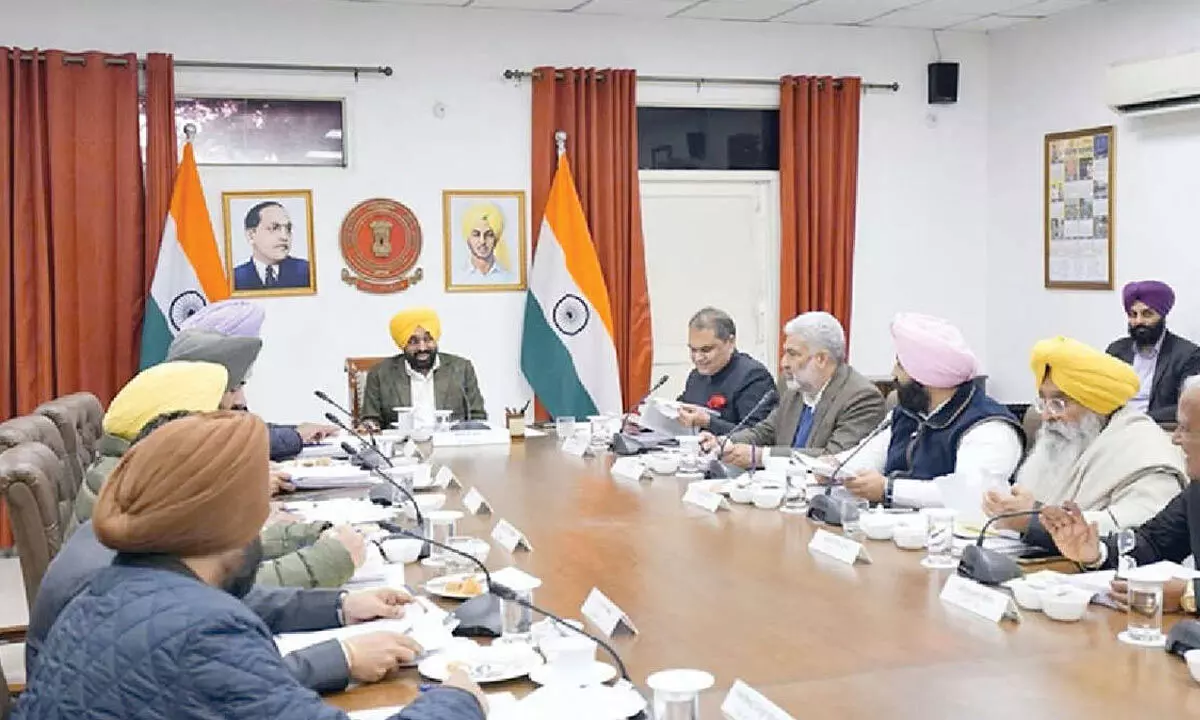
Chandigarh: The Punjab Cabinet here on Friday gave nod to India’s first comprehensive policy under which private institutions can establish fully digital universities in the state. The cabinet, which met here under the chairmanship of Chief Minister Bhagwant Mann, “gave nod to the Punjab Private Digital Open Universities Policy, 2026 to regulate and promote private digital open universities offering online and open distance learning (ODL) programmes.
The policy aims for quality higher education for the students of the state and opening up employment opportunities for them, an official statement said. The policy aligns with UGC Regulations, 2020, and introduces state-level standards for quality, accessibility, digital infrastructure, data governance, and learner protection, the statement said. “This pioneering policy will expand flexible, affordable higher education and position Punjab as a digital learning hub,” it said.
“Under this policy, private institutions can establish fully digital universities in Punjab. This is India’s first such policy and so far. Only Tripura has set up a digital university, but without a comprehensive policy, so Punjab becomes the first state to provide both a policy and a model in this area,” it said.
This will prove to be a boon for students or professionals busy with life, family, or jobs as they will be able to complete degrees without quitting jobs, without changing cities and even without going to classrooms, the statement said. It said the policy was the need of the hour as a large number of students worldwide are learning from online platforms.
The state government said that lakhs of students are clearing tough exams like JEE, NEET and UPSC by watching free online lectures, and crores of youth are building careers through online courses and AI-based learning platforms. However, India’s existing university policy only permits physical campuses, making digital-first universities legally impossible. As a result, students earned formal degrees from colleges while acquiring real skills online, creating a wide gap between education and employability. The new policy bridges this gap by allowing fully digital universities whose degrees will be legally valid and compliant with AICTE and UGC standards. Students will now be able to complete entire degree programmes from home using mobile phones or laptops. The government said this would usher in a new era of lifelong learning and upskilling in fields such as IT, AI, business, healthcare, manufacturing and data science.
To ensure quality, digital universities must have at least 2.5 acres of land, digital content studios, server rooms, LMS operations centres, digital examination control rooms, 24x7 student support systems and a minimum corpus fund of Rs 20 crore. Separate bills will be introduced in the Punjab Assembly for each approved university, ensuring transparency and legal strength.
Modelled on global institutions like Western Governors University (USA), University of Phoenix (USA), Walden University (USA), Open University Malaysia and others, the policy aims to make education affordable, skill-oriented and accessible, saving studentstime and major living and commuting costs.