Supreme Court To Hear Challenges Against Bihar's Electoral Roll Revision


Multiple petitions challenging the Election Commission's Special Intensive Revision of Bihar's electoral rolls are scheduled for hearing in the Supreme Court today. The legal challenge comes from various quarters including transparency advocacy group Association for Democratic Reforms (ADR), activist Yogendra Yadav, Trinamool Congress MP Mahua Moitra, and several political parties who have termed the exercise both "arbitrary" and "unconstitutional."
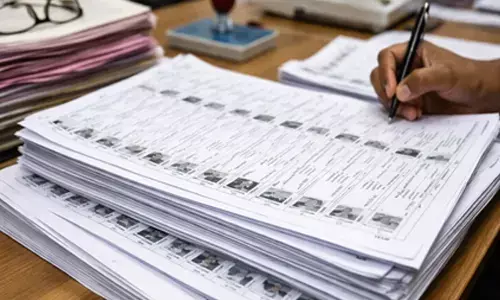
The controversy centers around the Election Commission's June 24 announcement of a comprehensive revision of voter lists ahead of Bihar's assembly elections scheduled for October-November. This Special Intensive Revision represents an unprecedented approach where all registered voters must re-establish their eligibility through fresh documentation and applications.
The Election Commission has defended this exercise by pointing to several factors including rapid urbanization and migration patterns, the need to include newly eligible 18-year-olds and previously unregistered citizens, unreported deaths in voter records, and concerns about foreign illegal immigrants appearing on voter rolls. The commission aims to complete draft electoral rolls by August 1, followed by a period for objections and scrutiny.
Opposition parties and civil society groups have raised serious concerns about the implementation and potential consequences of this revision. They argue that the process fundamentally shifts the burden of proof onto individual citizens, requiring them to submit fresh applications with documentary evidence of citizenship by July 25, 2025. The requirements exclude commonly held documents like Aadhaar cards and ration cards, instead mandating proof of parents' identity and other documentation that may be difficult to obtain.
The petitioners argue that this approach violates Article 32 of the Constitution and undermines the universal right to adult suffrage. They contend that given Bihar's high rates of migration and displacement, requiring documents dating back decades could potentially disenfranchise millions of eligible voters. The timeline for completion has also been criticized as unrealistic, requiring the training of approximately 100,000 Block Level Officers within a month during Bihar's monsoon and flood season.
The legal challenge has been accompanied by political protests, with the INDIA bloc organizing a 'Bihar bandh' on July 9 to oppose the revision exercise. Opposition leaders including Congress's Rahul Gandhi and RJD's Tejashwi Yadav have participated in demonstrations against what they view as a systematic attempt to manipulate voter rolls.
The Election Commission has remained firm in its position, citing Article 326 of the Constitution which defines voter eligibility criteria. The commission has also claimed that over 57% of the state's 7.9 million current voters have already submitted new enumeration forms, with scrutiny of these applications now underway.
The Supreme Court's decision on these petitions could have significant implications for how electoral roll revisions are conducted across India and may influence the timeline for Bihar's upcoming assembly elections.