




- UPI MDR Row: Congress Targets Centre Over New Merchant Charges, Says PM Has ‘Redefined NOTA’
- Anthropic, OpenAI want AI firms to slow down; Zuckerberg has other plans
- Tamil Nadu CM Vijay’s London Event Cancelled After Police Raise Safety Concerns
- Banners installed banning Ganesh idol immersion at Tank Bund
- Petrol and diesel prices today in Hyderabad, Delhi, Chennai and Mumbai on 16 September 2026
- Gold rates today in Hyderabad and Visakhapatnam surges, check the prices on 16 September, 2026
- New UPI charges: Will you pay extra? 5 things that remain free
- Gold rates today in Bengaluru and Chennai surges, check the prices on 16 September 2026
UPI MDR Row: Congress Targets Centre Over New Merchant Charges, Says PM Has ‘Redefined NOTA’
In Short
Congress has criticised the Centre over the introduction of MDR for certain UPI merchant transactions, alleging the move could benefit US payment companies.

Share :
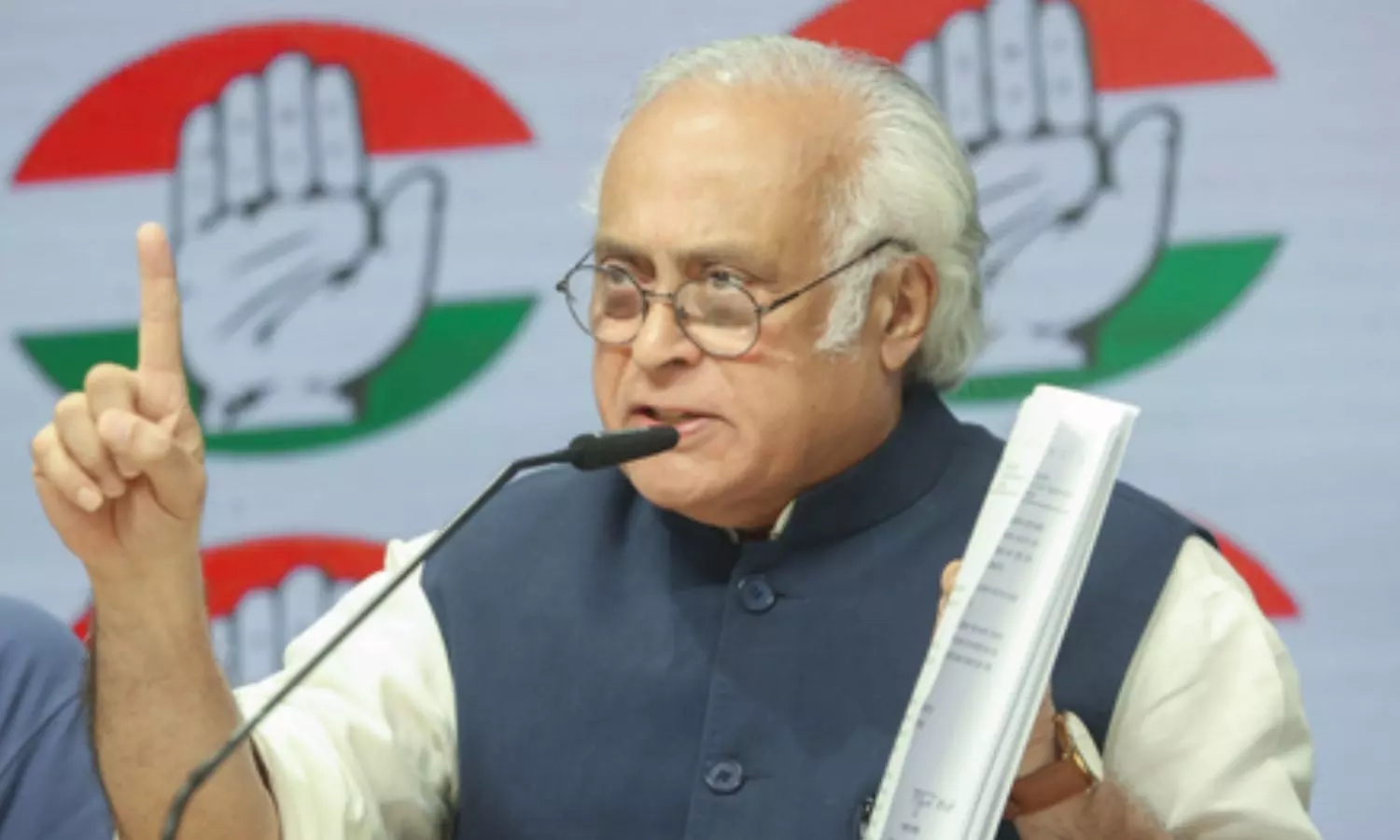
Congress General Secretary Jairam Ramesh
The Congress on Wednesday stepped up its criticism of the Centre over the introduction of a framework allowing Merchant Discount Rate (MDR) on certain Unified Payments Interface (UPI) transactions. Congress general secretary in-charge communications Jairam Ramesh accused the Narendra Modi government of yielding to pressure from the United States and used the phrase “Narendra’s Ongoing Trump Appeasement” to attack the Prime Minister.
The remarks came after the government notified provisions that protect UPI transactions of up to ₹2,000 from charges, while allowing the possibility of MDR on eligible higher-value merchant transactions. The government has maintained that customers will not be charged for making UPI payments.
Jairam Ramesh Questions Move
Ramesh questioned whether the decision to introduce MDR was intended to create greater competition for UPI from international card-payment companies.
“The PM has redefined NOTA,” Ramesh said, referring to his expanded interpretation of the acronym as “Narendra’s Ongoing Trump Appeasement.”
He also questioned why a proposed MDR could be around 0.4% and whether the move was connected to the rate applicable to some debit-card transactions. Ramesh asked whether the policy would help US-based payment companies compete with UPI.
Congress has also alleged that the policy change could eventually result in higher costs for consumers if merchants pass their payment-processing expenses on through prices. These are political claims made by the opposition and have not been established as the government's stated objective.
What The New UPI Rules Say
According to the government’s notification, banks and payment-system providers cannot directly or indirectly charge users for UPI transactions of up to ₹2,000. RuPay debit-card payments are also covered by the protection.
The Finance Ministry has emphasised that MDR is a charge within the merchant-payment ecosystem and is not a fee imposed on customers making UPI payments. It has also said individuals will continue to have unlimited free UPI usage without monthly quotas or transaction-volume caps.
The changes follow an amendment to Section 10A of the Payment and Settlement Systems Act, 2007, which creates an enabling framework for MDR on UPI and other notified electronic payment modes.
The government has previously said that any MDR, if introduced, would be limited and threshold-based rather than applied universally. Officials had indicated that a rate in the range of 0.25% to 0.4% could potentially apply to certain transactions above ₹2,000, excluding person-to-person payments, with the final decision to be taken by the UPI and Services Steering Committee headed by NPCI.
Congress Raises US Pressure Allegation
Ramesh linked the policy change to long-standing criticism from US payment companies and the US Trade Representative over India's zero-MDR system.
He claimed that US companies such as Visa and Mastercard could benefit if UPI merchants are allowed to pay processing fees. Congress has also questioned whether the proposed changes are connected to broader India-US trade tensions.
Rahul Gandhi had similarly accused the government of giving in to American pressure, while Congress president Mallikarjun Kharge criticised the change and alleged that it could eventually burden ordinary users.
The government has rejected the suggestion that consumers will be charged for UPI payments, stressing that MDR applies to merchants rather than end users. Finance Minister Nirmala Sitharaman has also said the framework is intended to help banks and fintech companies invest in infrastructure, innovation and security.
Debate Over UPI’s Future
The dispute centres on how India's rapidly expanding digital-payment ecosystem should be financed while keeping everyday UPI transactions accessible.
Congress has raised concerns over the removal of the earlier blanket zero-MDR framework and warned that the scope of charges could potentially expand in the future. The government, meanwhile, has argued that a sustainable revenue model could help support the infrastructure and security required to operate the UPI ecosystem at scale.
For now, the notified protection means users making UPI payments up to ₹2,000 will not be charged, while the details and scope of MDR for eligible merchant transactions above that threshold remain at the centre of the political debate.
Heavy Rain Alert issued for Andhra Pradesh and Telangana
22-A controversy: CM Revanth to expose Dharani loopholes in Assembly
Local BRS leaders stalling re-entry of turncoat MLAs!
Vice-President to be chief guest at Hyd Liberation Day fete
Reading for pleasure is akin to unlocking a hidden treasure
Learn security lessons from Bolarum arms theft shocker


