




- BJP will win Bengal civic body polls like recent Assembly elections: Minister Dilip Ghosh
- Shivakumar gives green signal to Golden Chariot special train in K’taka
- US H-1B restrictions risk undermining strategic partnership with India: Report
- Samsung Confirms Galaxy Devices Eligible for Android 17 Update
- Gas Cylinder Explosion: Three Injured in Benguluru
- Cyclone threat looms over Bay of Bengal, heavy rain alert for south Bengal from Wednesday
- AP ZPTC Race: Will it Be Family First, Grassroots Workers Last
- Airbnb bans guest checkout chores from November 20
Nvidia CEO Jensen Huang backs Seattle lab with 7 million GPU hours
In Short
Jensen Huang’s foundation is giving a Seattle research lab massive computing power to speed up AI-driven protein design for medicine and sustainability.

Share :
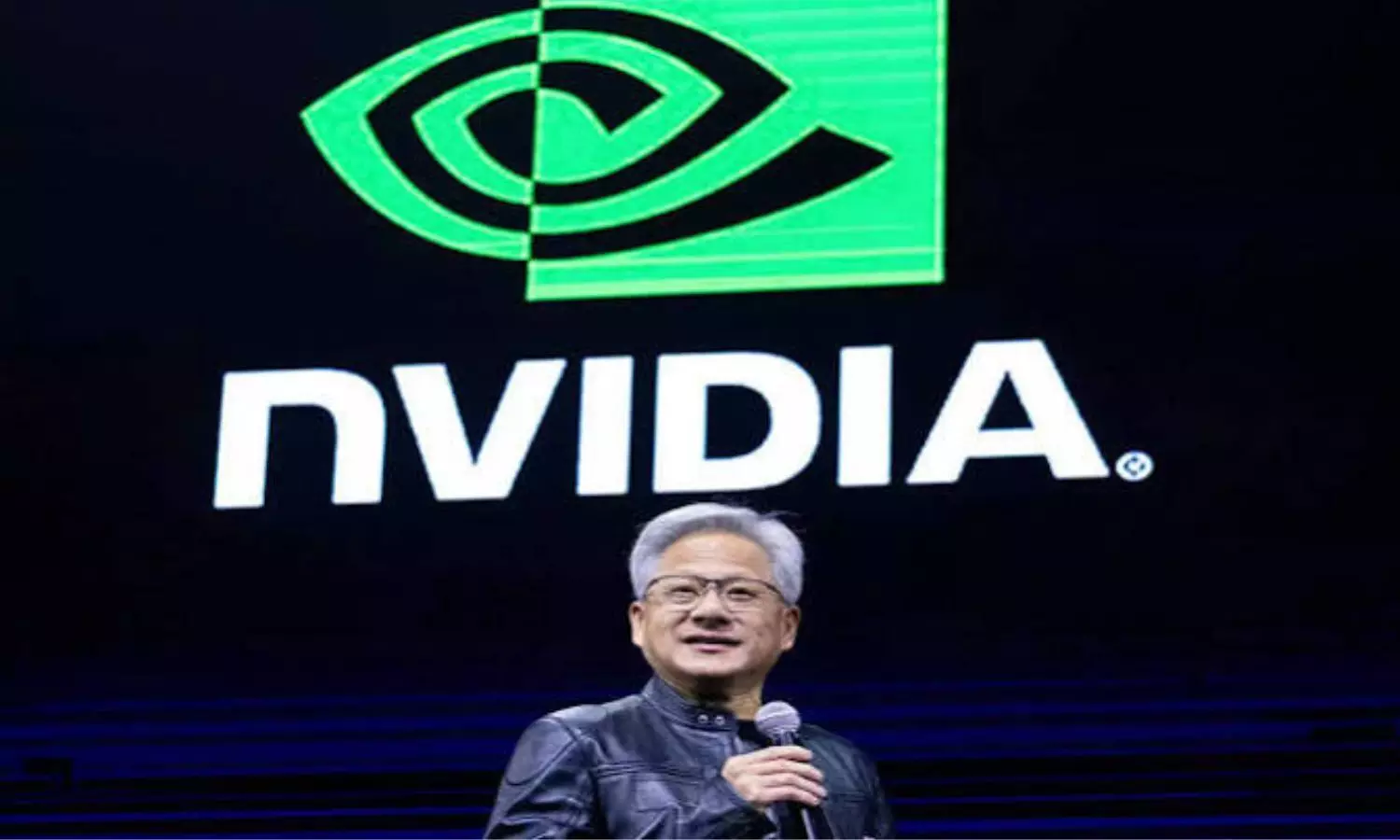
Nvidia CEO Jensen Huang
Nvidia CEO Jensen Huang and his wife Lori Huang are supporting a research project that uses artificial intelligence to create new proteins. These proteins could help in medicine, biotechnology and environmental work.
The Jensen and Lori Huang Foundation gave the University of Washington Medicine Institute, for Protein Design (IPD) a computing grant. It’s worth 7 million GPU hours. This helps the team run AI models to design proteins more quickly and accurately. The funding is expected to give researchers access to the enormous computing power needed to train and test advanced AI models for protein design.
The development comes alongside the introduction of RFD4-Proteina, an open generative AI model jointly developed by IPD and Nvidia. The model is designed to create new proteins and is claimed to work up to 10 times faster, while using biomolecular reasoning to improve the ability of scientists to develop proteins with specific functions.
By making RFD4-Proteina openly available, researchers worldwide will be able to build on the technology, investigate a wider range of possible protein structures and potentially move promising drug candidates into laboratory testing more quickly.
“RFD4-Proteina will open the door to new solutions in medicine, sustainability, materials and biotechnology,” said David Baker, IPD director and professor of biochemistry at the University of Washington School of Medicine.
The foundation's computing support could significantly reduce the time required for AI training and evaluation. Instead of taking months, some computational workloads could be completed within days, giving scientists more opportunities to test ideas and refine protein designs.
The additional computing capacity will support research into areas including precision cancer treatments, longer-lasting vaccines, diseases that currently have no effective treatment and enzymes capable of breaking down environmental pollutants. These include persistent hazardous chemicals and plastics.
The grant is being delivered through the Huang Foundation's partnership with CoreWeave, using NVIDIA graphics processing units (GPUs). These specialised systems provide the processing power required for the highly complex calculations involved in AI-based molecular research.
“Most of the most important medicines of the future will come from proteins that have never existed," said Jensen Huang, co-president of the Huang Foundation. "For David Baker and the Institute for Protein Design, this path means training AI on tens of millions of molecular structures, learning from virtual experiments, and finding novel protein designs that have eluded nature. The Huang Foundation is providing researchers the compute to expand the frontiers of medicine, while ensuring that the resulting models, data, and tools are openly available to all."

TG Ethics committee hearing on Padi Kaushik Reddy deferred, Huzurabad by-election likely
₹10,000-Crore Business at Stake: Chamber Sounds Alarm, Seeks Rally Rescheduling
Five Killed in Blasting Accident in Alluri District
Jio IPO scripts global record with 1.39 cr applications
IMD warns of thunderstorms, gusty winds in Telangana
Needless row over Jaishankar-Rubio meeting in Mumbai


