




- What are the Benefits of Petrol Cars?
- CM Will Face Suspicion if Sting Operation Is Not Seriously Investigated: Basavaraj Bommai
- OpenAI ChatGPT Chrome Extension Gets Work Mode: Find Details
- Who is Journalist in Digital Age? SC Raises Concern
- WhatsApp Storage Full? Free Up Space Without Deleting Chats
- YSRCP-TDP clashes in Punganur, several injured
- Two Killed in Suryapet after Bolero vehicle hits three people
- Welcome Starlink, but must follow law: Reliance responds to Elon Musk
Elon Musk Open Sources Grok 2.5, Promises Grok 3 Release in Six Months
In Short
Elon Musk’s xAI has released Grok 2.5 as open source, with Grok 3 expected to follow within six months.

Share :
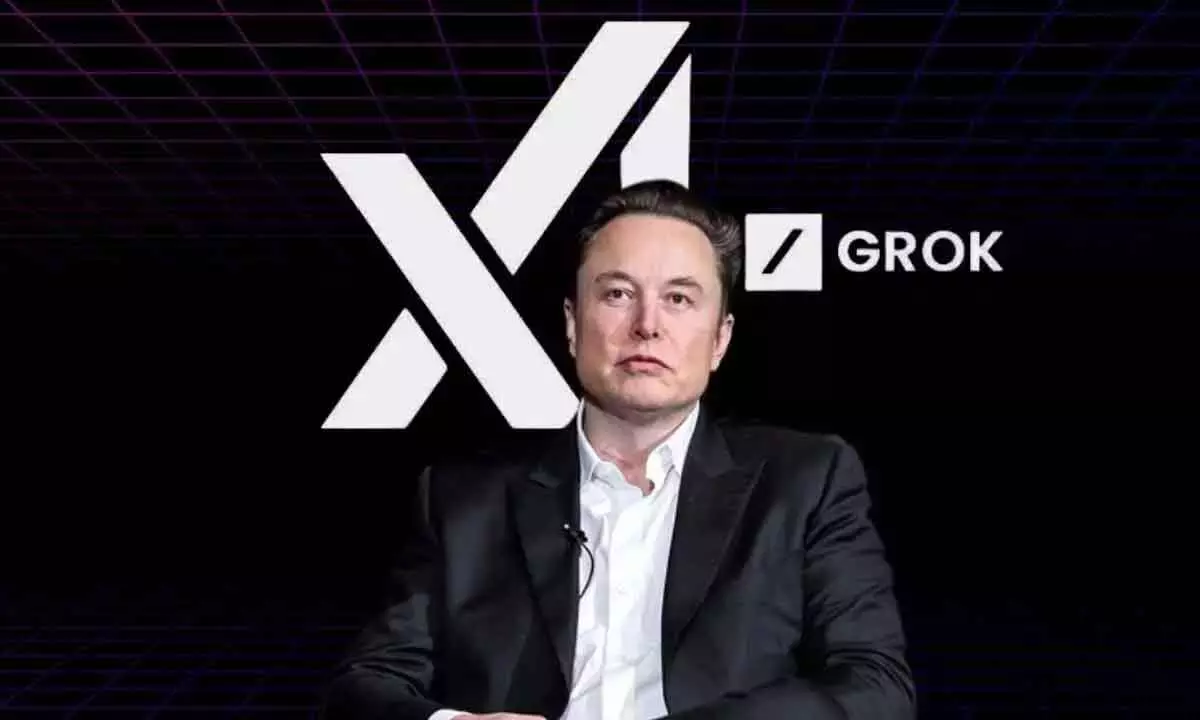
Elon Musk has taken another step toward his vision of open artificial intelligence by announcing that his company xAI has made its Grok 2.5 language model available as open source. The move allows developers worldwide to access, run, and experiment with the model. Musk also confirmed that Grok 3, the company’s most advanced AI system to date, will follow the same path in about six months.
The announcement came directly from Musk on X (formerly Twitter), where he posted: "The @xAI Grok 2.5 model, which was our best model last year, is now open source. Grok 3 will be made open source in about 6 months."
Grok 2.5 Now on Hugging Face
The Grok 2.5 model has been uploaded to Hugging Face, a popular platform widely used by the global AI research community. This makes it easier for developers and researchers to download and test the system, as well as explore its underlying architecture. However, xAI has attached a license that places limits on how the code can be used. While the model is free to experiment with, it cannot be employed to train competing AI systems or develop rival models.
A Growing Tradition of Open Source
This isn’t the first time xAI has leaned toward open access. Back in March 2024, the company released Grok 1 to the public. That earlier version was a base model without specific fine-tuning, intended primarily for researchers to evaluate its raw capabilities. With Grok 2.5 now being released, xAI appears committed to making its systems more transparent, while also controlling how they are reused.
Musk has also hinted at ambitious plans beyond Grok 3, stating that Grok 5 could arrive before the end of the year. However, observers note that Musk’s aggressive timelines have not always been met in the past.
Rivalry With OpenAI
The release places Musk’s xAI in direct competition with his former company, OpenAI, which has faced criticism for keeping its most powerful models closed. Earlier this year, OpenAI released two smaller-scale open-source models—the first such release since GPT-2—but they were considered much weaker compared to the company’s flagship ChatGPT offerings. Musk has repeatedly taken aim at OpenAI for prioritizing commercial interests over transparency, presenting xAI as the more open alternative.
Controversies and Challenges
Despite the excitement, Grok has not been without issues. Earlier versions of the system were reported to generate problematic outputs, including offensive or inappropriate responses. The xAI team attributed these flaws to outdated code and claimed to have resolved them, but the incidents raised broader concerns about the safety of making powerful AI systems widely accessible.
By releasing Grok 2.5, Musk is inviting developers to build upon xAI’s work, potentially addressing weaknesses while creating new applications. Whether this commitment to open access continues with Grok 3 and the anticipated Grok 5 will be a major test of xAI’s long-term philosophy.
For now, the move underscores Musk’s strategy of challenging industry norms, particularly in contrast to OpenAI, and ensuring that AI innovation remains accessible to the wider community.

Lucky draw for 41 bars in Hyderabad completed peacefully
Supreme Court to hear plea over pregnant journalist's allegation against Rahul Gandhi on Oct 26
Apple iPhone Duo pre-orders open in India today
Delhi Police Put Abhijeet Dipke on Notice, Deny Rally Permission
Tensions grips in Rayachoti amid YSRCP -TDP clashes, 15 cars destroyed
AP High Court Orders CBI Probe into Custodial Death Case


