




- High Court Rejects Bail Pleas Of Umar Khalid, Sharjeel Imam
- October OTT Calendar: Must-Watch Movies And Web Series
- AP minister Mandipalli Ramprasad Reddy hails archers’ Asian Games gold
- Nani Is All Ready To Join The Sets Of Bloody Romeo
- R Veeramani Faces Third POCSO Case Over 2004 Death Of Class 11 Student
- Trump Calls Sundar Pichai a ‘Monster’ at Lunch with AI CEOs
- Vijayasai Reddy outlines five-point plan for North Andhra
- Sreeleela Joins Rajinikanth’s Dharman
OpenAI Challenges Zuckerberg’s Muse With Dots: 5 Key Things to Know
In Short
OpenAI has announced its new AI agent, Dots. Dots appears to be a rival to Muse, Mark Zuckerberg's tool that has gone viral on the internet in recent days. Next, we compare both agents.

Share :
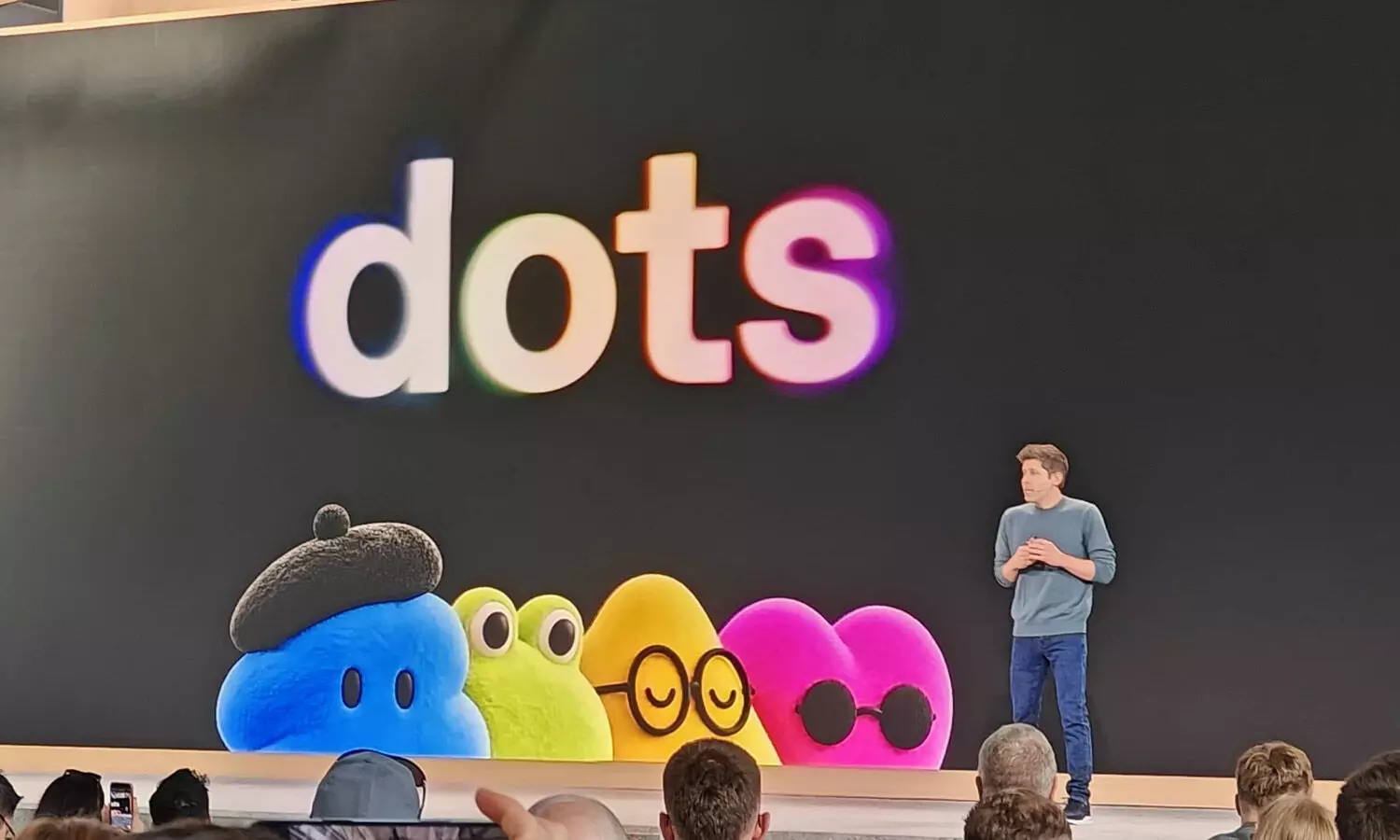
OpenAI Challenges Zuckerberg’s Muse With Dots: 5 Key Things to Know
OpenAI made several announcements during the DevDay 2026 event. However, what caught the most attention was Dots: the company's new always-on AI agent, which appears to be a direct competitor to Meta's Muse.
Muse, launched earlier this month, has gone viral in the United States as a personal AI agent capable of performing various tasks, such as booking tickets or making online purchases. The Muse app even took the top spot in US app stores, beating out tools like ChatGPT and Claude. Now, OpenAI is betting big on AI agents with Dots, its own version of a customizable AI avatar.
1. What is Dots?
OpenAI describes Dots as always-on assistants capable of “doing almost anything” for you, using cloud computing and connected apps. You can set up your own Dot agent and interact with it via text or voice through ChatGPT. Once connected, Dots can perform actions such as browsing the web or interacting with more than 4,000 compatible applications.
Dots is powered by GPT-6 Astra, OpenAI's cutting-edge AI model. In addition, it is capable of maintaining context between different applications or devices and helps you in research or work tasks, such as software development.
Once you assign a task to Dot, it can work around the clock and send you updates on its progress. Currently, each paying ChatGPT user has a Dot, although OpenAI has indicated that it will soon be possible to have multiple Dot agents working for you.
2. Dots by OpenAI vs. Muse by Meta
As mentioned above, OpenAI announced Dots at a time when the popularity of Meta's Muse continues to grow. Both products share certain similarities: like Dots, Muse is designed to act as an AI agent working on your behalf and in the background. Both AI agents are represented by customisable avatars and use a text-messaging-like interface, although Dots does not have a standalone app. Both Dots and Muse can learn from the way you use them and adapt their behaviour accordingly.
However, there are some differences. While Muse is geared toward personal use of AI-such as making reservations or purchases-Dots focuses more on the workplace. The OpenAI agent can connect to your work applications, help prepare documents, and perform other tasks. Additionally, while Muse offers a free modality for users, Dots is currently only available for the Pro and Business Premium versions.
3. OpenAI’s CFO accidentally calls Dots "Muse"
OpenAI appears heavily focused on competing with Muse through Dots. So much so that OpenAI CFO Sarah Friar accidentally referred to Dots as "Muse" during an interview at DevDay. She made the slip-up while discussing improvements to ChatGPT’s memory.
"(ChatGPT) knows the kinds of conversations you’ve had and how you like to present yourself to the world; Muse will benefit... Sorry, not Muse. Dots will also benefit from that," Friar told a famous publication. While everyone makes mistakes—and after a hectic DevDay, Sarah Friar can hardly be blamed for such a slip—it is worth noting.
4. Does Sam Altman feel threatened by Mark Zuckerberg?
Moving from OpenAI’s CFO to its CEO, Sam Altman: during DevDay, Altman was asked if Meta and Mark Zuckerberg concerned him. In recent weeks, Meta has released more advanced models and agents, including Muse. This has allowed the company to finally narrow the gap separating it from OpenAI and Anthropic in the AI race.
When asked if he felt "threatened by Zuckerberg," OpenAI’s CEO replied: "No... I mean, he’s an impressive person and that company has vast resources. But I feel very confident about our roadmap."
Meanwhile, Sam Altman hinted that OpenAI had much more in store for the future, including its first hardware device, designed by former Apple design chief Jony Ive. "I don’t want to spoil the surprise, but I think we’ll have something worth waiting for," he stated.
Mark Zuckerberg recently unveiled Muse Charm, a pendant-style device for the Muse AI assistant.
5. Everything else OpenAI announced
There were many other announcements besides "Dots" at OpenAI DevDay 2026. The company launched its new AI model: GPT-6.1 Sol. According to OpenAI, GPT-6.1 Sol is a more cost-effective model with performance approaching the level of Astra. The company had recently confirmed that it would not release GPT-6.1 Astra due to safety concerns.
Along with the new model, OpenAI also launched the new ChatGPT Pro 500 plan, priced at $500 per month. This tier includes the "Ultrafast" feature, which allows Codex and Work to generate up to 300 tokens per second—eight times faster than standard usage. The company also introduced ChatGPT Space, a shared workspace where users can collaborate and "Dots" can leverage that shared context.

‘Fight to Finish’ Pumps New Energy, But Opposition Remains Divided
EC Form 6 Move Gives Oppn Fresh Ammunition minutes before INDIA bloc Meet
Gas Cylinder e-KYC Deadline Today: How to Complete Aadhaar Authentication
Congress announces candidates for two Graduate MLC elections
Did not submit enumeration form?
Revanth meets Rahul, Venugopal


