Rishabh Agarwal Quits Meta’s Superintelligence Lab After 5 Months, Says He’s Ready for a “Different Kind of Risk”

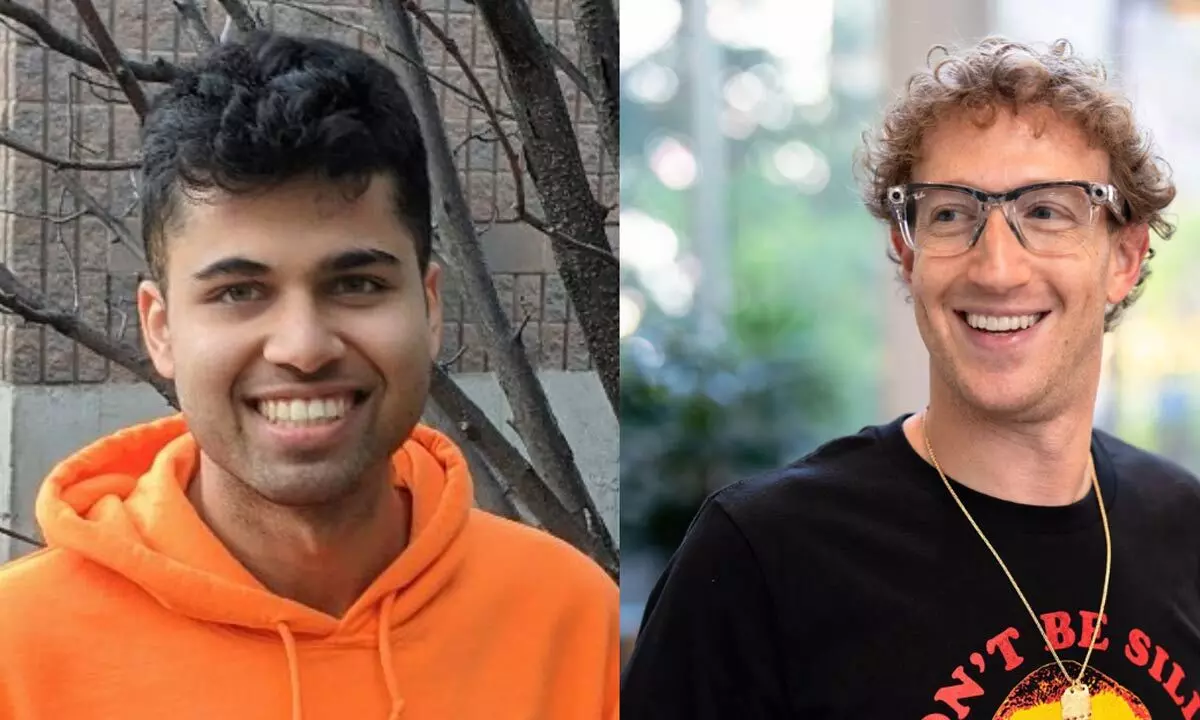
AI researcher Rishabh Agarwal exits Meta’s Superintelligence Lab after just five months, sparking questions about the company’s ambitious AI push.
Meta’s ambitious bet on superintelligence is already showing cracks. Just months after Mark Zuckerberg launched the company’s high-profile Superintelligence Lab (MSL), one of its star recruits, Rishabh Agarwal, has announced his departure only five months into the role.
Agarwal, a leading AI scientist, was lured into Meta in April 2025 with a lucrative million-dollar package as part of the company’s drive to assemble some of the brightest minds in artificial intelligence. However, on X (formerly Twitter), he confirmed that this would be his final week at Meta.
“This is my last week at @AIatMeta. It was a tough decision not to continue with the new Superintelligence TBD lab, especially given the talent and compute density. But after 7.5 years across Google Brain, DeepMind, and Meta, I felt the pull to take on a different kind of risk,” Agarwal wrote.
While he made clear his decision to exit, Agarwal stopped short of revealing what comes next. Whether he plans to start his own venture, join another tech firm, or return to academic research remains an open question.
Meta’s Troubles at the AI Frontier
Agarwal’s resignation is not an isolated case. A report by Wired indicates that at least three other high-profile researchers have also left Meta’s superintelligence project in recent weeks. Among them are Avi Verma and Ethan Knight, both of whom have returned to OpenAI after short stints at Meta. Knight’s journey has been particularly nomadic—he previously worked at OpenAI, Elon Musk’s xAI, and then Meta, only to circle back to OpenAI again.
These exits come as a setback for Meta’s latest AI initiative, which Zuckerberg only formally unveiled a couple of months ago. The company has been offering multi-million-dollar compensation packages to lure talent away from rivals such as Google DeepMind, OpenAI, and xAI, but retaining that talent appears to be proving more difficult than anticipated.
Still, Meta insists there is no cause for alarm. Company spokesperson Dave Arnold downplayed the resignations, saying: “During an intense recruiting process, some people will decide to stay in their current job rather than starting a new one. That’s normal.”
Agarwal’s Journey in AI
Rishabh Agarwal’s academic and professional credentials make him one of the most respected figures in reinforcement learning research. A Computer Science and Engineering graduate from IIT Bombay, he went on to pursue his PhD at Mila – Quebec Artificial Intelligence Institute, where his early work focused on reinforcement learning and evaluation techniques.
Professionally, Agarwal began his career with internships at Saavn, Tower Research Capital, and Waymo before joining Google Brain in 2018 as a Senior Research Scientist. Over the next five years, he made significant contributions to deep reinforcement learning, even winning the prestigious NeurIPS 2021 Best Paper Award.
Later, at DeepMind, he advanced research in reinforcement learning and large language models, applying methods of self-improvement to scale AI systems. In April 2024, Meta recruited him into its newly formed Superintelligence Lab. There, he focused on post-training techniques for “thinking models”, working on scaling reinforcement learning methods and refining distillation approaches.
Outside of industry, Agarwal has also been active in academia, serving as an Adjunct Professor at McGill University.
What Comes Next?
While the exact nature of his “different kind of risk” remains under wraps, industry watchers believe Agarwal could either be moving toward entrepreneurship or shifting back to research. Either way, his exit adds to the growing turbulence at Meta’s Superintelligence Lab, raising questions about whether the company can hold together the elite AI team it worked so hard—and spent so much—to assemble.