Govt relaxes TDR norms; creates slabs

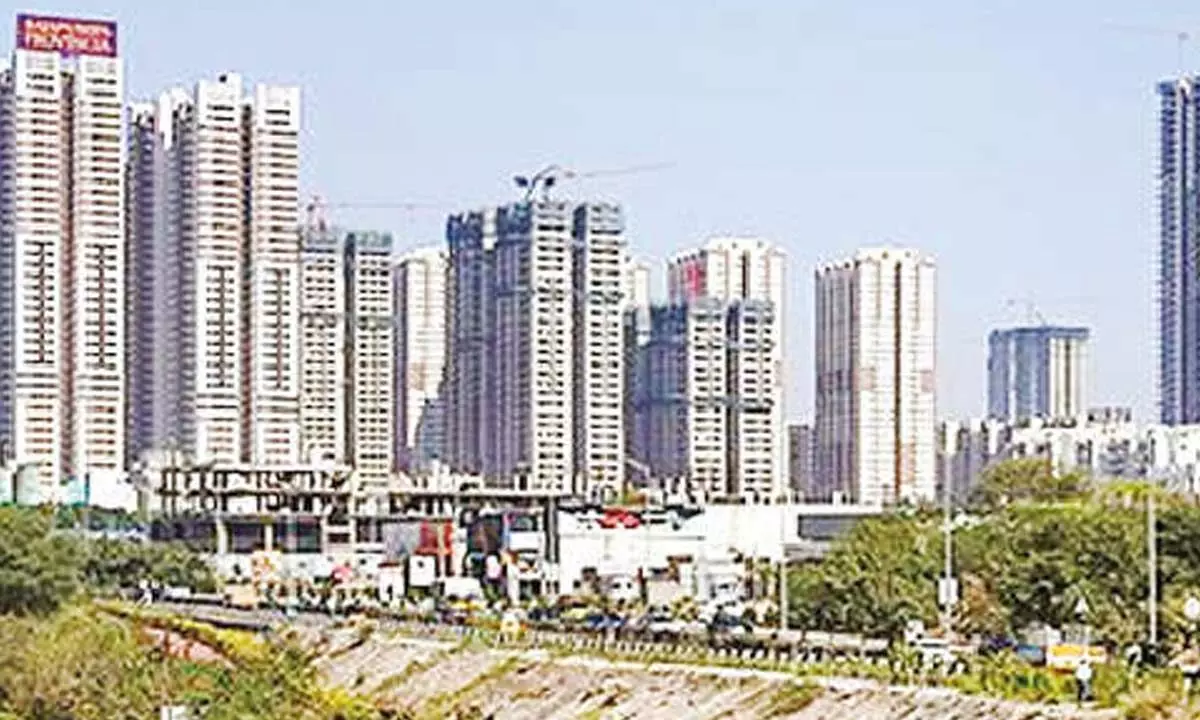
Hyderabad: The Telangana government issued orders on Sunday relaxing a few norms and creating slabs for Transferable Development Rights (TDR) utilisation for high- rise structures, and, accordingly, buildings with over 10 floors should construct 3 per cent and buildings with above 20 floors should construct 5 per cent of the built-up area through TDRs.
For context, Transferable Development Rights (TDR) in building context refers to a certificate issued by municipal authorities allowing a landowner to transfer unused development potential from a "sending" zone (restricted area) to a "receiving" zone (high-potential area). It acts as a land development technique for city planning, allowing developers to build more space than normally permitted. It makes room for the preservation of heritage sites, agricultural land, or public infrastructure development, while compensating landowners.
When a landowner surrenders land for public use (like road widening or slum redevelopment), they receive a Development Right Certificate. The common types include Slum TDR (redevelopment), Road TDR (widening), Heritage TDR (protecting old buildings), and Reserved Plot TDR.
According to the officials, in view of the modified rules announced on Sunday, the TDR utilisation in the case of high-rise building above 10 floors and up to 20 floors is fixed at three per cent of the total built-up area above 10 floors. For high-rise buildings above 20 floors, five per cent of total built-up area above 20 floors should be done through TDR utilisation.
According to the GO, the definition of the high-rise building is a structure with 21 meters or more in height. However, the structures like chimneys, cooling towers, boiler rooms, lift machine rooms, cold storage and other non-working areas, in the case of industrial buildings and water tanks and architectural features in respect of other buildings have been excluded from the clause.
The government has laid down that 50 per cent of TDR should be released during the time of granting building permissions and the balance 50 per cent should be released prior to issue of occupancy certificate, according to the GO. For the plots having extent from 750 sq.m to 2,000 sq.m, building from 18 meters to 21 meters height will be permitted only through utilisation of TDR subject to provision of required parking and compliance with other rules.
For non-high rise buildings, setback relaxation will be permitted through utilisation of the TDR, subject to maintaining minimum setbacks as prescribed in cases of road widening. In the high-rise buildings, setback relaxations up to 10 per cent of permissible setbacks will be allowed through TDR, subject to maintaining a minimum of seven meters all-round setbacks. In cases where master plan roads are modified, reduced or deleted, the applicant should have option to: (a) pay applicable development/conversion charges or (b) submit equivalent TDR in lieu of such charges.
As per the orders, amendment for additional floors through TDR modify existing provisions relating to additional floors in plots above 2,000 sq.m: (a) up to 3 additional floors will be permitted in plots abutting 40 feet roads, (b) up to 4 additional floors in plots abutting 60 feet road and (c) up to 5 additional floors in plots abutting 80 ft road, subject to utilisation of TDR and compliance with fire, airport and other norms.
Previously, the government issued orders on January 16 this year introducing provisions relating to grant of TDR for lands affected by FTL/MFL/Buffer zones and prescribing utilisation of TDR in high-rise buildings for CURE area. However, some of the stakeholders had objected to uniformity in the entire city. They argued that this would serve as a deterrent for promotion of high-rise structures in other zones and wanted the government to reconsider the decision. The builders pointed out that TDR utilisation would increase the apartment prices by about Rs 400 per square foot.