Sanjeev Mudiraj warns of Centre’s conspiracy against the poor

District Congress Party President Sanjeev Mudiraj on Tuesday alleged that the BJP-led Central Government is attempting to trample on the rights of the poor by weakening the Mahatma Gandhi National Rural Employment Guarantee Act (MGNREGA). He claimed that amendments introduced under the so-called “VB G RAM G” threaten the livelihoods of rural labourers by shifting financial responsibility onto states and undermining the scheme’s original intent.
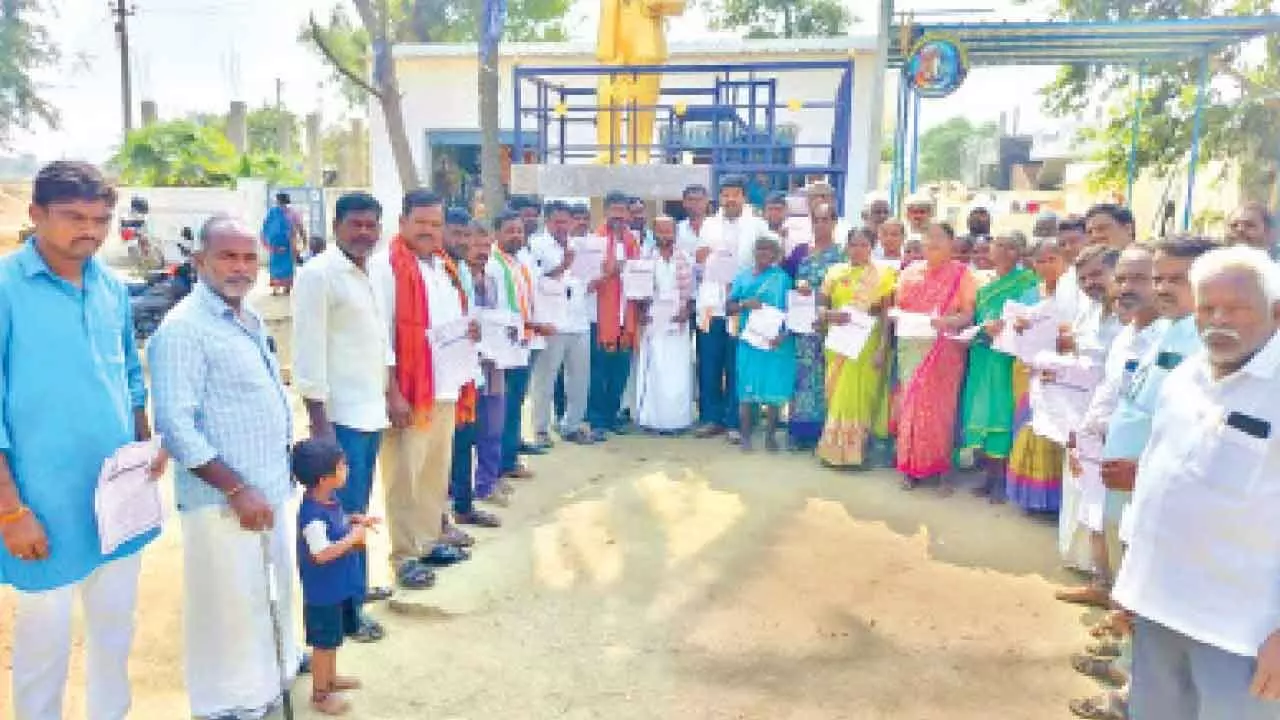
Following directions from the PCC, gram sabhas were conducted in Konagattupalli, Ramannapalli, Vepur, Lingannapalli and Madaram villages in Hanwada mandal to demand the restoration of MGNREGA. Speaking at these meetings, Mudiraj stressed that the employment guarantee scheme had long ensured local work opportunities, prevented rural-to-urban migration, provided timely wages, and upheld gender equality.
He warned that the “VB G RAM G”, while promising 125 days of work, imposed a 40 percent financial burden on states, jeopardising the livelihoods of rural labourers and potentially leading to renewed migration.
Mudiraj criticised the Central Government for disregarding the scheme’s original provisions, recalling that MGNREGA previously guaranteed 100 days of work per family per year, fully funded by the Centre. He alleged that both the BJP and BRS were attempting to weaken one of the most significant welfare initiatives for rural communities, undermining economic self-reliance.
He called upon youth, women, and educated citizens to participate actively in the campaign to demand the repeal of the “VB G RAM G” and restore MGNREGA in its original form.
Mudiraj highlighted the importance of protecting workers’ rights and ensuring that rural labourers continue to benefit from employment guarantees without added burdens.
The meetings saw the participation of Mahila Congress District President Bheemakavi Vasantha, DCC General Secretary Vemula Krishnayya, Hanwada Congress Party President Mahender, Mahila President Navaneetha, along with village Congress leaders, deputy sarpanches, ward members, employment guarantee workers and women from the communities.